Iconography of Christ Carrying the Cross
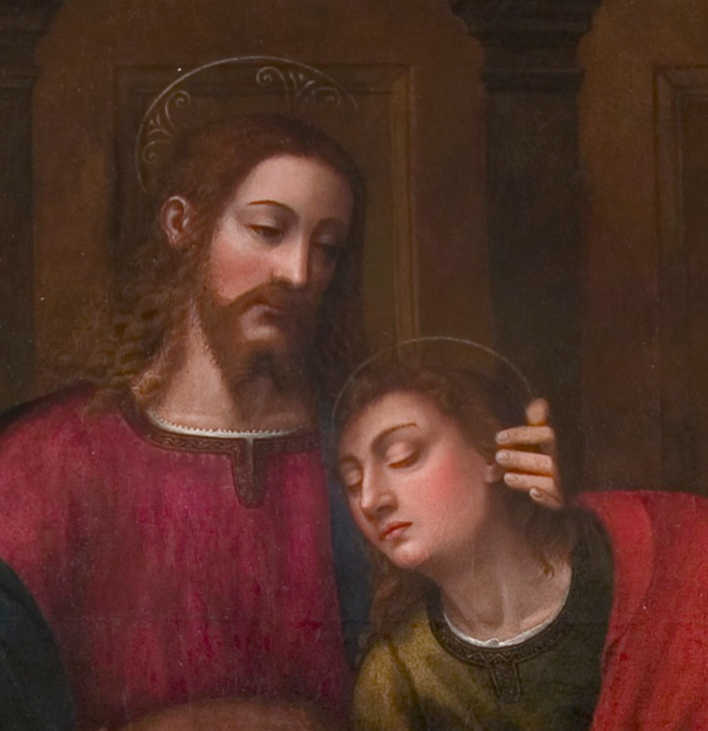
The Painting belongs to the theme of Christ Carrying the Cross, widely represented during the Renaissance. Its interest lies not only in the subject, but above all in the presence of a second figure, absent from the best-known Milanese versions
The analysis takes as its starting point the Venice Head of Christ Drawing, a recognized Leonardesque model for several Milanese versions of Christ Carrying the Cross. See the full study “Iconography”: Iconography, full study.
Giampietrino’s Versions of Christ Carrying the Cross
Five versions are now attributed to Giampietrino or to his workshop. Among them, the paintings in London, Budapest, and Turin form a particularly homogeneous group in terms of dimensions, framing, and construction. Their structure is very close to that of The Painting, except for the Figure.
The National Gallery Technical Bulletin states that this composition derives from a Leonardesque model identified with the drawing of the Head of Christ in Venice. This point is essential: it directly links the Giampietrino group to a recognized Leonardesque model.
These versions therefore constitute the main comparison for The Painting. They show both a shared construction and a major difference, since The Painting introduces a second protagonist absent from this group.
See the dedicated page: Giampietrino: Christ Carrying the Cross
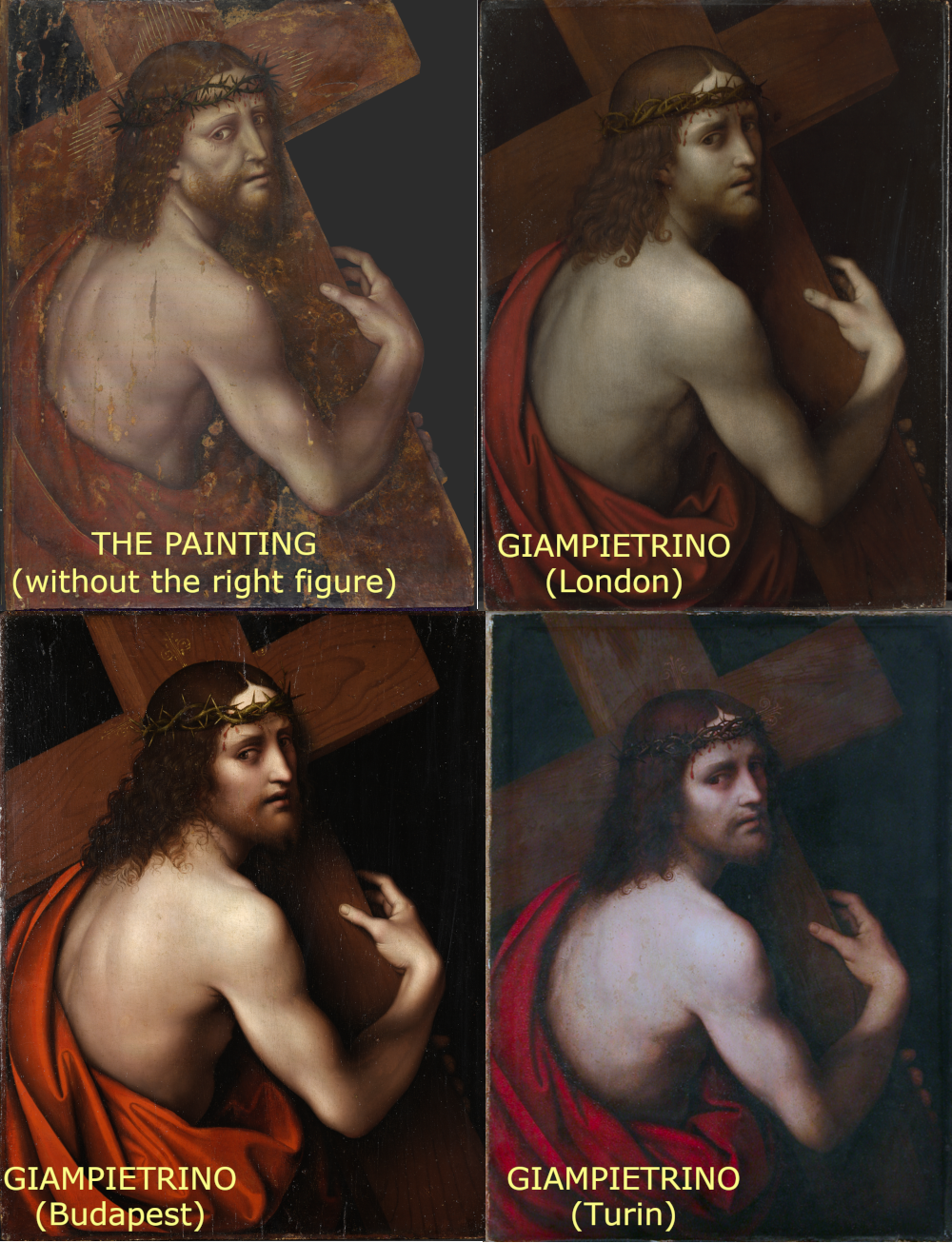
The Painting before the discovery of the Figure and three versions by Giampietrino
– Three paintings close to The Painting
– Possible common cartoon
Christ Carrying the Cross Attributed to Andrea Solario
The Christ Carrying the Cross formerly in Berlin and then in Magdeburg, now destroyed, was long regarded as a work by Solario. It is now known only through old documentation and an archival photograph.
Comparison with the secure versions by Giampietrino nevertheless reveals several divergences: inclination of the head, length of the neck, volume of the chin, treatment of the cross, and rendering of the robe. These differences lead to its exclusion from Giampietrino’s homogeneous group.
This work should therefore be regarded as an independent version, perhaps linked to Solario or his circle, rather than as a simple variant of the main Milanese group.
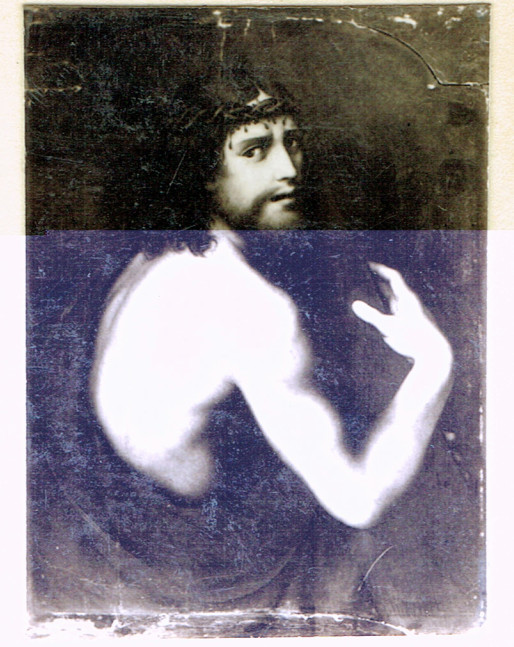
Christ Carrying the Cross attributed to Andrea Solario
– Destroyed in 1945
– Attributed to A. Solario by the Berlin Museum
– Significant divergences from Giampietrino
Other Echoes in the Leonardesque Milieu
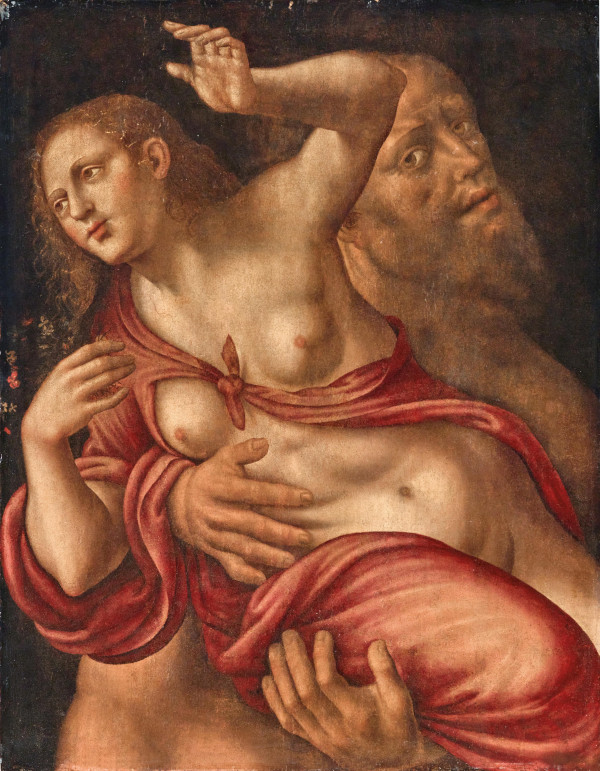
The Rape of Proserpina
The two versions studied of The Rape of Proserpina show precise morphological correspondences with The Painting: proximity between Proserpina and the Figure, analogies between Pluto and Christ, and similarities in contours, gazes, and the treatment of light. The hypothesis of a common source may therefore be considered.
Adam and Eve
The face of Adam, attributed to Giampietrino, extends the same expressive type. It confirms the circulation, within the Leonardesque milieu, of a model close to that of Christ in The Painting.
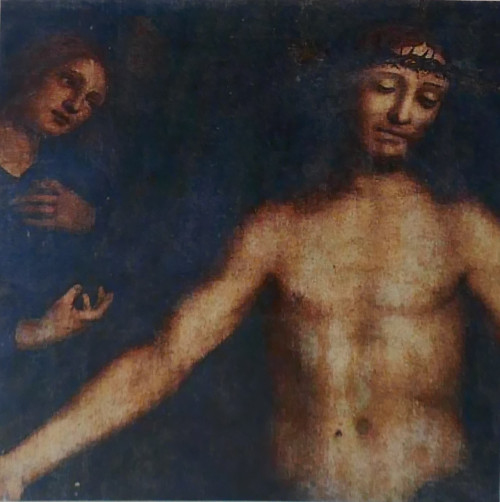
San Magno Altarpiece
In the San Magno Altarpiece, the inclined angel shows clear affinities with the Figure: inclination of the head, softness of the modelling, structure of the eyes, and shape of the chin. This comparison does not prove a direct link, but places The Painting within the same way of representing faces, characteristic of the Milanese milieu influenced by Leonardo.
Plautilla Nelli’s Last Supper
The comparison with John in Plautilla Nelli’s Last Supper remains more indirect. This later work, dated 1568, mainly shows the prolonged diffusion of certain Leonardesque types beyond the initial Milanese circle.

Conclusion
The iconography of The Painting belongs to a network of comparisons centred on the drawing of the Head of Christ in Venice and on Giampietrino’s versions. Other works from the Leonardesque milieu show that this expressive type circulated in various forms. The Painting is close to this group, while differing from it through the presence of the Figure and through certain specific features of its own.