The Deltoid: Pictorial Construction and Leonardo’s Anatomical Research
From the Venice Drawing to Leonardo’s Anatomical Research
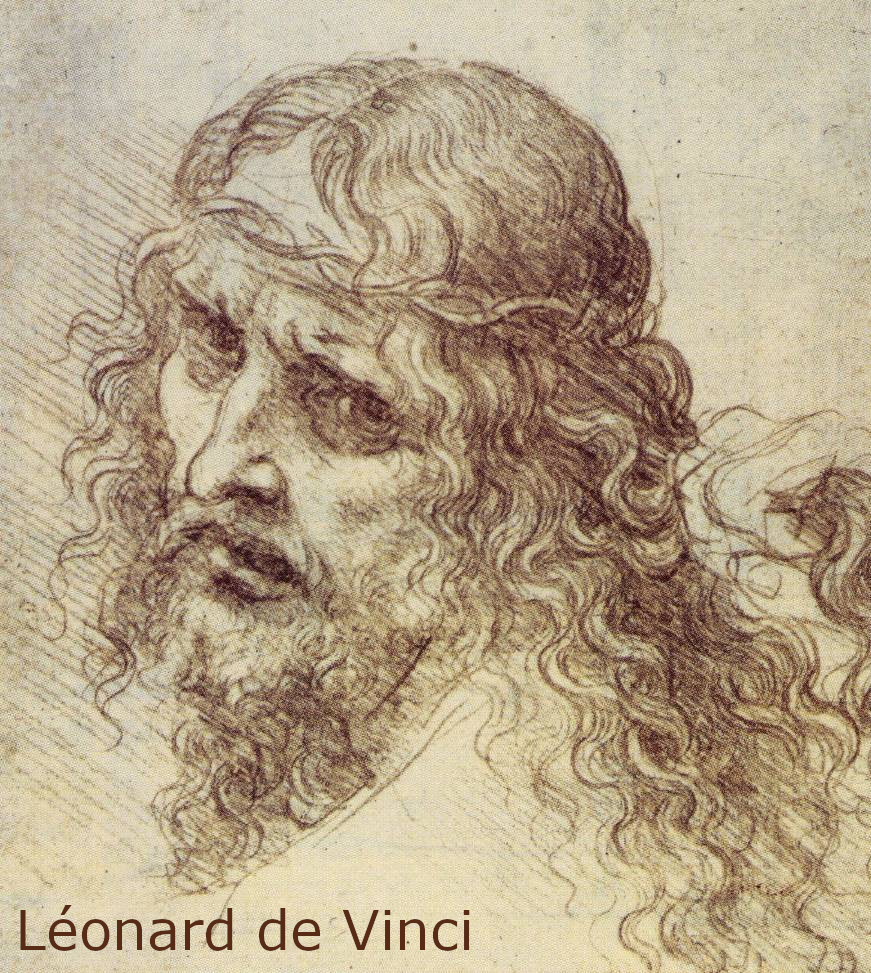
Leonardo’s drawing of Christ Carrying the Cross, preserved in Venice, is recognised as the source of the model adopted in the paintings of Christ Carrying the Cross attributed to Giampietrino. The versions in London, Budapest and Turin feature a composition almost identical to that of the Painting, despite differences in execution. This relationship makes the anatomical comparison particularly relevant.
In the Almanacco Italiano of 1979 (p. 242), Carlo Pedretti connects the painted versions with Leonardo’s studies for Christ Carrying the Cross. He identifies Lombard characteristics that recall Giampietrino, as well as Solario and Luini. These works adopt an arrangement that he traces back to Leonardo: Christ presents his shoulder to the viewer and turns his head towards them.
This posture brings the shoulder into the foreground and emphasises the muscles of the back, shoulder and neck, while intensifying the figure’s expression. In the Painting, the volume of the deltoid thus plays an important role in the composition.
Pedretti observes that the muscles depicted in this way prefigurano gli stessi studi anatomici di Leonardo del 1510
— “foreshadow Leonardo’s own anatomical studies of 1510”. This connection between composition and anatomy informs the examination of the deltoid in the Painting, where the shoulder occupies the foreground.Source: Carlo Pedretti, Giorgione e il Cristo Portacroce di Leonardo, Almanacco Italiano, 1979, pp. 236–242, especially p. 242.
The Muscles Revealed by X-Ray Imaging
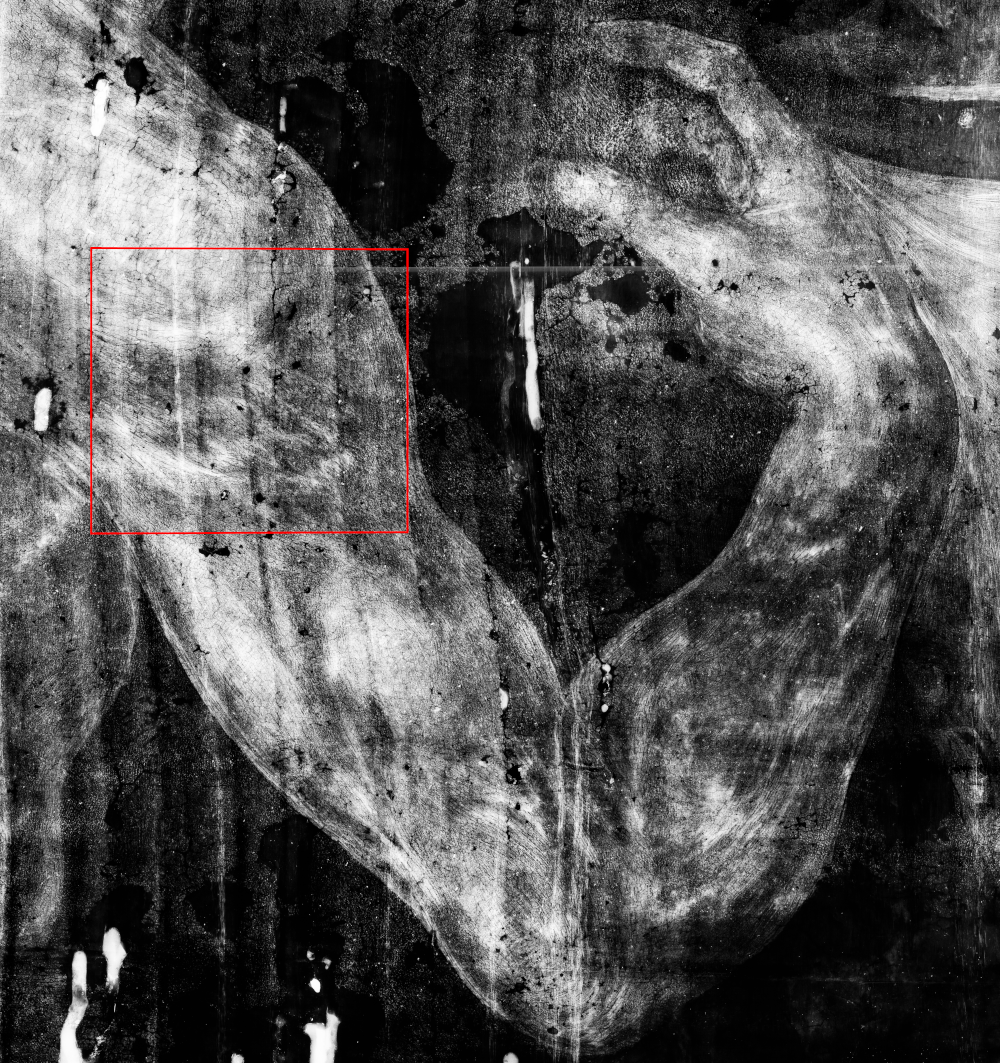
The X-ray image of Christ Carrying the Cross brings out the contours of the shoulder and arm muscles. It allows us to trace the deltoid, which gives the shoulder its rounded shape, and then the volumes of the arm down to the elbow and forearm.
The clarity with which the muscles can be seen had already been noted in the 1960s. Following the X-ray examination that revealed the figure, the owner of the Painting wrote:
“In the X-ray image, the muscles of the arm and back are painted and can be distinguished by a radiologist.”
Note by the owner of the Painting, 1960s.
The brushstrokes also become more visible: their directions and curves show how the painter gave volume to the muscles.
The Deltoid: An Anatomical Assessment
After examining the documents provided, a surgeon specialising in anatomy made the following observation:
“The deltoid, as depicted in the painting, forms the rounded contour of the upper arm and extends over half its length, which corresponds to anatomical reality.”
Extract from a personal communication dated 19 September 2026.
Brushstrokes and the Shape of the Shoulder
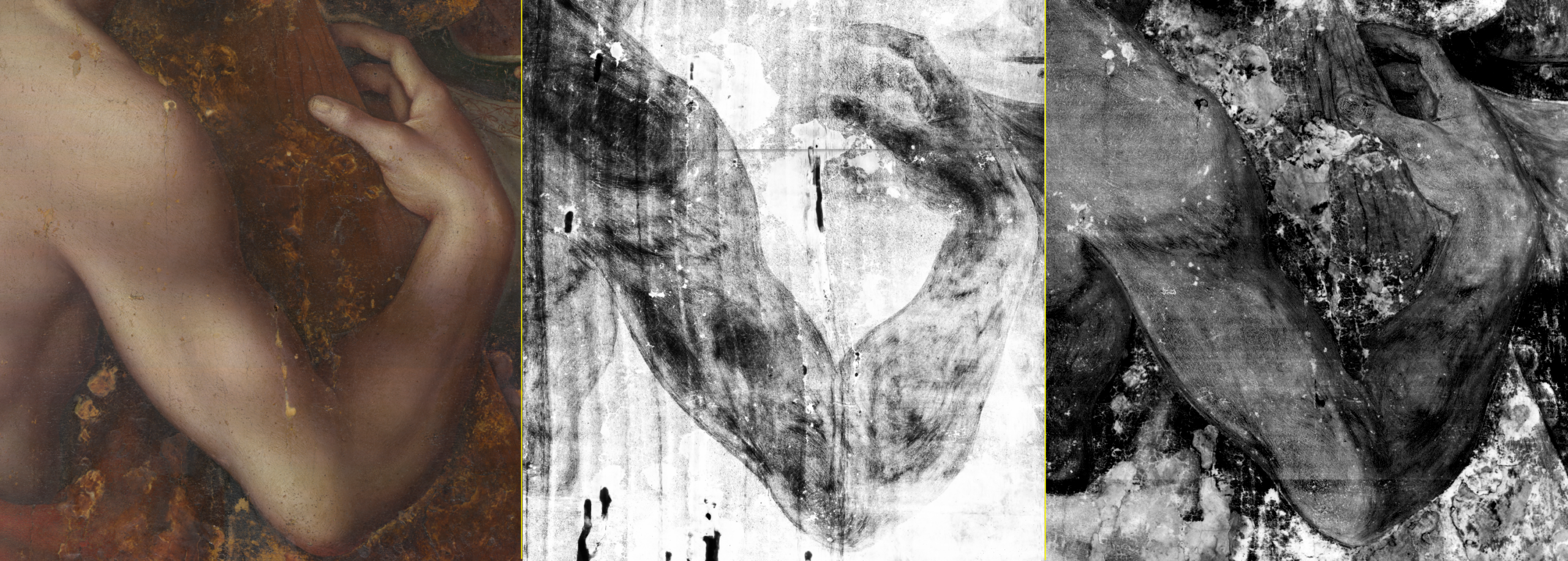
A brushstroke is the mark of paint left by a movement of the brush. Comparing visible-light photography, the inverted X-ray image and LAM imaging shows how these marks give the muscles volume, without necessarily following the direction of the muscle fibres.
The X-ray image is shown here with its tonal values inverted: light areas become dark, and vice versa. This display mode makes certain details easier to interpret and compare with the painting, without altering the shapes or adding information to the original image.
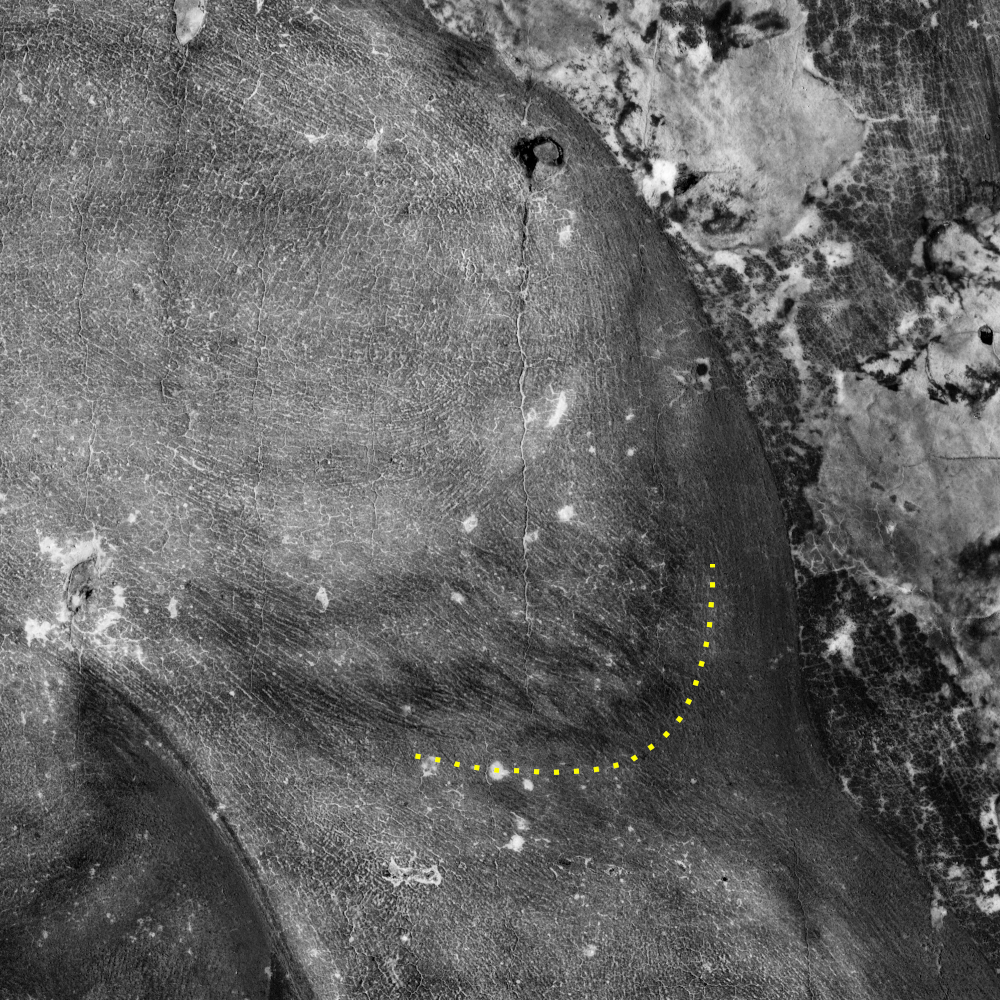
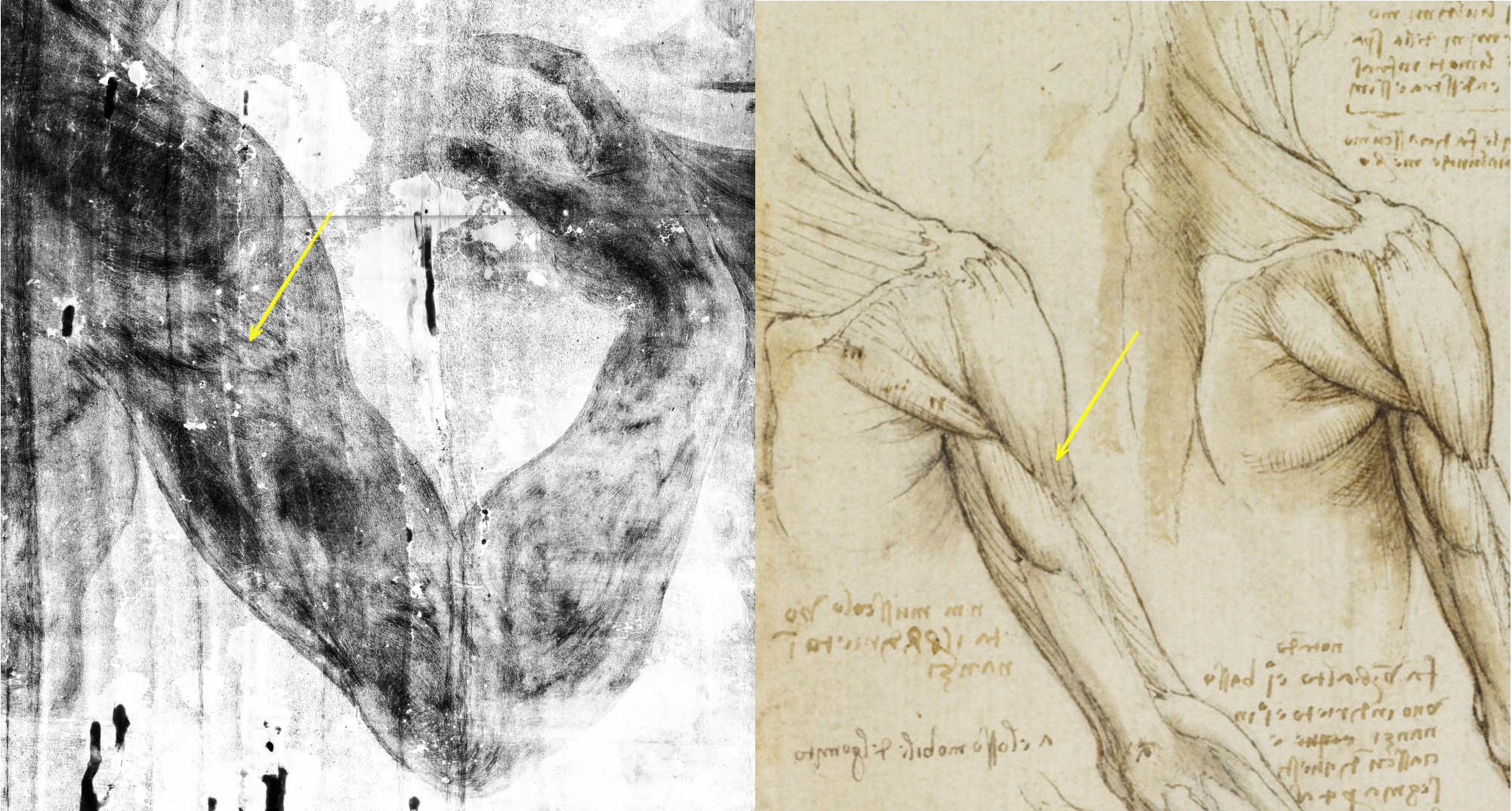
The LAM 518 detail brings out more clearly the transition between the volume of the shoulder and that of the arm. The yellow dotted line highlights part of the apparent contour. This shape can be compared with Leonardo’s anatomical drawing, without equating it with the muscle’s attachment to the bone.
The Shoulder Compared with a Drawing by Leonardo
Pedretti relates the muscles of the back, shoulder and neck depicted in the paintings of Christ Carrying the Cross to Leonardo’s anatomical studies of 1510. The sheets RCIN 919005V and 919008V (Royal Collection Trust) illustrate this research: they show the deltoid, its attachment to the upper arm bone and the neighbouring muscles.
The comparison presented here between sheet RCIN 919005 and the shoulder in the Painting allows us to examine the shape of the deltoid and the way it narrows towards the arm. The positions differ: Leonardo draws the exposed muscles, while the painter conveys their contours beneath the skin. This specific comparison develops Pedretti’s broader observation.
From Anatomy to the Painter’s Brushwork
X-ray and LAM imaging help us understand how the brushstrokes give volume to the shoulder. The comparison with Leonardo’s drawing focuses on the shape of the deltoid and its relationship with the arm.
In his study of anatomy and painting in Leonardo’s work, Dominique Le Nen emphasises the connection between knowledge of the muscles and the depiction of movement. This knowledge can be expressed through the accuracy of a posture or gesture, even when the muscles remain subtle beneath the skin. This approach encourages us to consider the shoulder in the Painting in relation to the position of the arm.
This interpretation complements the connection suggested by Pedretti between depictions of Christ Carrying the Cross and Leonardo’s anatomical research. It contributes to the study of the Painting, without being sufficient to establish its authorship. Nor does the reference to the studies of 1510, on its own, allow the painting to be dated.
Reference: Dominique Le Nen, “Le mouvement chez Léonard de Vinci. De l’anatomie à la peinture”, e-mémoires de l’Académie Nationale de Chirurgie, 2008, 7 (1), pp. 13–20, especially pp. 18–19.