Verso of the Panel: Seal, Inscriptions and Traces
The reverse of the panel preserves several material clues: a wax seal, a label, handwritten inscriptions and traces of former sealing systems. Together, they document the successive handling, movements and uses of the work.
The verso confirms the use of a single poplar panel, reinforced by two added crossbars. The surface shows old wear, with abraded areas, insect galleries and alterations linked to conservation conditions and past interventions.
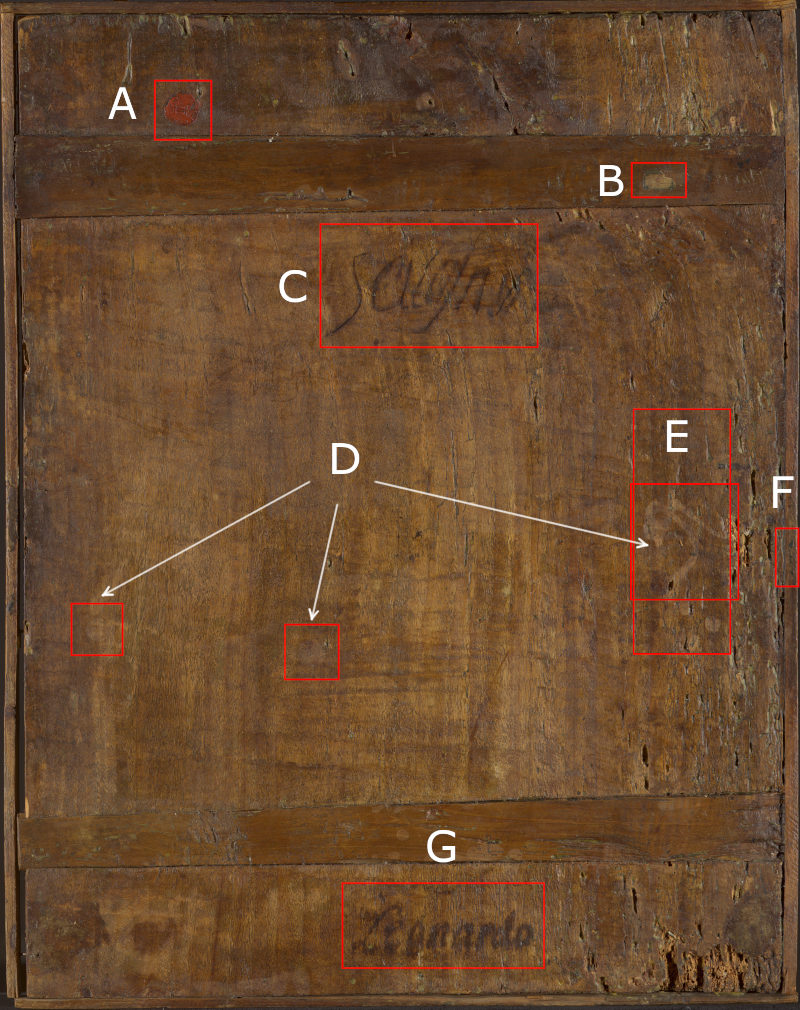
The verso of the panel
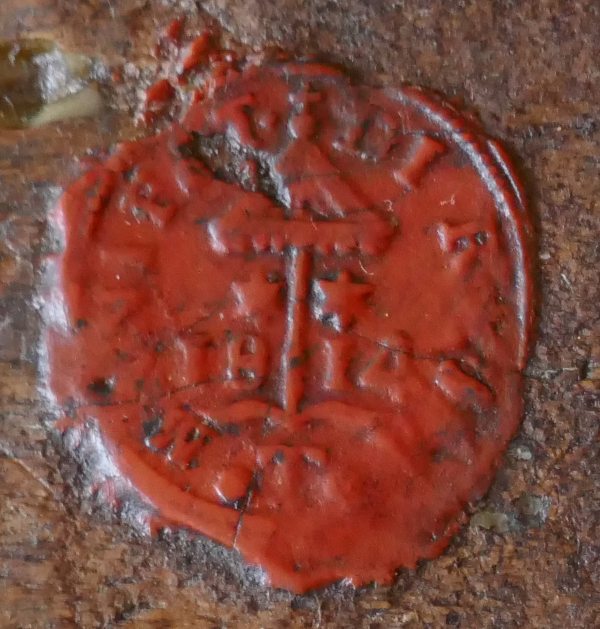
Red Wax Seal (A)
Its detailed analysis, typology and comparison with other related works are developed on a dedicated page: “The Red Wax Seal”.
It constitutes an indicator of circulation and provenance, particularly in a Roman context of the early nineteenth century.
Old Label (B)
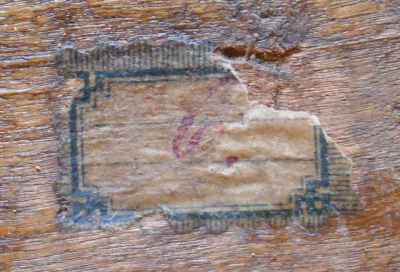
Printed identification label, bearing the number 6 in red, probably gummed. It belongs to a type of inventory label used on the back of paintings for material identification; comparable examples are noted in several museum records.
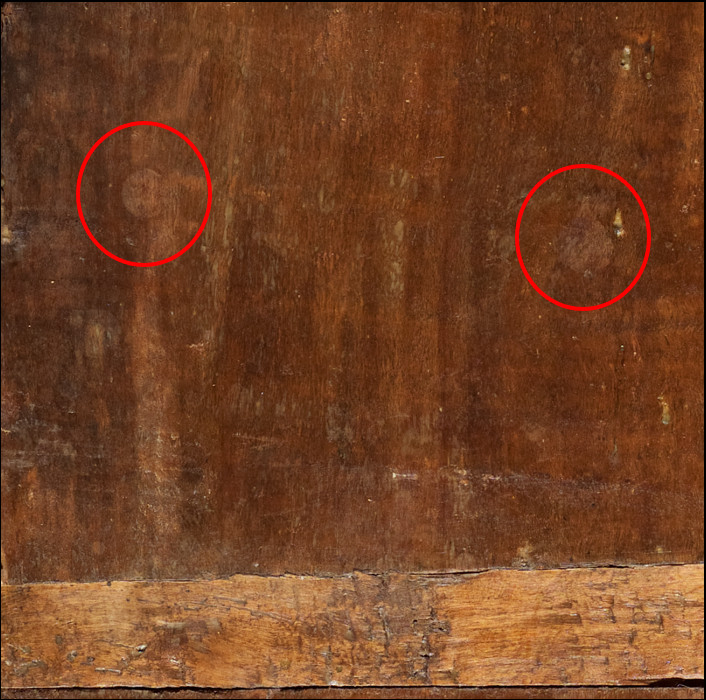
Traces of Former Seals and Ribbon (D and E)
Several circular impressions indicate the presence of former seals now lost, together with a longitudinal trace interpreted as that of an old ribbon or tie. These elements suggest a sealing or closure system, compatible with practices of transport, authentication or protection.
Handwritten Inscriptions (C and G)
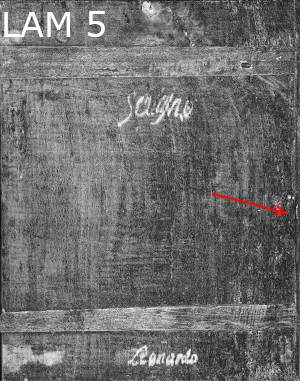
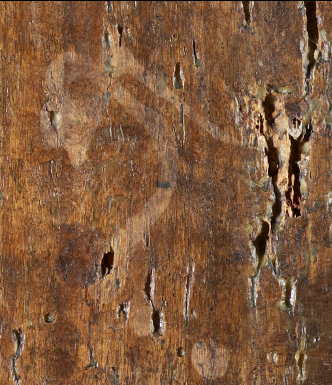
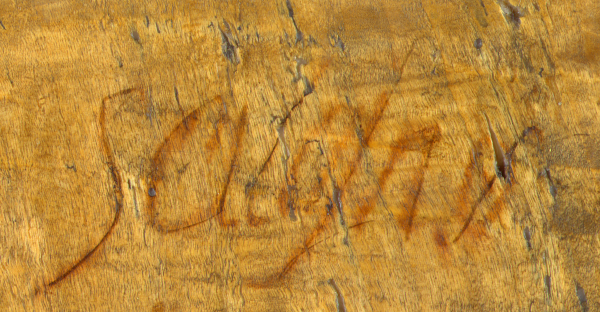
The reverse bears several ink inscriptions, some of which can be read as “Salaj/?”, “Salajno” and “Leonardo”, together with other fragmentary marks.
One can distinguish, in particular, a “Salaj /? …” inscription carved into the wood, located beneath the “Salajno” writing: unlike “Leonardo” and “Salajno”, which are later additions, this carved inscription cannot be dated and may be earlier.
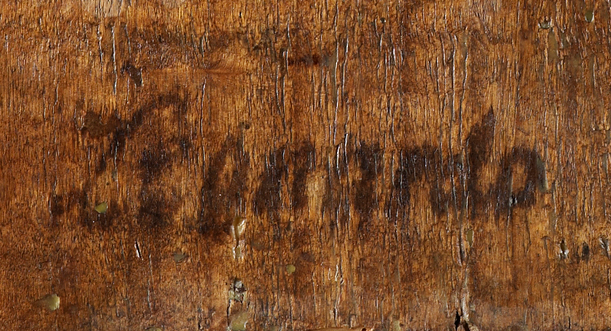
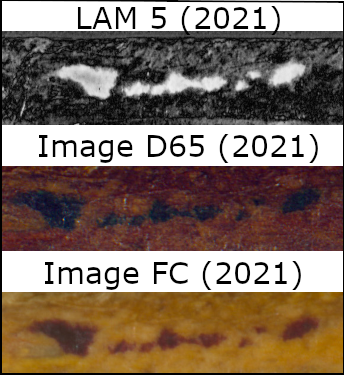
Inscription on the Right Lateral Batten (F)
On the only preserved frame batten, to the right of the panel when seen from the verso, there is a black handwritten inscription, approximately 22 mm long and 3 mm high, visible mainly in LAM imaging.