Pentimenti: Corrections Visible in IR and X-ray
A pentimento is a correction made by the artist during execution, either in the drawing transferred onto the panel or in the paint layer itself. In The Painting, several pentimenti have been identified in Christ’s head and hand, together with a colour-related pentimento revealed by X-ray.
The density, location and nature of the pentimenti documented by IR, LAM and X-ray imaging point to an active execution process, rather than to a merely mechanical reproduction.
Identified Pentimenti
- Parting of the hair
- Thorns of the crown and boundary between hair and forehead
- Left eye
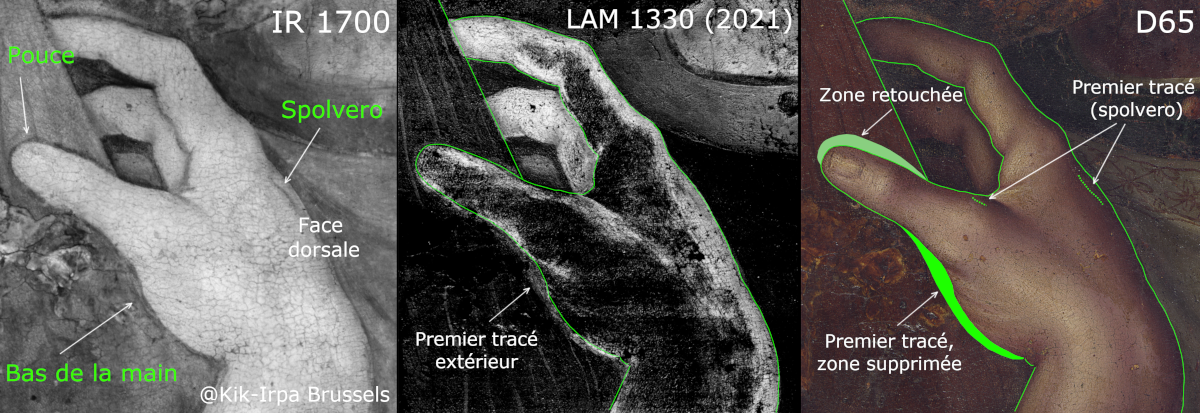
- Christ’s right hand
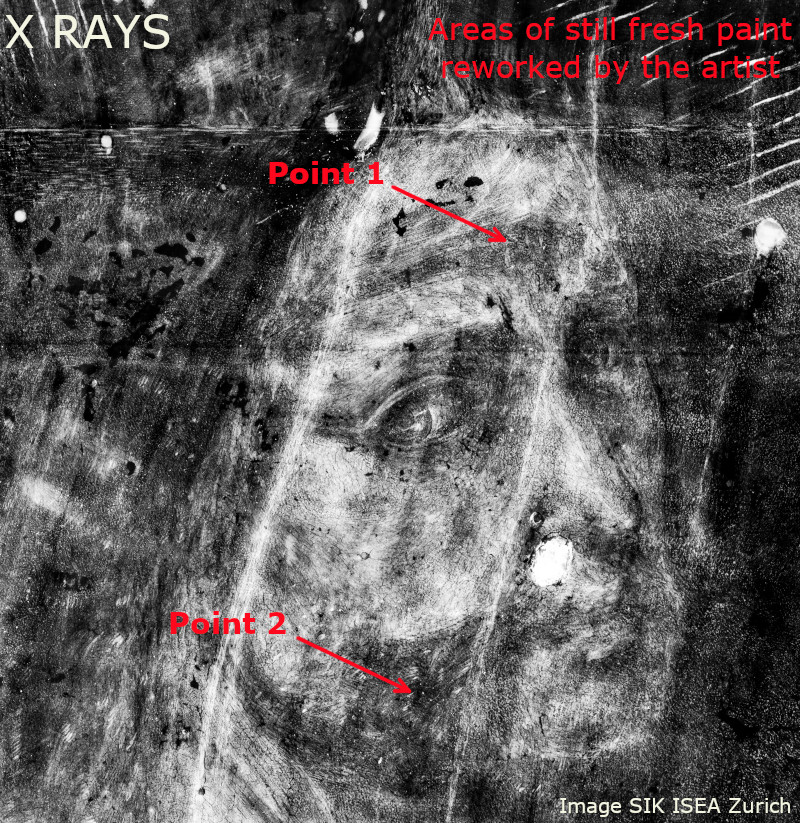
- Local removal of lead white — forehead, right cheek, chin
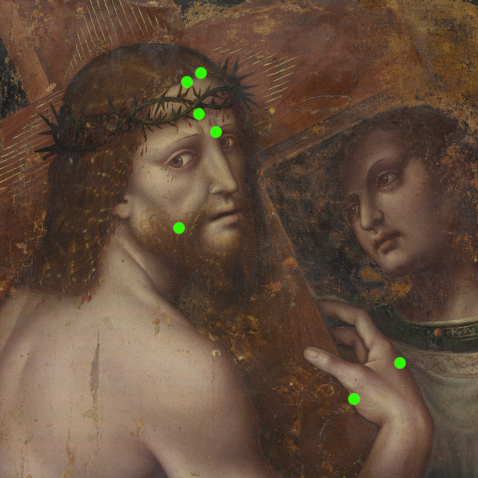
Parting of the Hair
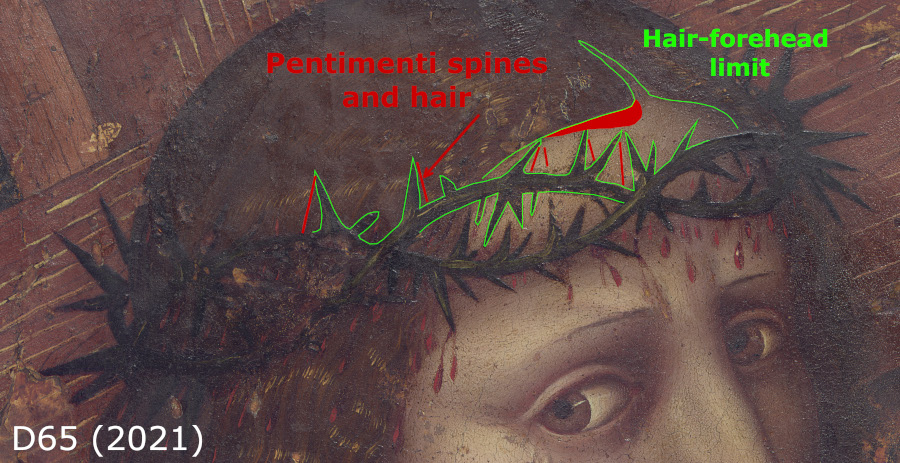
The boundary between the forehead and the hair, marked in green on the visible image, does not coincide exactly with the preparatory drawing observed in infrared. The enlargement reveals a small area of hair that was painted and then removed.
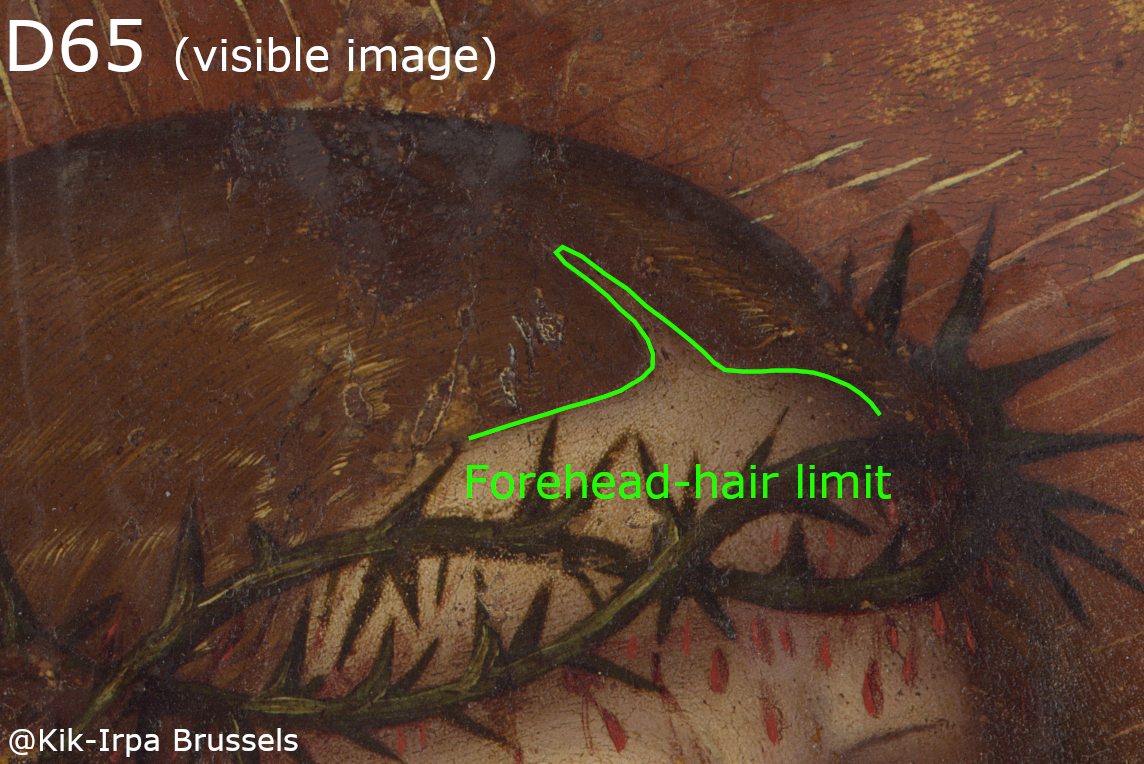
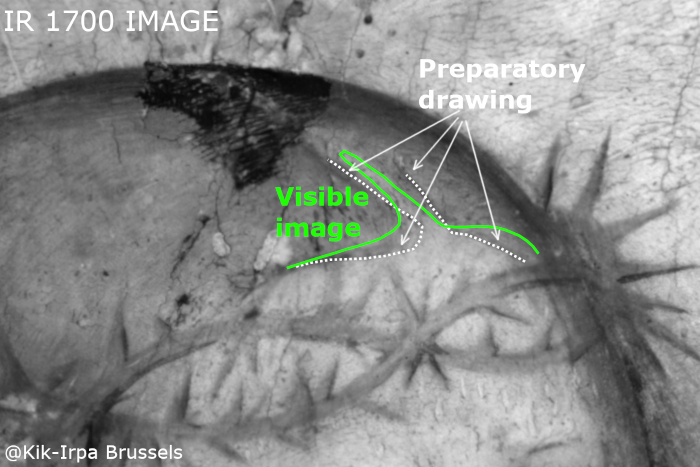
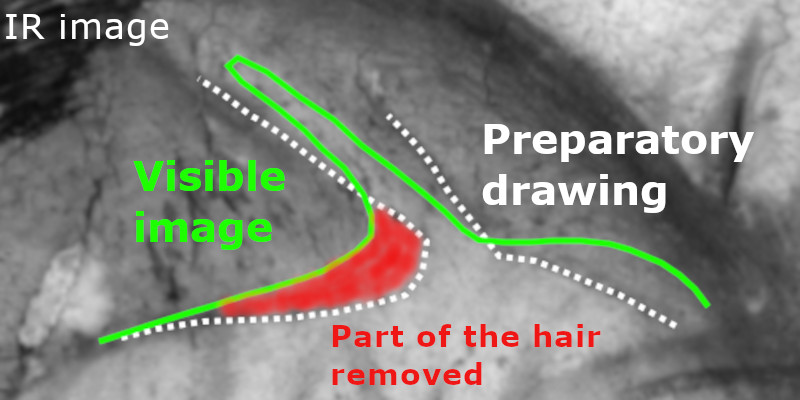
Pentimento: removed hair
Green: final outline; white dotted line: preparatory drawing; red: removed area.
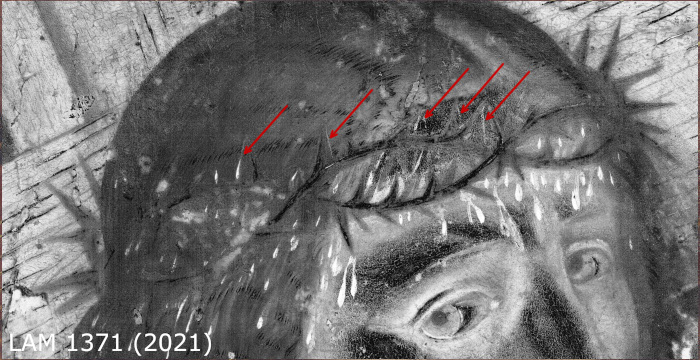
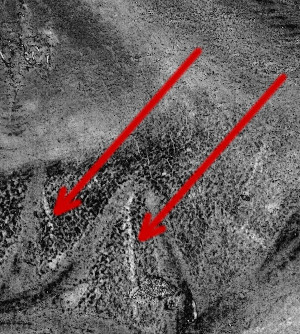
Crown of Thorns and Hair
Light lines, indicated by the red arrows, suggest a first outline for some of the thorns. When transferred onto the synthesis image on the right, these indications differ from the final drawing and connect with the correction of the boundary between hair and forehead, in a more symmetrical arrangement around the central parting.
The Left Eye
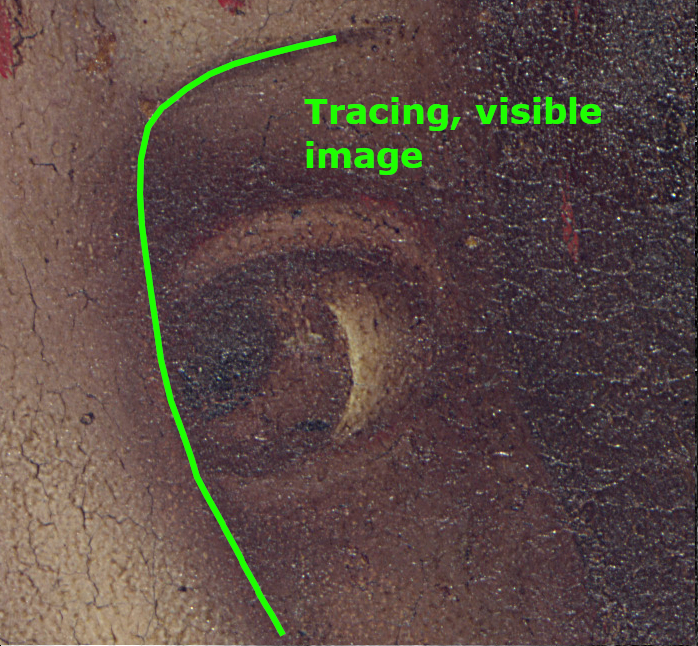
At the level of the left eye, the final outline and the preparatory drawing observed in infrared do not fully overlap, particularly along the upper part of the nose and the brow ridge.
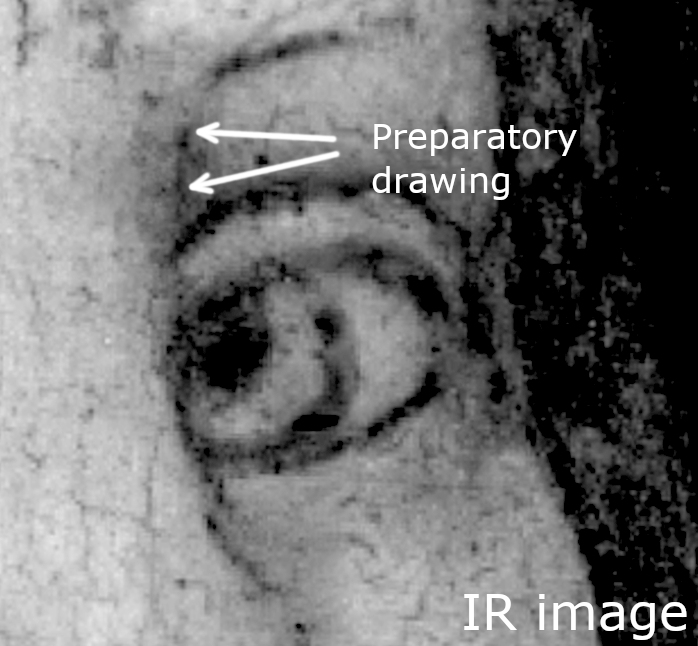
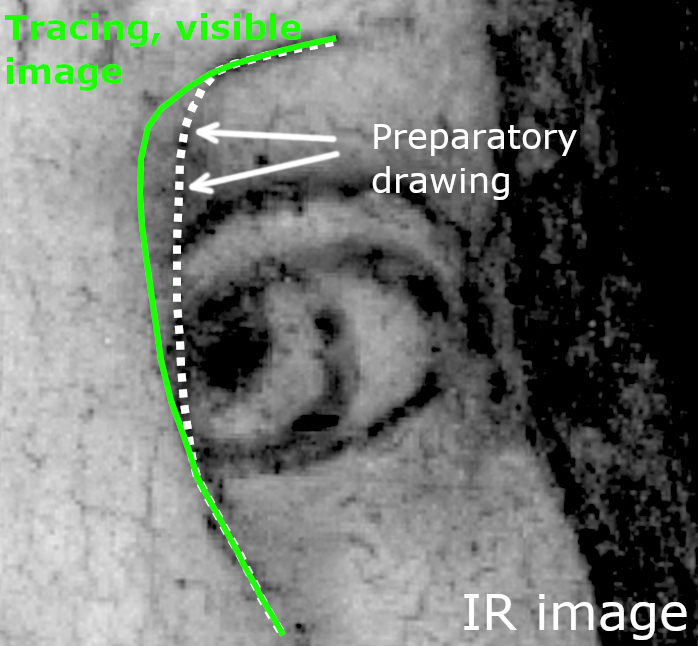
The Right Hand
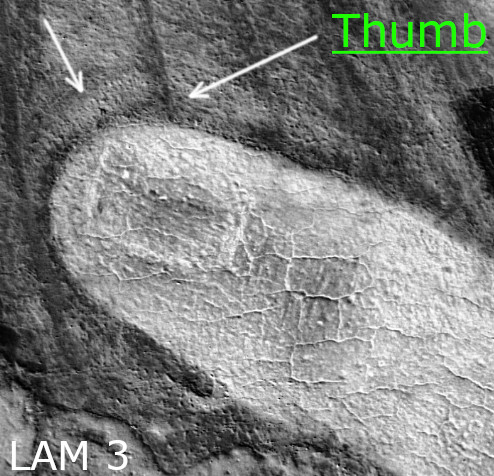
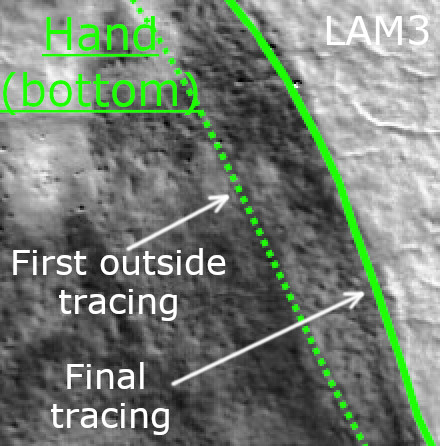
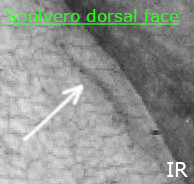
Several corrections appear in the execution of the hand: retouching of the thumb, an initial outline of the lower edge placed further outwards, and spolvero dots on the back of the hand. Together, these elements document a modification of the initial tracing.
Pentimento by Removal of Lead White
X-ray imaging reveals an intervention on fresh paint: removal of lead white to accentuate the contrast near the crown of thorns and the beard, according to observations reported by Seracini.
Conclusion
Taken together, the observed pentimenti — corrected tracings, adjustments to the hair, modifications to the hand and local removal of lead white — document an active execution process, with successive reworkings during the painting stage. These indications reinforce the idea of an elaborate pictorial process, distinct from a strictly mechanical copy.