Sfumato: Definition, Reference Points and Application to The Painting
Sfumato refers to a visual effect based on very gradual transitions between shadow and light, without sharp contours. Derived from the word fumo — smoke — it suggests a “veiled” perception. It is not a single technique, but an optical result that may be achieved through different pictorial means.
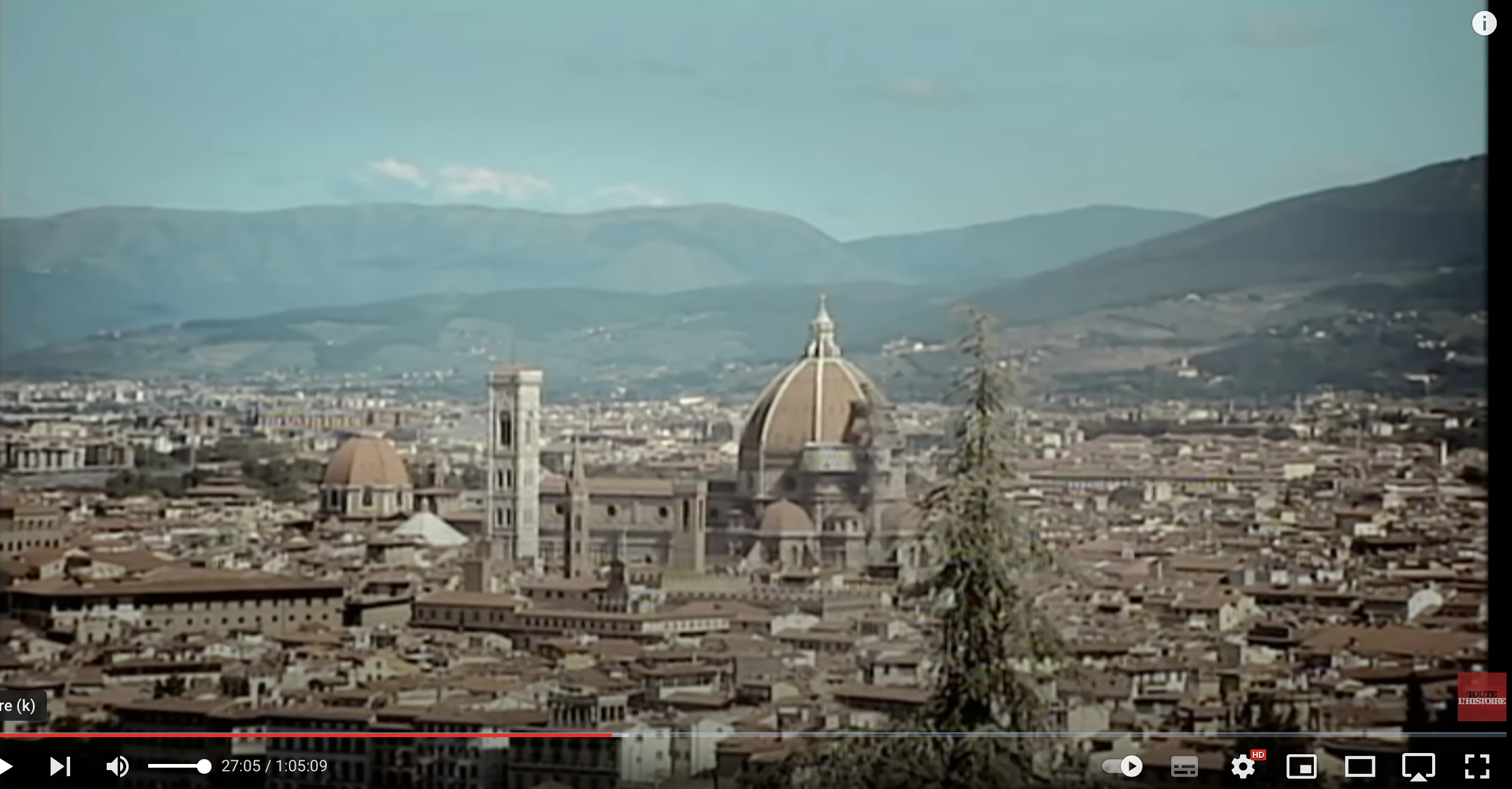
Misty landscape, Florence
Leonardo da Vinci: Before and After 1500
Before 1500, Leonardo achieved sfumato mainly through direct modulation of the paint, using dark pigments. Contours often remain perceptible, especially in the hair and flesh tones.
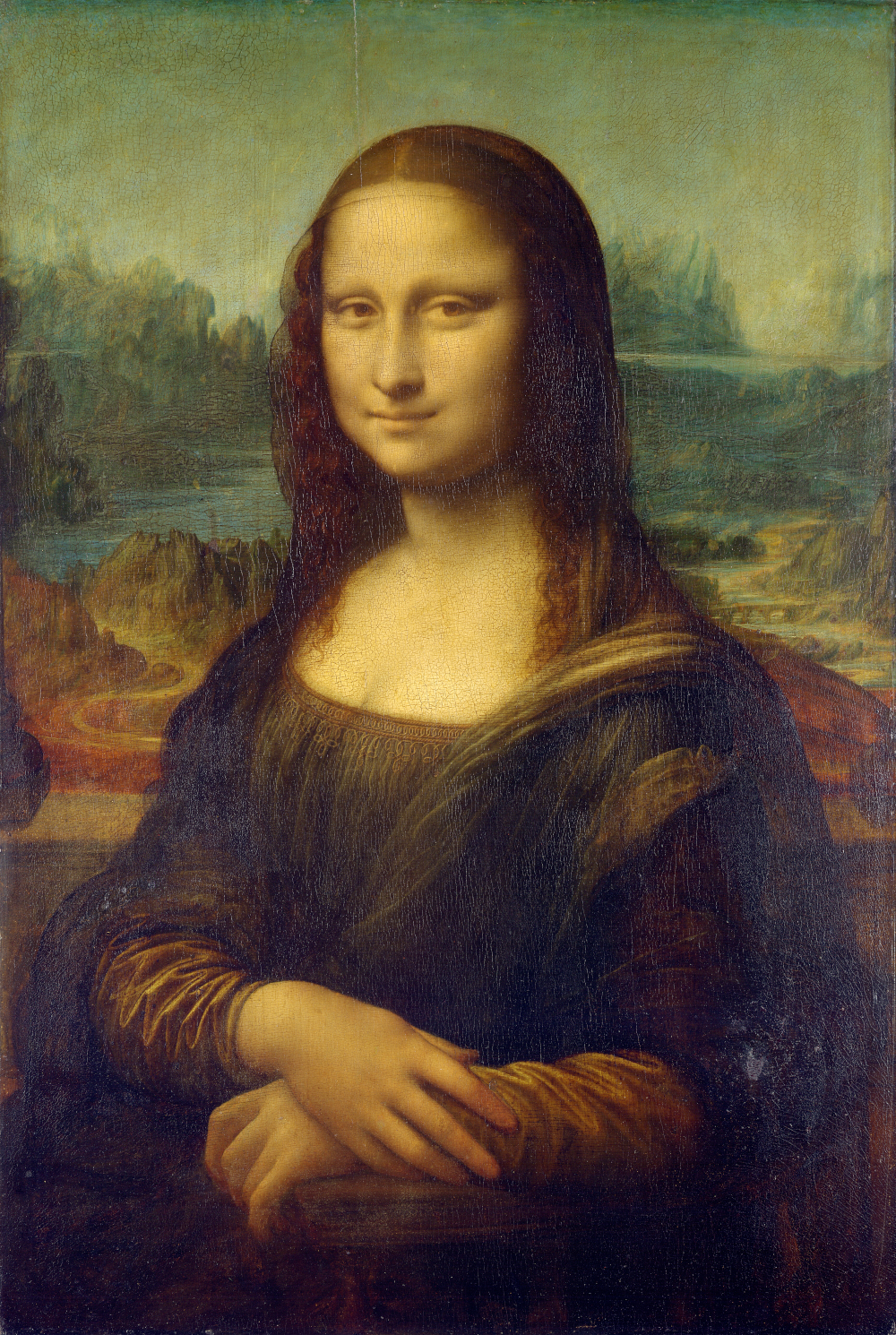
After 1500, the effect could be developed further through the superimposition of very thin layers, softening the transitions even more. Mona Lisa offers the most accomplished example.
A distinction must be made between sfumato as a visual effect — an almost imperceptible transition between shadow and light — and sfumato by glazing, which refers to a specific technical process. This distinction is essential for the examination of works produced before 1500.
Sfumato in The Painting
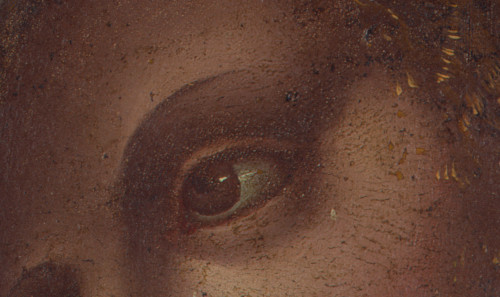
Close examination reveals a localised sfumato, used in the construction of shadows, particularly on Christ’s abdomen and arm, as well as in the left eye of the right-hand figure. The transitions between shadow and light are gradual, without a sharp break.
No glaze comparable to those of Mona Lisa has been formally identified. The present condition of the surface, after partial or total varnish removal, does not however exclude the possibility that translucent layers once existed before being altered or lost.
Technical Reading and Interpretative Scope
The modelling of the shadows appears to have been achieved through paint worked within the body of the layer, compatible with late fifteenth-century practice, without necessarily requiring the systematic use of very fine glazes. This observation provides a technical reference point consistent with careful execution and precise control of transitions.
Bibliographical references
- Vincent Delieuvin, Peindre la lumière à la Renaissance
- Philippe Walter, CNRS work on sfumato
- Internal technical study, The Painting (2024)