Presentation of the Venice Drawing and ritratto di spalla
The Venice Drawing, attributed to Leonardo da Vinci and preserved in the Gallerie dell’Accademia, Venice (no. 231), represents the head of Christ in three-quarter view, turned backwards, while a hand visible on the left seizes his hair. The crown of thorns clearly identifies the subject as an episode from the Passion.
Generally dated around 1490–1495, the sheet may have been conceived either as an autonomous drawing or as the study for a painting now lost, possibly never carried beyond the project stage. It is, however, recognised as the source for Giampietrino’s Christs Carrying the Cross. See the Giampietrino page.
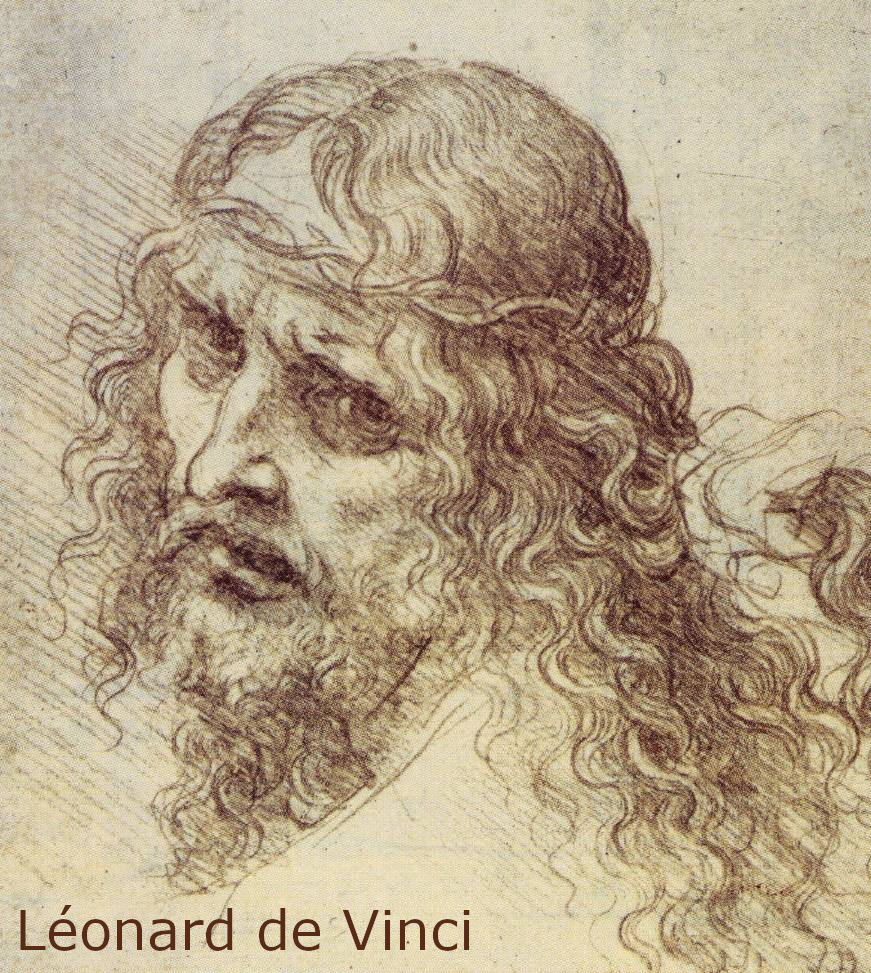
Presentation of the Drawing
Carlo Pedretti described this drawing as “problematic”, since it cannot be clearly linked to a documented project and remains unusual in Leonardo’s work by its subject. The pulling of the hair explains the rotation of the face and emphasises the muscles of the back, neck and arm.
The technique, generally described as metalpoint and often associated with silverpoint, requires a prepared support and allows very little room for correction. It produces a fine, incisive line, reinforcing the dramatic tension of the sheet.
The drawing has been preserved in Venice since its acquisition by the Accademia in 1822. It previously belonged to Giuseppe Bossi, who had already reproduced it in Del Cenacolo di Leonardo da Vinci in 1810.
The ritratto di spalla
The ritratto di spalla, or shoulder portrait, is one of the most important aspects of the Venice Drawing. This formula, developed by Leonardo at the end of the fifteenth century, combines a slightly turned body, a rotating head, a gaze directed towards the viewer and the impression of movement caught in the moment. The Treatise on Painting states the principle clearly: the head should not be shown straight on the shoulders, but turned, so as to appear alive.

From Study Drawing to The Painting
These three images highlight the persistence of two structural reference points — the neck fold and the curve of the back — from the Washington sheet to the Venice Drawing, and then to The Painting. Clearly visible in the two drawings by Leonardo, they reappear in The Painting in the same position and according to the same logic of construction. The comparison with The Painting is particularly clear here.
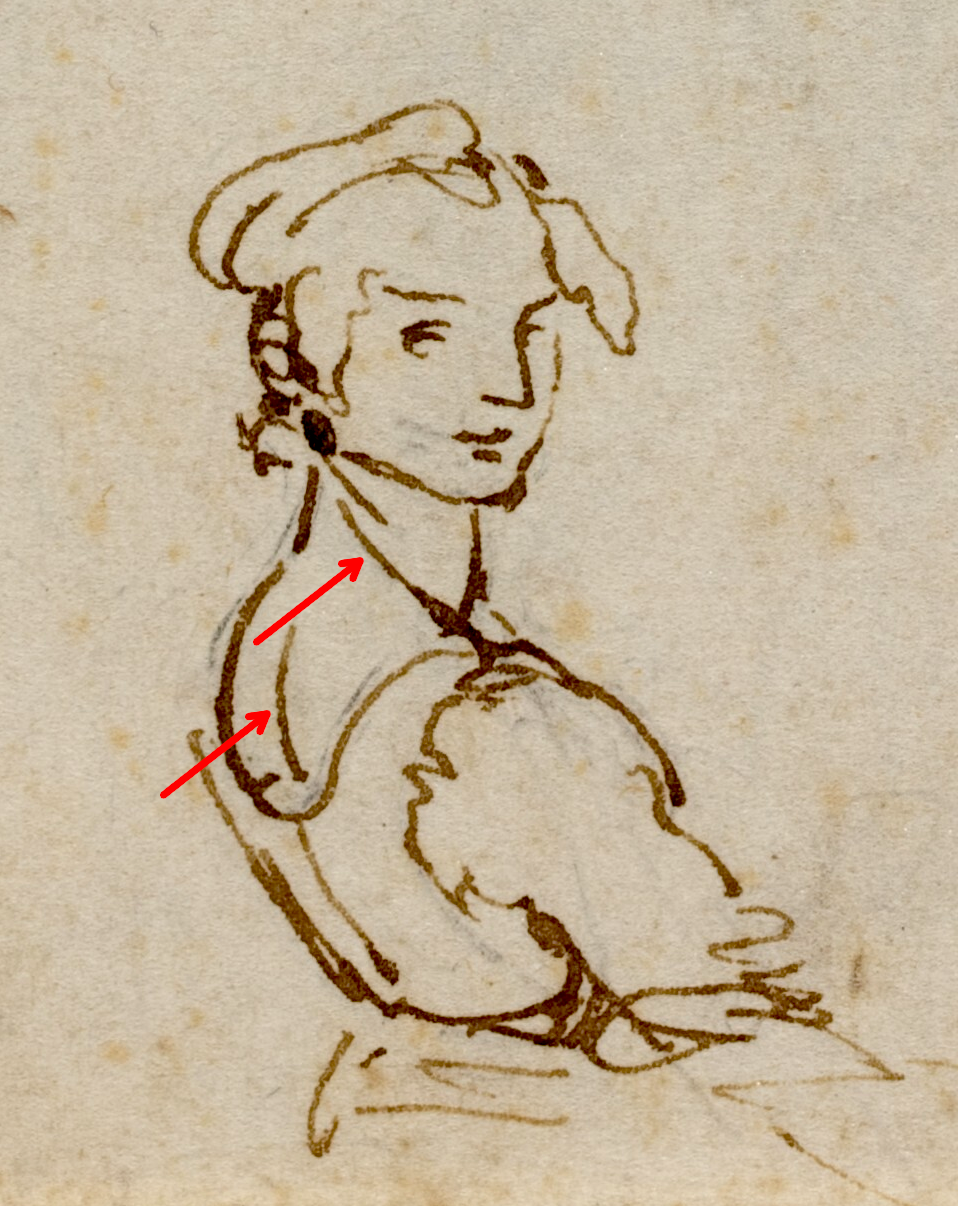
Study sheet, Washington (Leonardo)
Neck fold and curve of the back
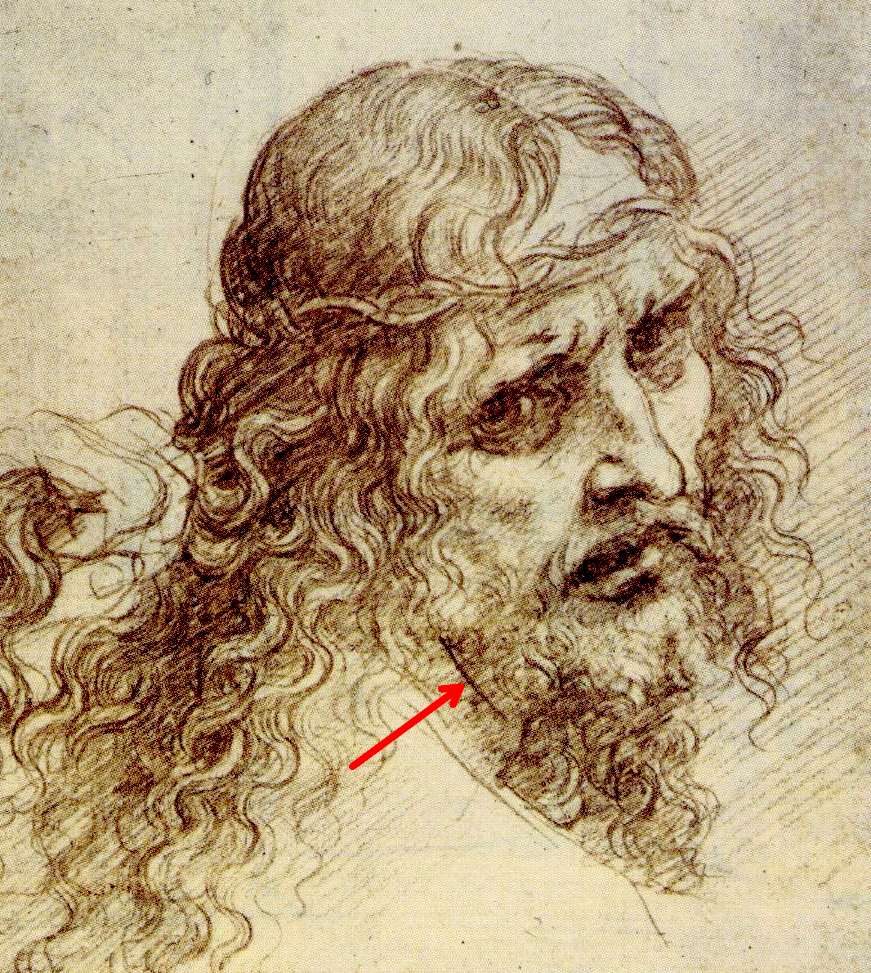
Reversed Head of Christ in Venice (Leonardo)
Strongly accentuated neck fold
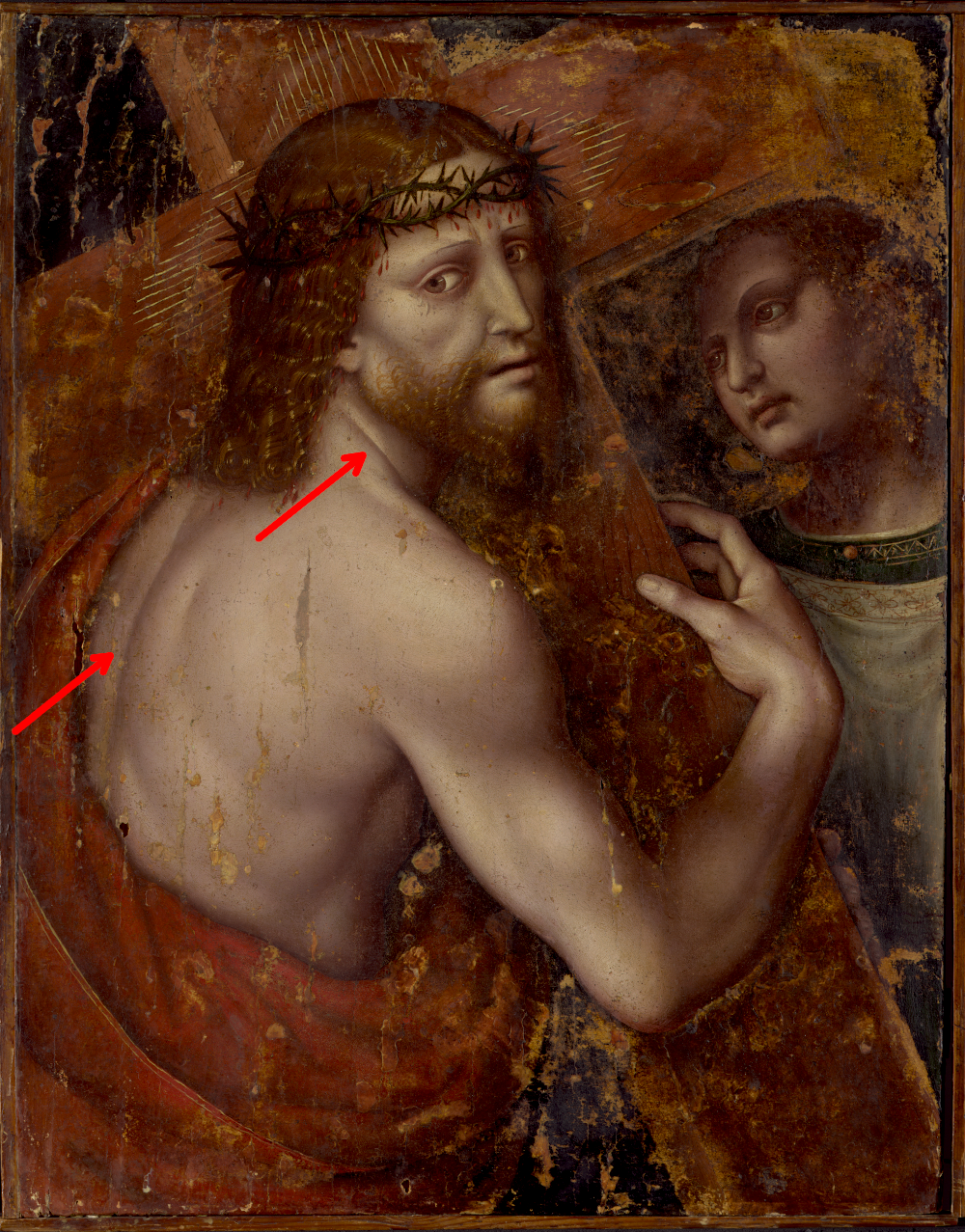
The Painting (enhanced image)
Neck fold and curve of the back
Dating, Origin and Character of the Model
The drawing is generally dated to 1490–1495, but Carmen Bambach and Carlo Pedretti have considered an execution as early as 1488, notably because of the use of metalpoint, which Leonardo later abandoned. Its engraved appearance has also been compared with German models, particularly Schongauer and Dürer, well known in northern Italy at the end of the fifteenth century.
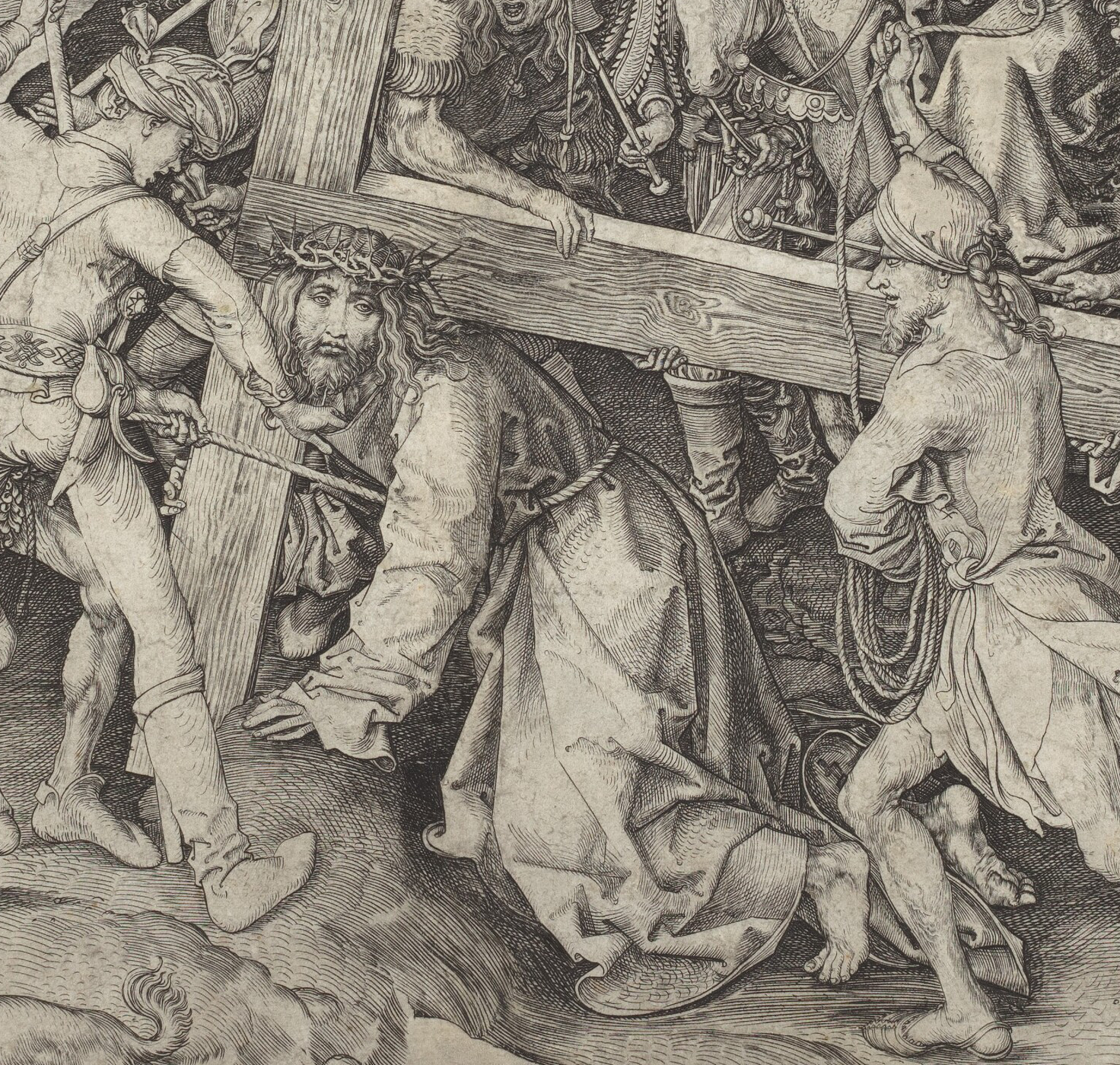
The Drawing, The Last Supper and Anatomy
The Venice Drawing has often been compared with studies related to The Last Supper, a connection traced on the Art Historians and the Drawing page, notably in Bossi, Pedretti and Marani.
Marani and Bambach nevertheless stress a decisive technical difference: the Venice Drawing is executed in metalpoint, whereas the known studies for The Last Supper are generally in black and red chalk.
By contrast, the sheet is very close to Leonardo’s anatomical research, particularly in the treatment of the muscles of the back, neck and shoulder. It thus belongs both to the world of the Passion and to an inquiry into the structure of the body in movement.
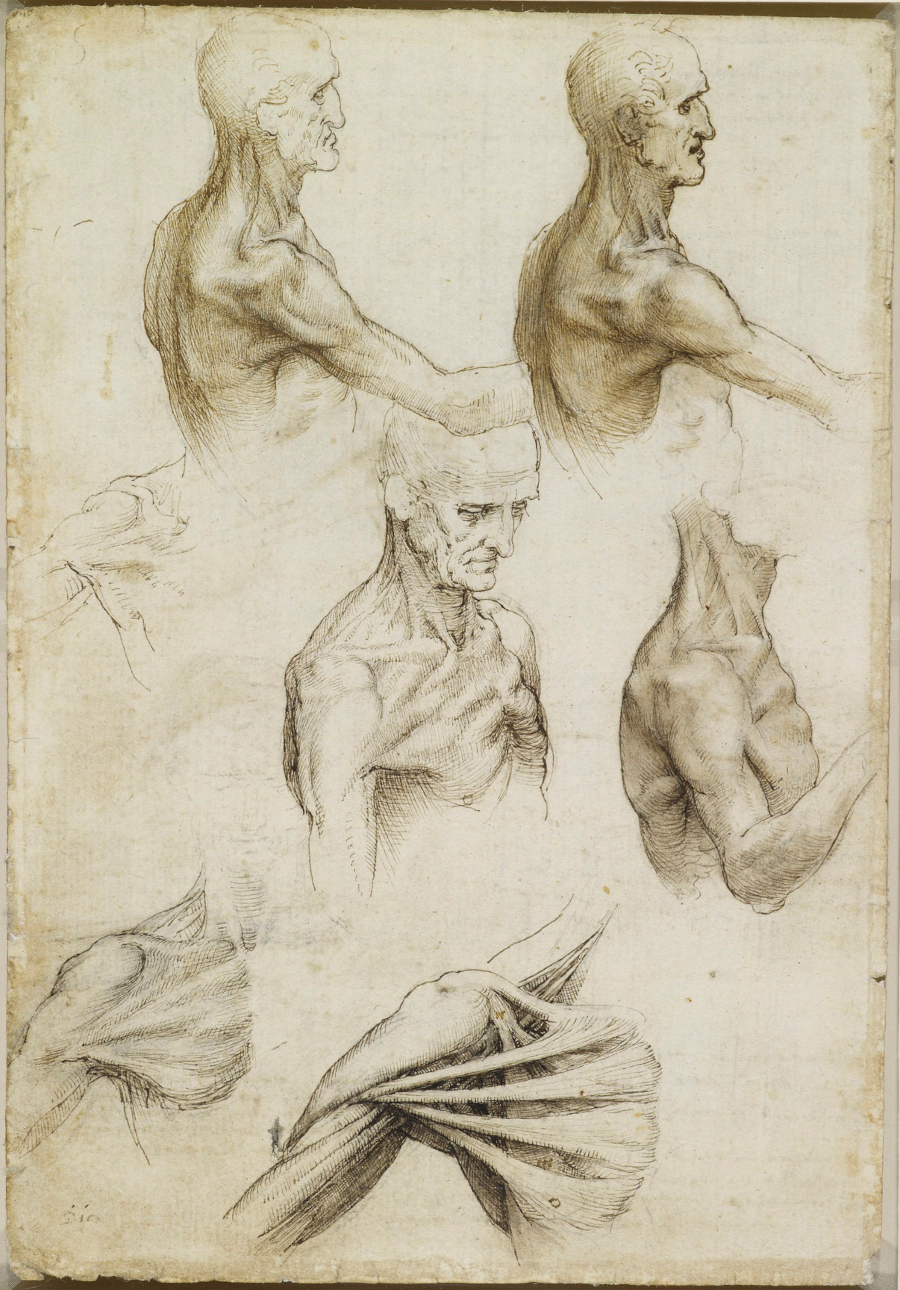
Synthesis
The Venice Drawing appears as a decisive sheet. Through its technique, expressive intensity, use of the ritratto di spalla and anatomical tensions, it goes beyond a simple isolated study. Although its precise connection with a lost painting or with The Last Supper remains uncertain, it remains a major reference model for understanding the diffusion of the Christ Carrying the Cross type in the Milanese milieu around Leonardo.