Christ’s Forearm: an Anatomical Difference between The Painting and Giampietrino
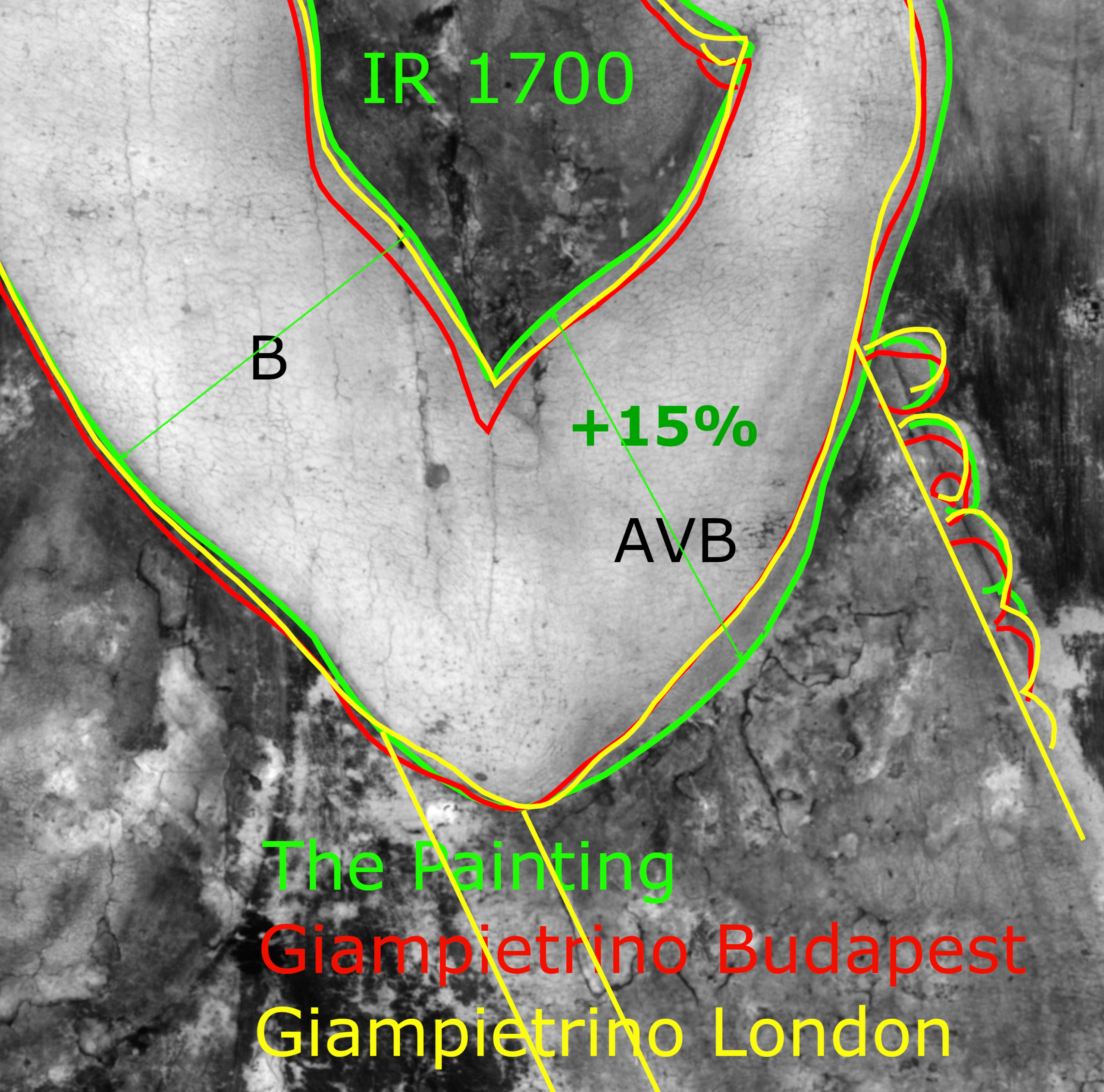
The forearm (AVB) contains the muscle groups that control the movements of the hand and fingers. Here, Christ’s hand grips the cross: this effort directly involves the muscles of the forearm.
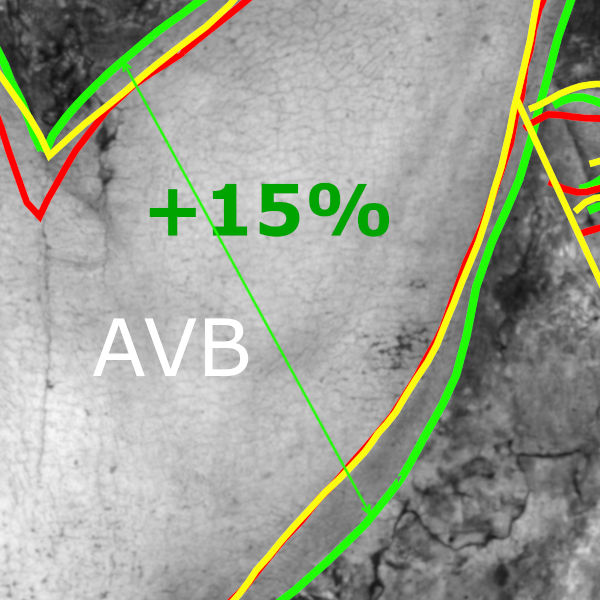
In the infrared images, a clear morphological difference can be observed between The Painting and the versions attributed to Giampietrino. In The Painting, the musculature appears more accentuated, with a difference of about 15% compared with the Giampietrino versions examined.
This difference, consistent with the gripping effort, constitutes a useful marker for discussing the exact relationship between the works.
An Observation by Leonardo da Vinci: Muscles Follow the Action
In the Treatise on Painting, Leonardo stresses a simple point: the form of the muscles must follow the action. When the hand closes and grips, the muscles of the forearm (AVB) “contract and swell” (art. 269). He also recommends making the limbs that bear effort more “muscular” (art. 289), and making visible first the muscles actually involved in the movement (art. 299; see notes 1 to 4 below).
Applied to The Painting, this principle makes the forearm a useful anatomical marker: the hand grips, and the forearm should therefore visually “respond” to that effort.
The Forearm: a Comparative Marker
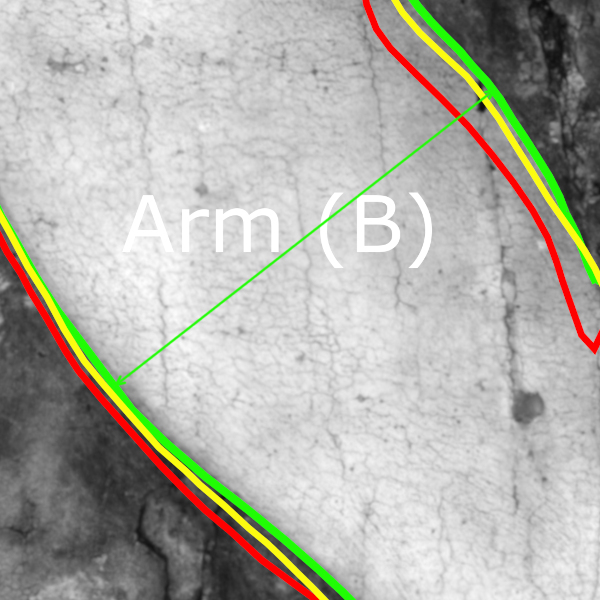
In The Painting, the IR image shows a coherent anatomical hierarchy: the forearm (AVB), directly involved in the grip, is visually the most “active” part, while the arm (B) remains more discreet.
By comparison, Giampietrino’s versions present a less accentuated forearm. This contrast is not sufficient in itself, but it forms one comparative indication among others.
Notes – Treatise on Painting, translated from French edition
(1) Treatise on Painting – Leonardo da Vinci, Éditions Jean de Bonnot, Paris, 2002.
(2) Article 269, on the joint between the hand and the arm: “The joint between the hand and the arm decreases in size when the hand closes and swells when it opens. […] When the hand closes, the muscles and ligaments contract and swell…”
(3) Article 289, on the composition of the limbs: “The limbs that bear fatigue should be made muscular, and those that do not labour should be without muscles, full of softness.”
(4) Article 299, on how muscles appear: “…show only the muscles involved in the movement in progress, the muscle most involved being more apparent than the one involved to a lesser degree.”