Cartoon and Spolvero: Evidence of Drawing Transfer
This page summarises the material evidence showing that a preparatory drawing was transferred onto The Painting by means of a cartoon/pouncing system, attested by spolvero dots visible in imaging (IR and cross-reading of IR/LAM images). The detailed mapping of the spolvero and of the differentiated transfer is presented on a separate page: Spolvero and Differentiated Transfer. The comparison with Giampietrino’s versions supports the hypothesis of a shared cartoon.
The cartoon presented here is not a surviving independent document: it reconstructs the tracings and main lines observable in The Painting.
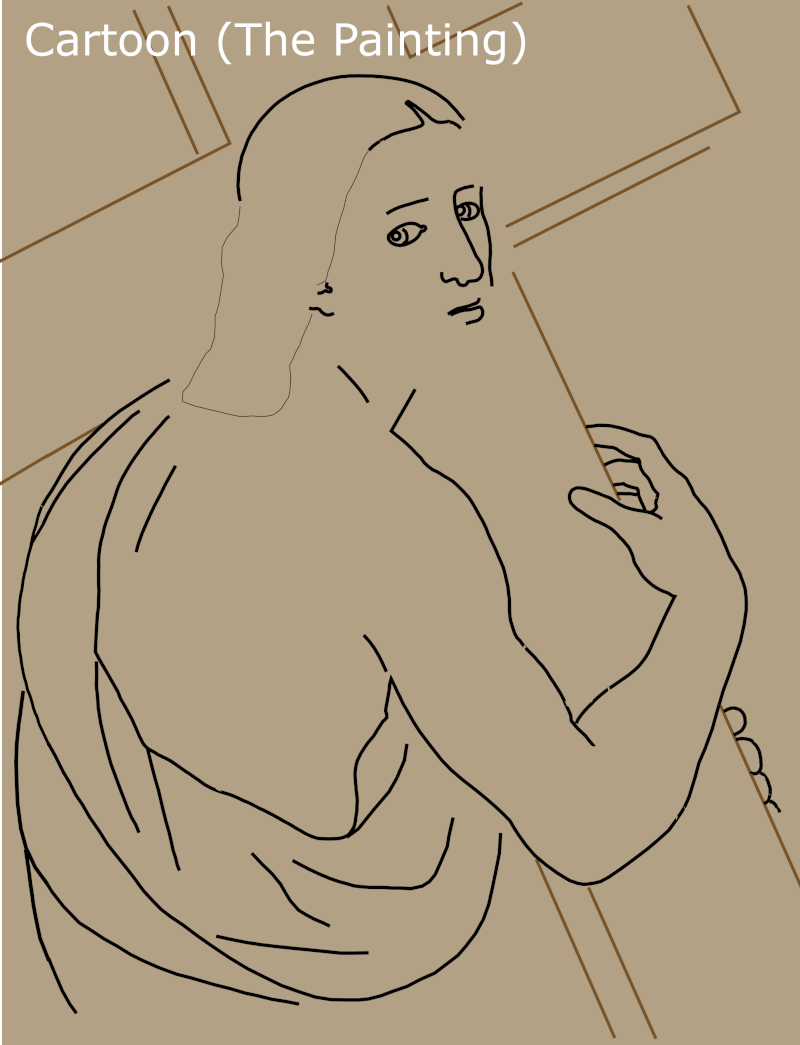
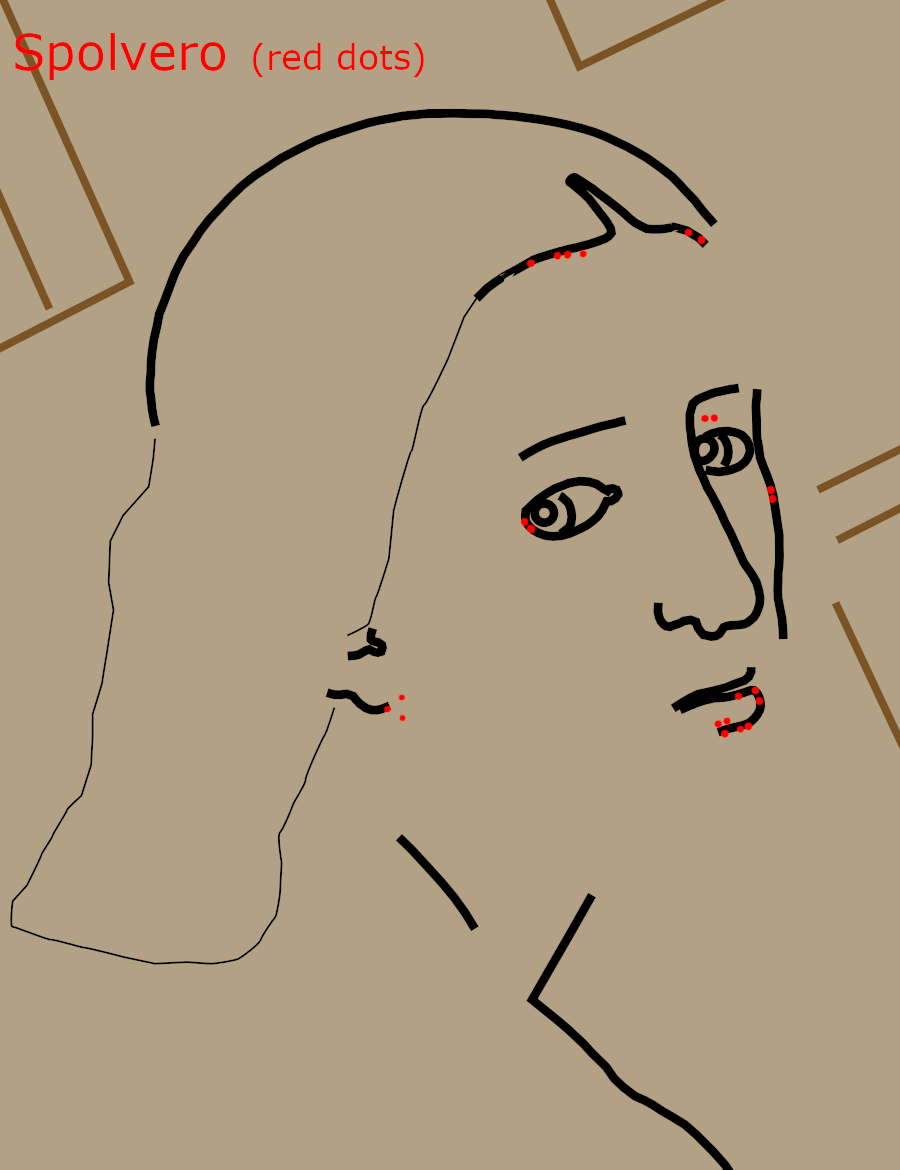
Cartoon, Pouncing Pattern, Spolvero
– Cartoon = the preparatory drawing used for transfer;
– Pouncing pattern = the perforated cartoon, or perforated transfer sheet derived from the cartoon;
– Spolvero = the operation, and often the trace, of dusting pigment through the perforations to create a dotted line.
Material Evidence of a Cartoon
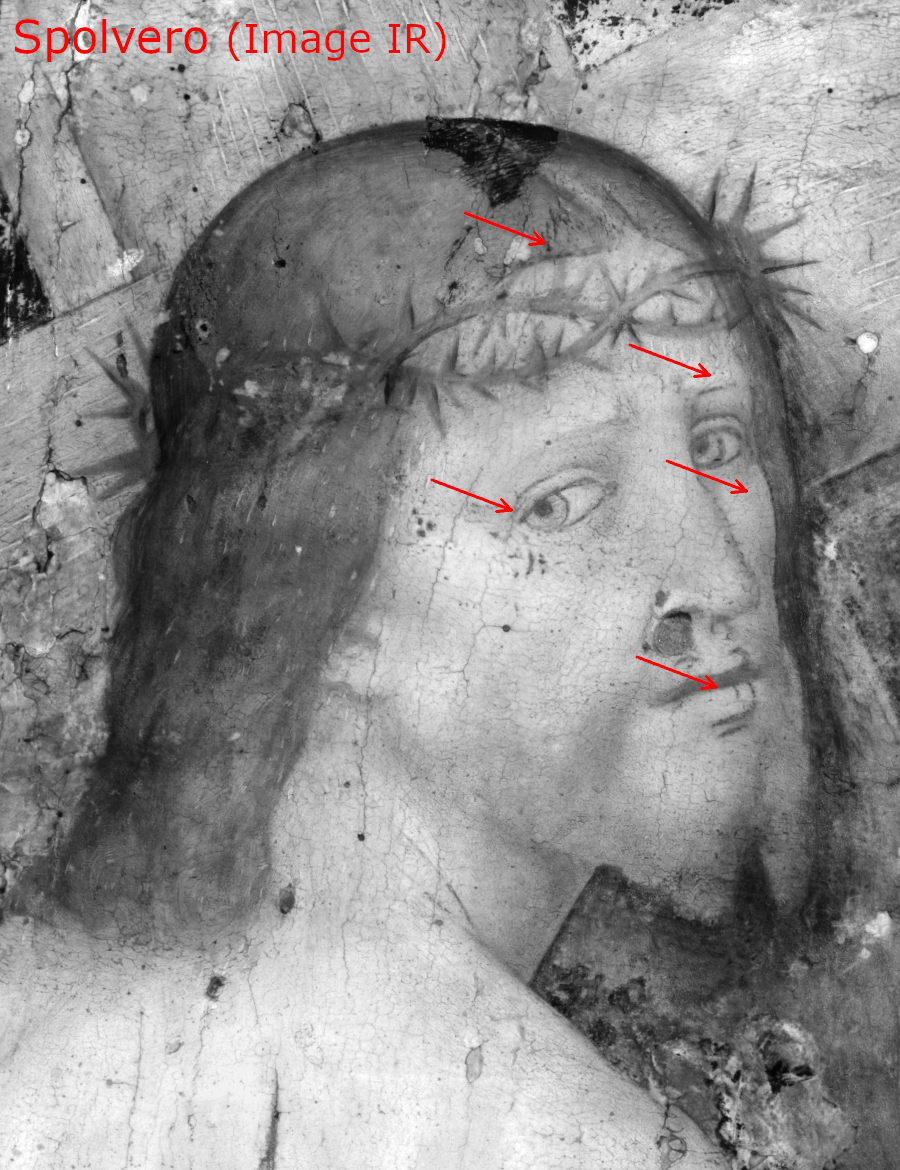
Infrared analysis, combined with LAM images, reveals spolvero dots beneath charcoal or black-chalk lines. These dots structure at least part of the preparatory drawing.
The spolvero dots are identified on Christ, and not on the right-hand figure, particularly in the following areas:
- Right eye: dots and lines identified by cross-reading IR/LAM images;
- Left profile: spolvero dots connected by a line;
- Lower lip, central groove: an informative area for comparison;
- Ear: spolvero dots at the junction of the lobe and the cheek;
- Right hand: spolvero dots inside the hand, showing a pentimento.
These observations attest the use of a cartoon, at least for Christ’s head and hand.
The Same Cartoon for The Painting, London and Budapest
In the infrared images of the London and Budapest versions, one very precise detail can be distinguished: the groove at the centre of the lower lip. Its recurrence in the same position and with the same form in several paintings is strong evidence for a shared preparatory model — a cartoon — rather than for a merely stylistic proximity.
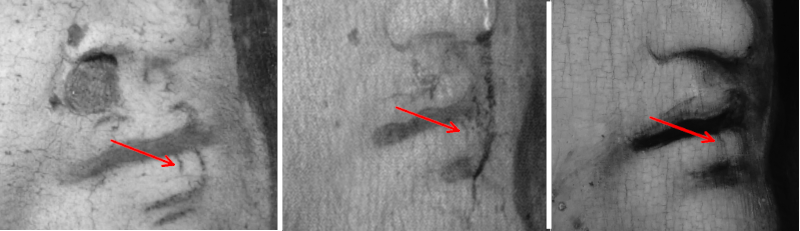
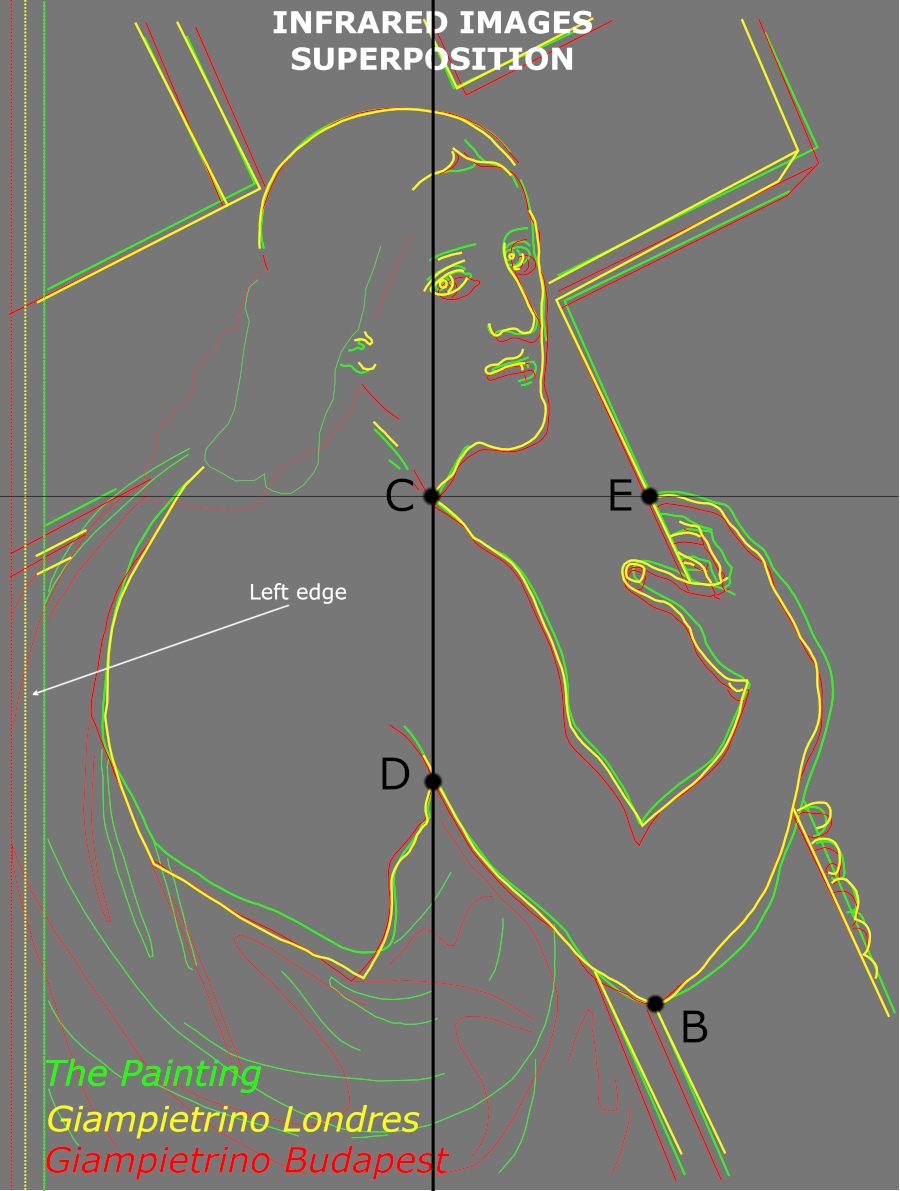
Beyond the detail of the lip, the comparison of the structural tracings visible in IR and in normal light — facial contours, placement of the features, articulation of the hand and main axes of the cross — leads to a convergent conclusion: The Painting and the three versions by Giampietrino (London, Budapest, Turin) point to the use of the same cartoon. The differences mainly reflect adjustments in execution rather than an autonomous conception.
This reading directly extends the conclusions of the National Gallery (1996), which identifies the Venice Drawing as the compositional source for the London version and demonstrates, beyond reasonable doubt, the use of the same cartoon for London and Budapest.
The Right-Hand Figure: Differentiated Transfer
The right-hand figure shows no spolvero, indicating that it probably did not appear on the initial cartoon.
In the Seracini report, the transfer of this figure is described as using another process, probably carbon-based, unlike the transfer used for Christ.
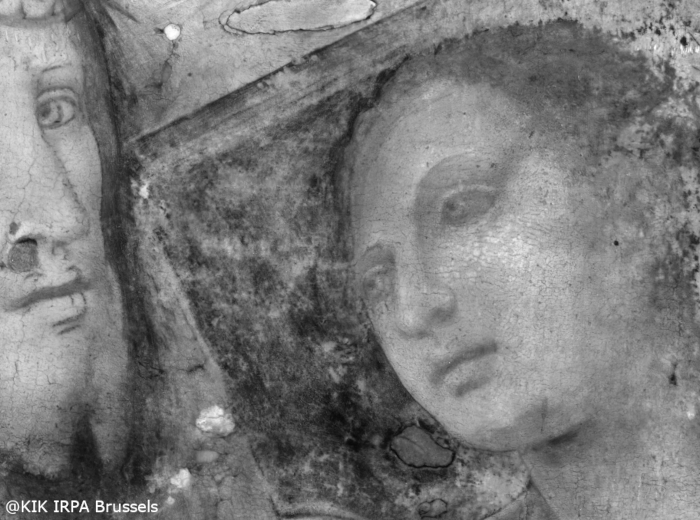
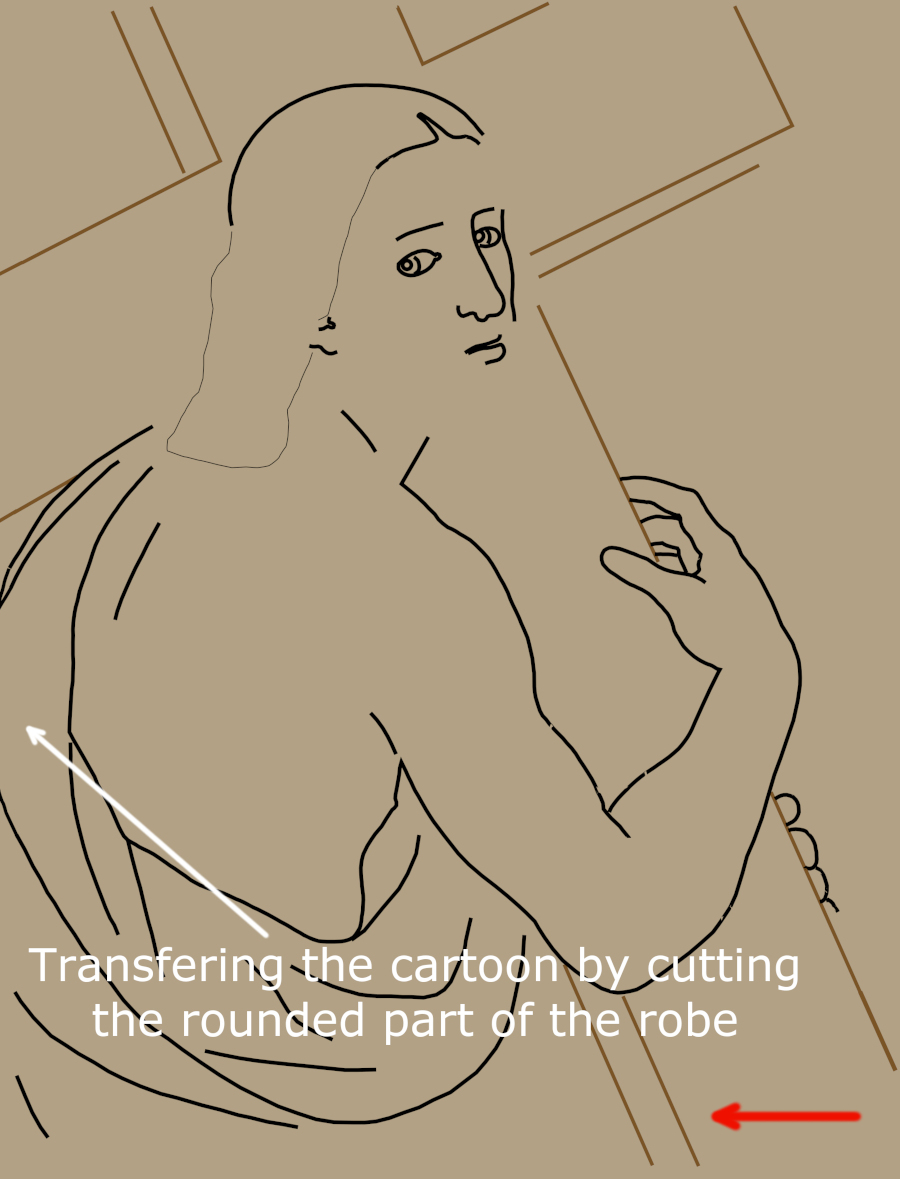
To integrate the second figure without widening the panel, one must envisage a shift of the composition to the left, causing the rounded edge of the drapery to be cut off.
The conclusion of this sequence confirms the idea of a first-group cartoon without a second figure, the latter being added during execution. The truncated rounded edge would be explained by this addition.