Lighting in the Painting: Comparison with Three Versions by Giampietrino
Overall lighting of Christ in the Painting
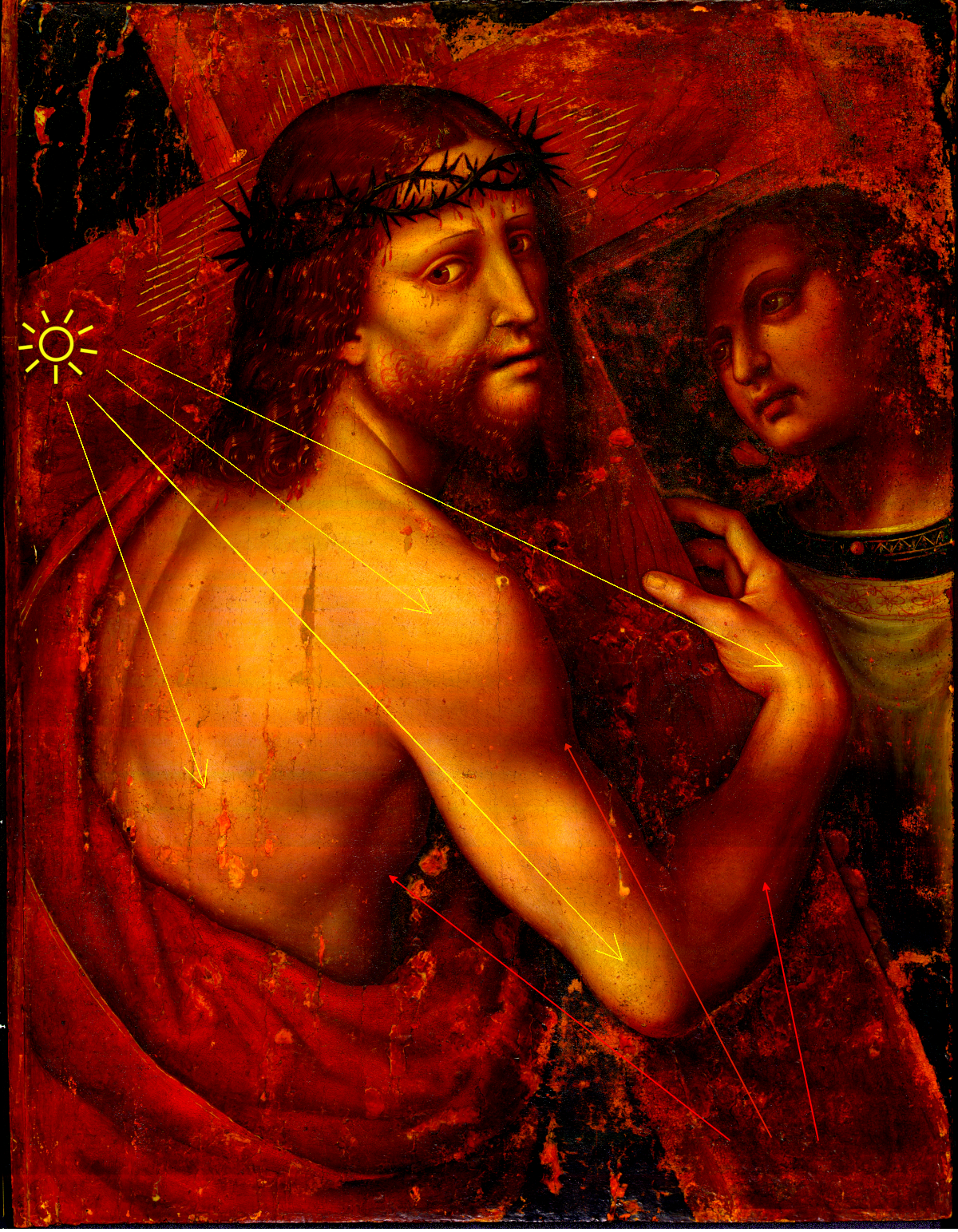
The distribution of illuminated areas suggests that the light comes from the left, from an elevated position. It highlights the face, shoulder, back, outer side of the upper arm and parts of the hand. The underside of the chin, the neck, the inner side of the upper arm and much of the forearm remain in shadow. These variations in light model the body and emphasise Christ’s musculature.
The saturation and contrast of the image have been increased to make it easier to interpret. Yellow arrows indicate illuminated areas, while red arrows mark areas in shadow. The symbol indicates the presumed position of the light source.
Overall comparison with Giampietrino’s Budapest version
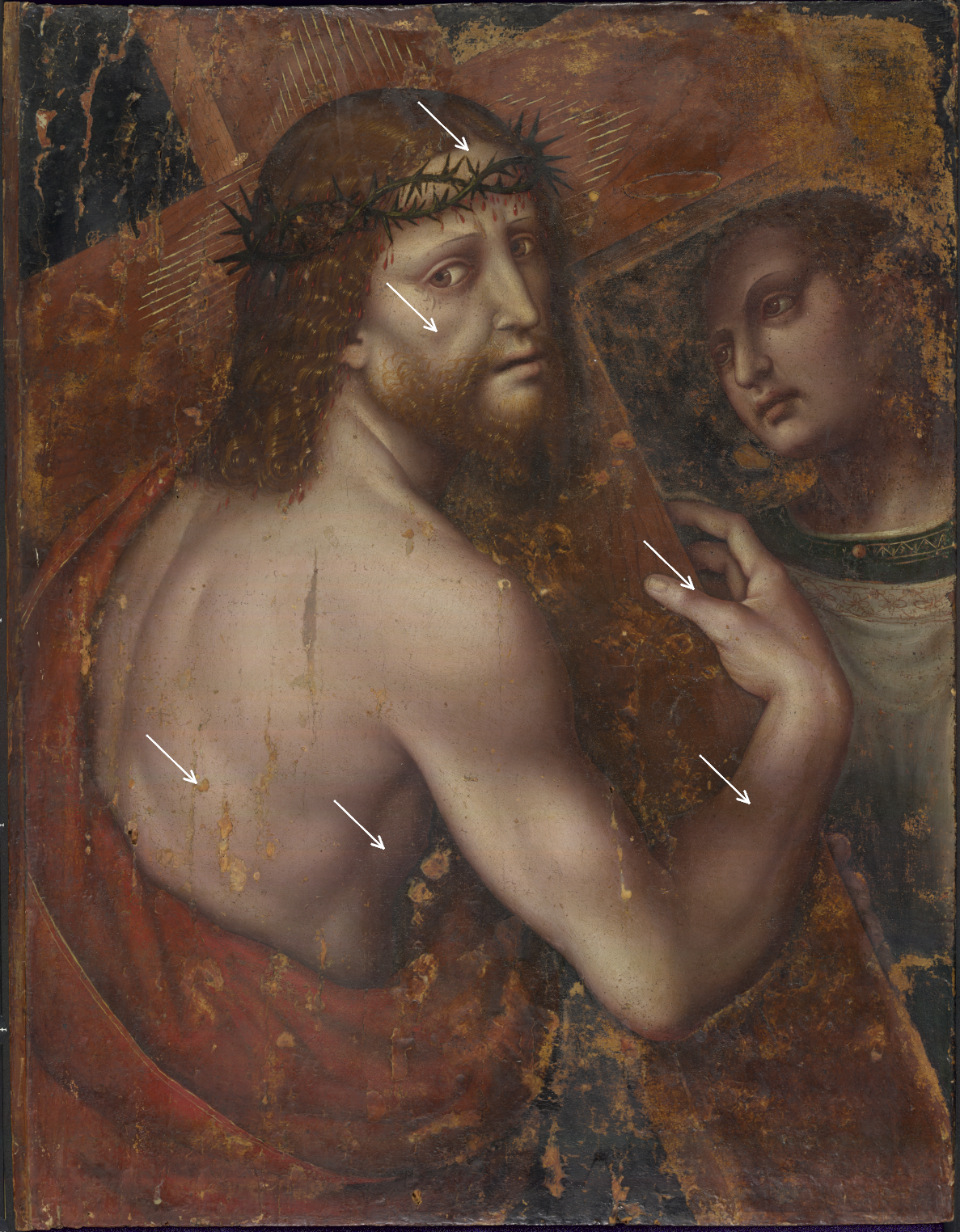
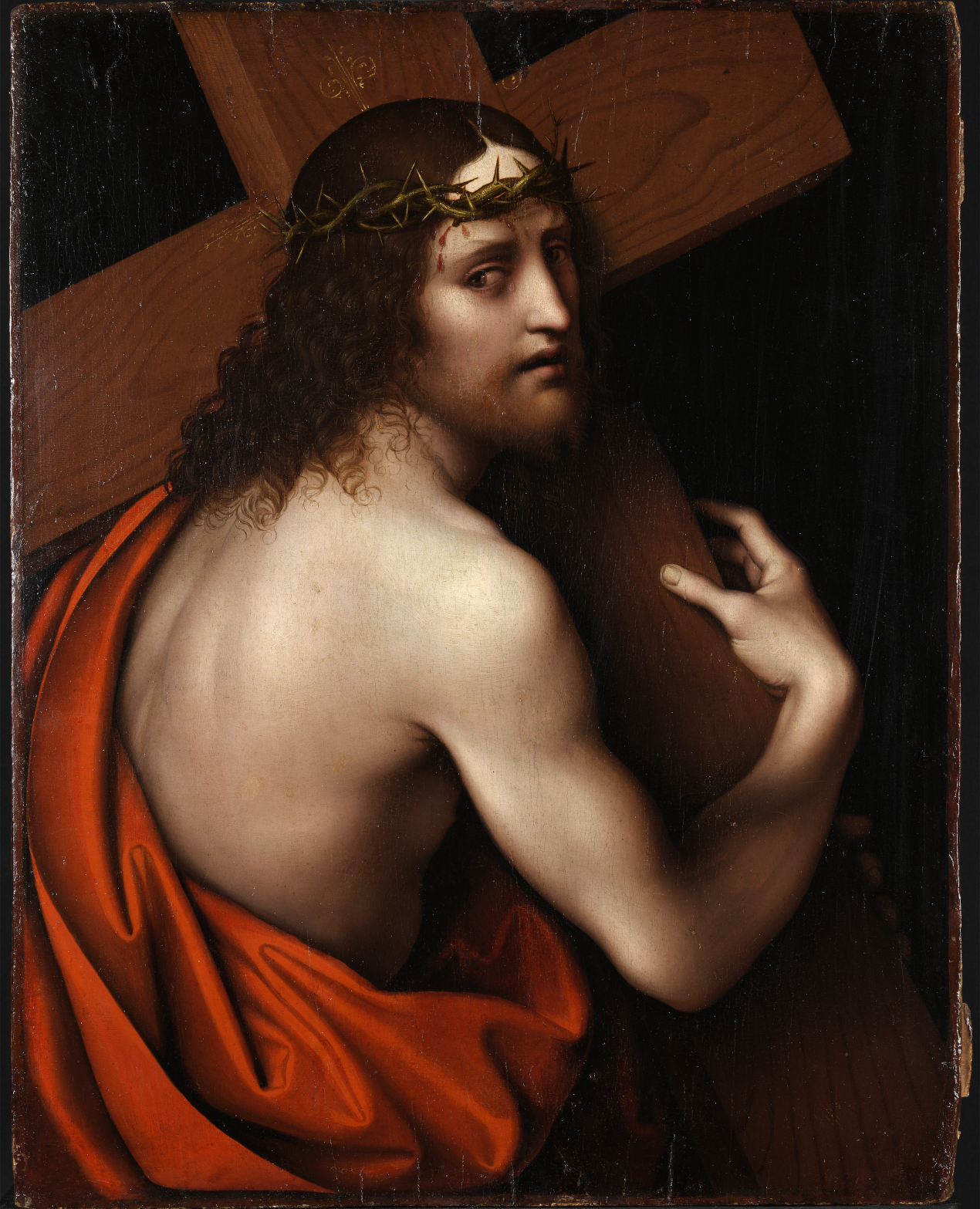
The lighting in the Painting and in the Budapest version is broadly comparable in terms of the presumed position of the light source and the distribution of the main illuminated areas of Christ’s body. Closer examination, however, reveals significant differences in the modelling. In the Painting, this appears more developed: the transitions between light and shadow describe the contours of the face and the musculature of the body in greater detail. The observations made here using the Budapest version also apply to the London and Turin versions. White arrows mark some of these differences.
The area of the forehead between the hair and the crown of thorns is noticeably lighter in all three versions by Giampietrino. It is painted as a surface receiving frontal illumination and therefore does not reflect the light entering the scene from the left. In the Painting, this area remains slightly shaded, in keeping with the direction of the light and the orientation of the head. The study of pentimenti describes the removal of lead white in this area to darken the underlying paint slightly. A cast shadow beneath the prominence of the cheek also accentuates the volume of the face; it is not discernible in Giampietrino’s versions.
The variations in light also make the musculature of the back more distinct in the Painting. The visible part of the chest remains discernible in shadow, whereas it is barely distinguishable in Giampietrino’s versions. The following sections examine two further differences: the cast shadows at the thumb joints and the distribution of shadow across the forearm.
The hand: cast shadows at the thumb joints
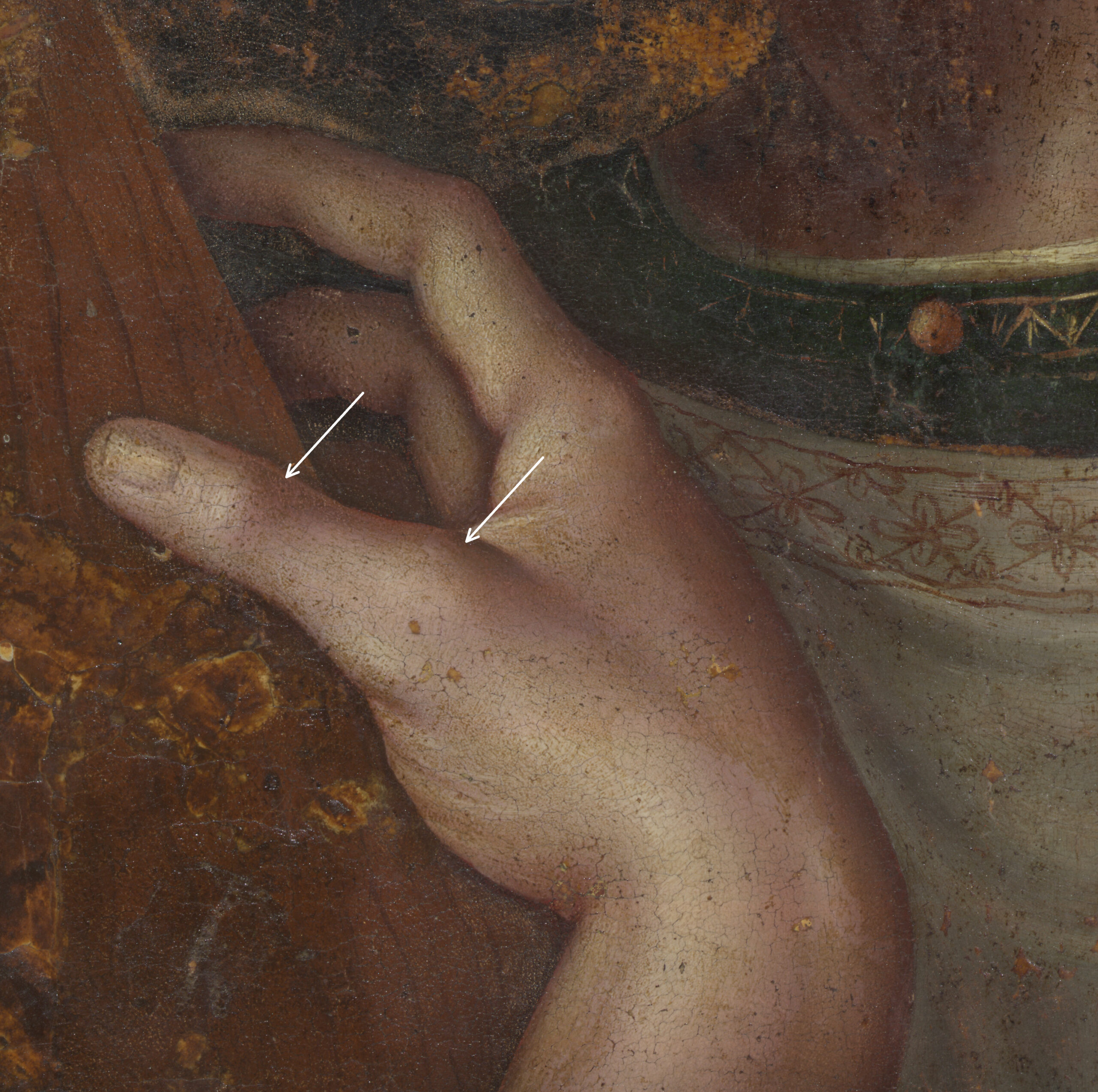
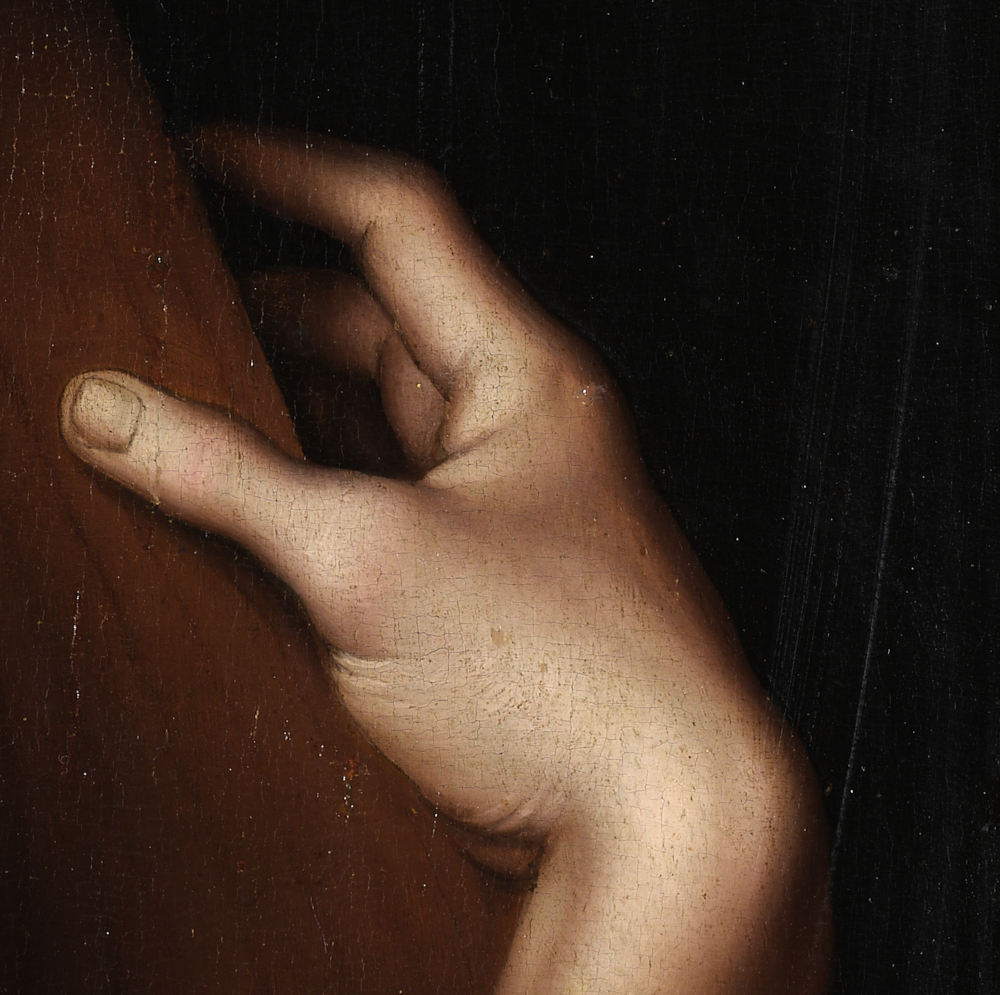
Two cast shadows are clearly visible in the Painting: one at the crease of the thumb joint, the other where the thumb joins the hand. Marked by white arrows, they fall onto adjacent surfaces and emphasise the relief of these joints.
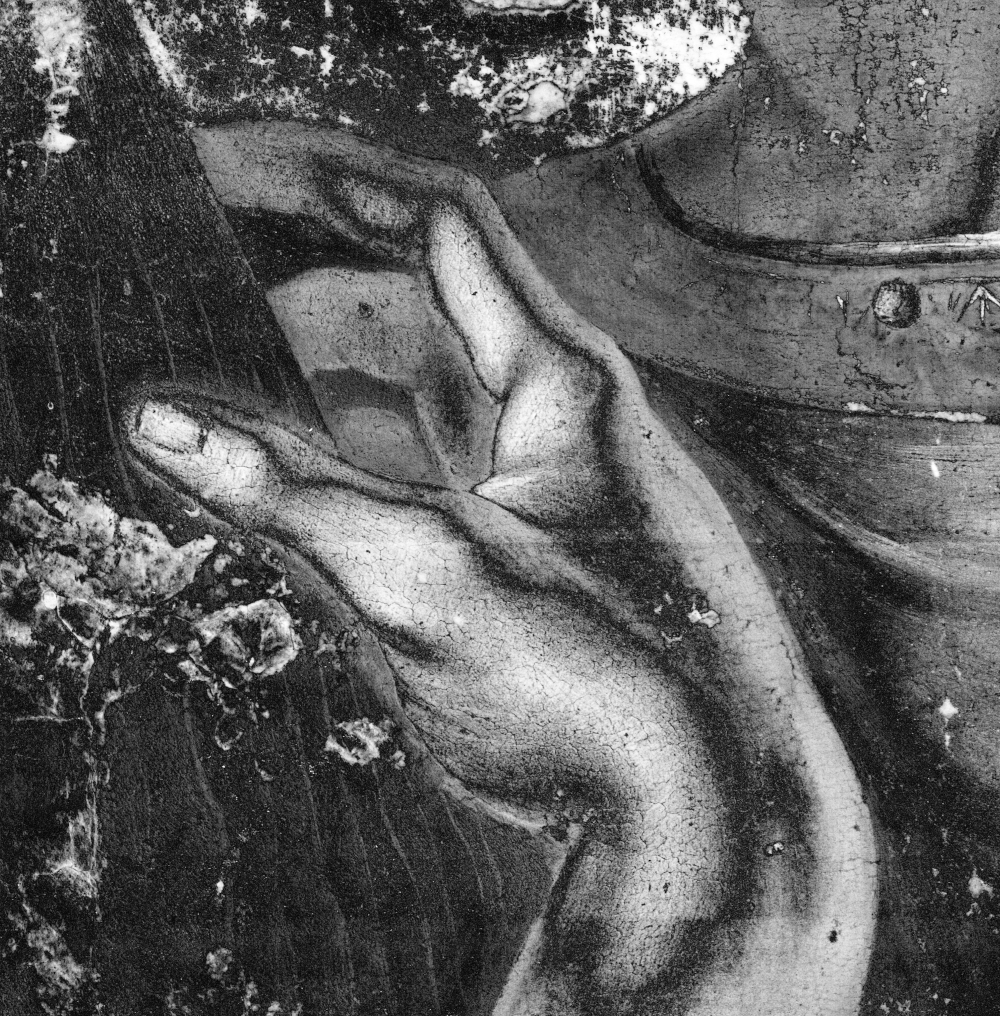
The 2020 LAM 5 image highlights the paint in the illuminated areas and makes their relationship with the darker parts of the hand particularly clear.
In all three versions by Giampietrino, the fingers and hand show modelling shadows, but the two cast shadows in the Painting are not distinctly visible in the same positions. The Budapest detail illustrates this difference: the transitions remain gradual, without the two separate cast shadows visible in the Painting.
The forearm: a different distribution of shadow
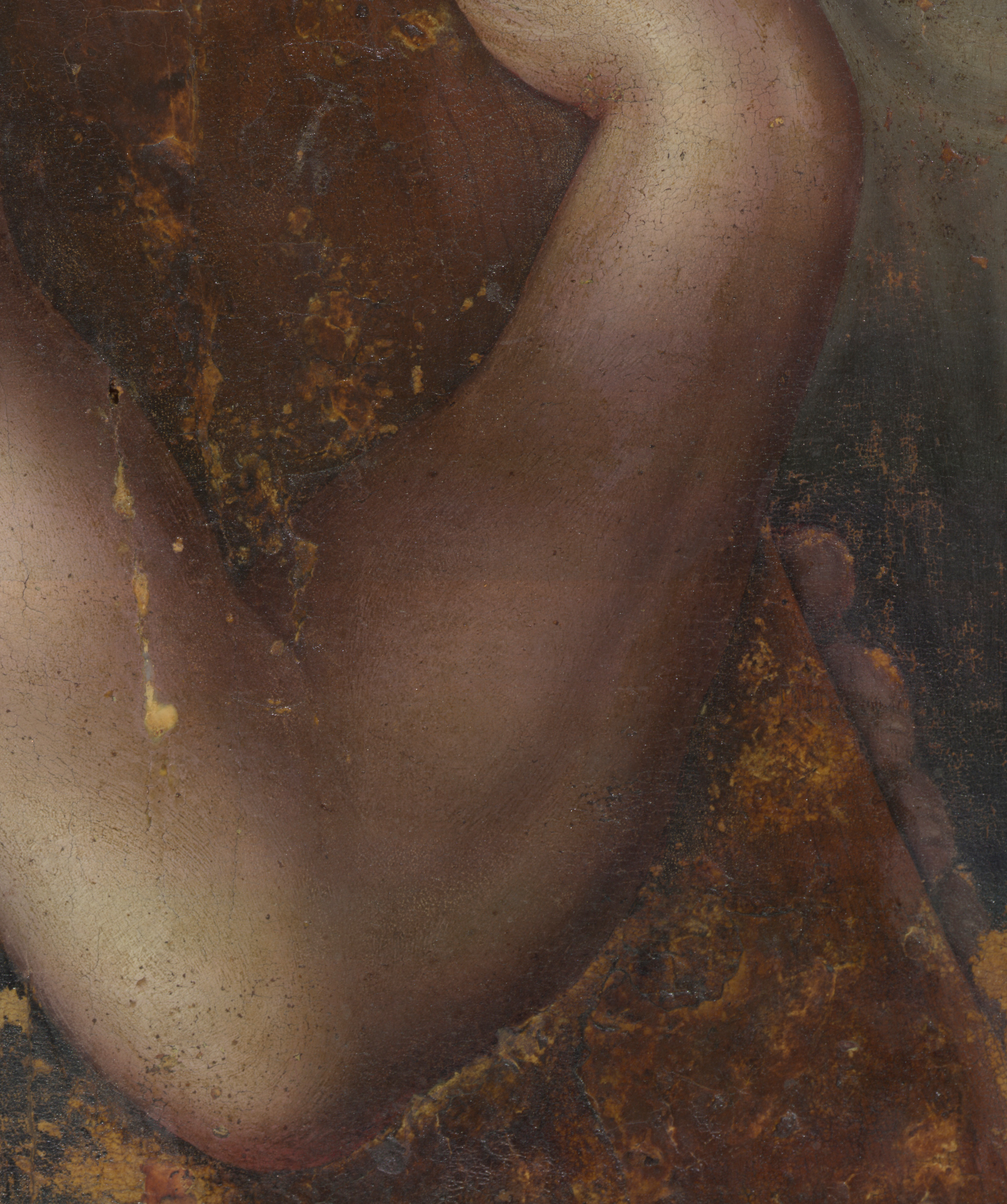
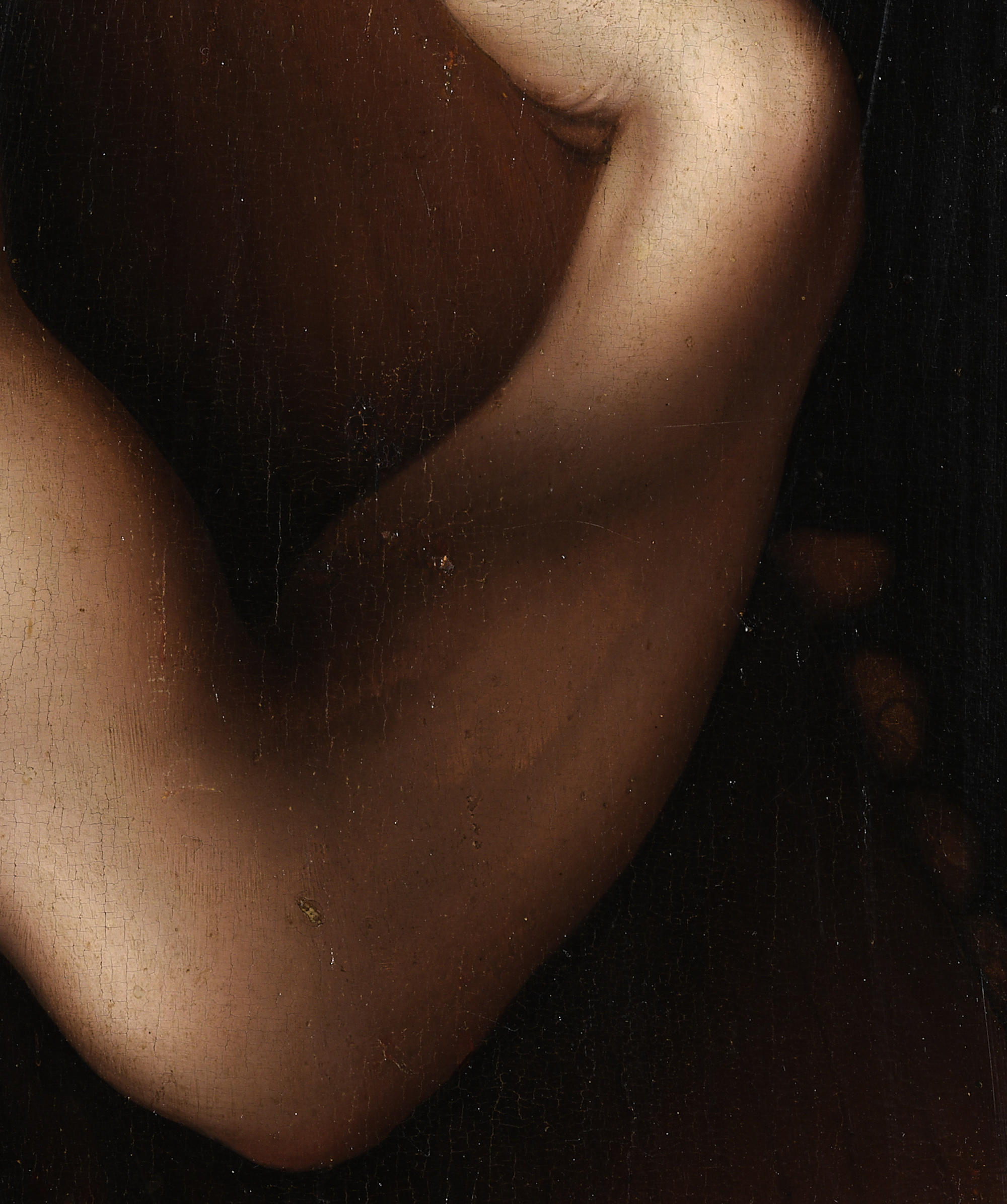
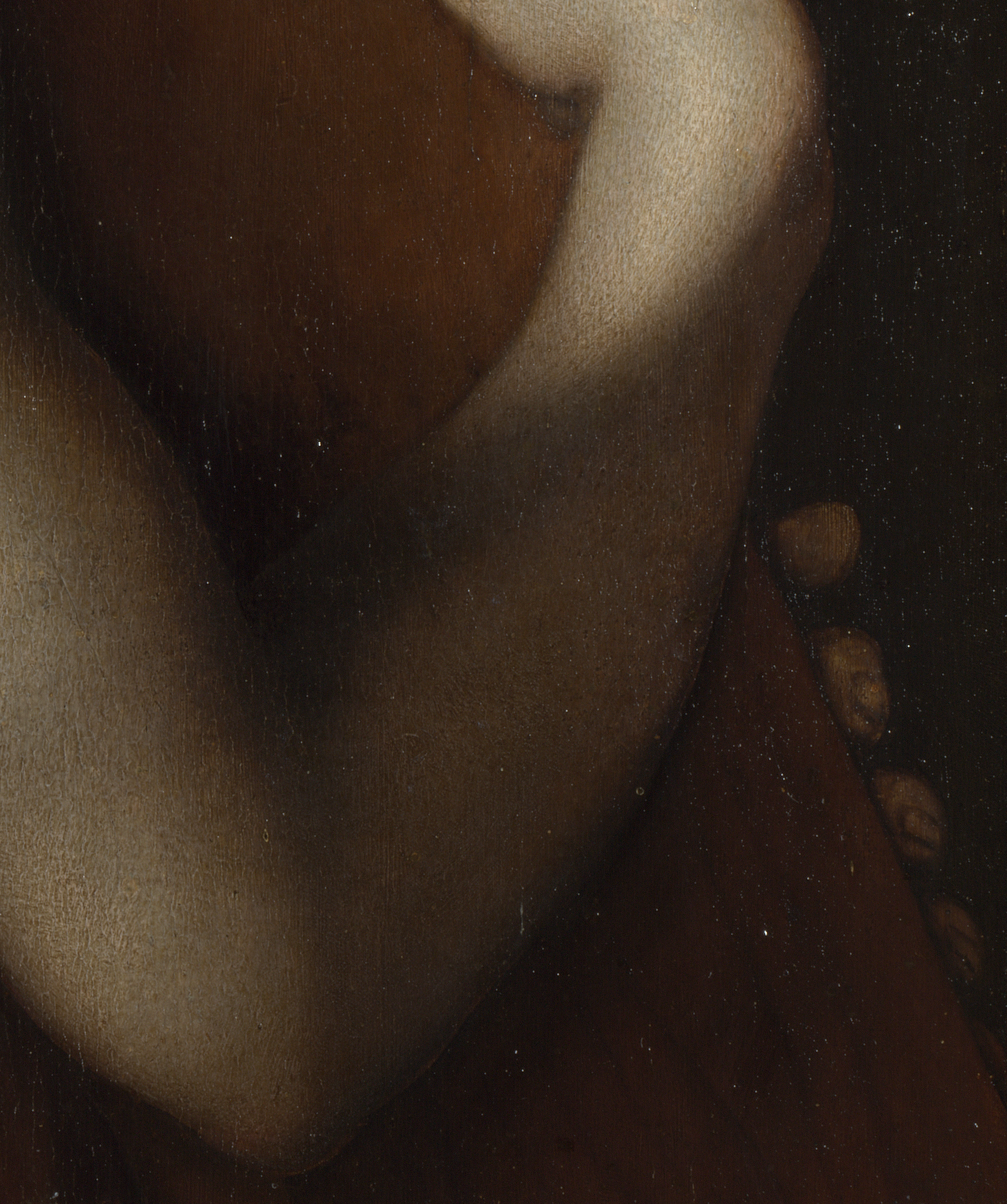
In all three versions by Giampietrino — Budapest, London and Turin — an oblique dark band crosses the middle of the forearm, between the illuminated areas near the wrist and elbow. The Budapest and London details shown below illustrate this shared arrangement, with more softly blended edges in the London version.
In the Painting, the shadow covers a larger part of the forearm and extends continuously, without forming this distinct dark band. The illuminated areas near the wrist and elbow thus frame a more extensively shaded surface.