Overpaints: Six Intervention Phases
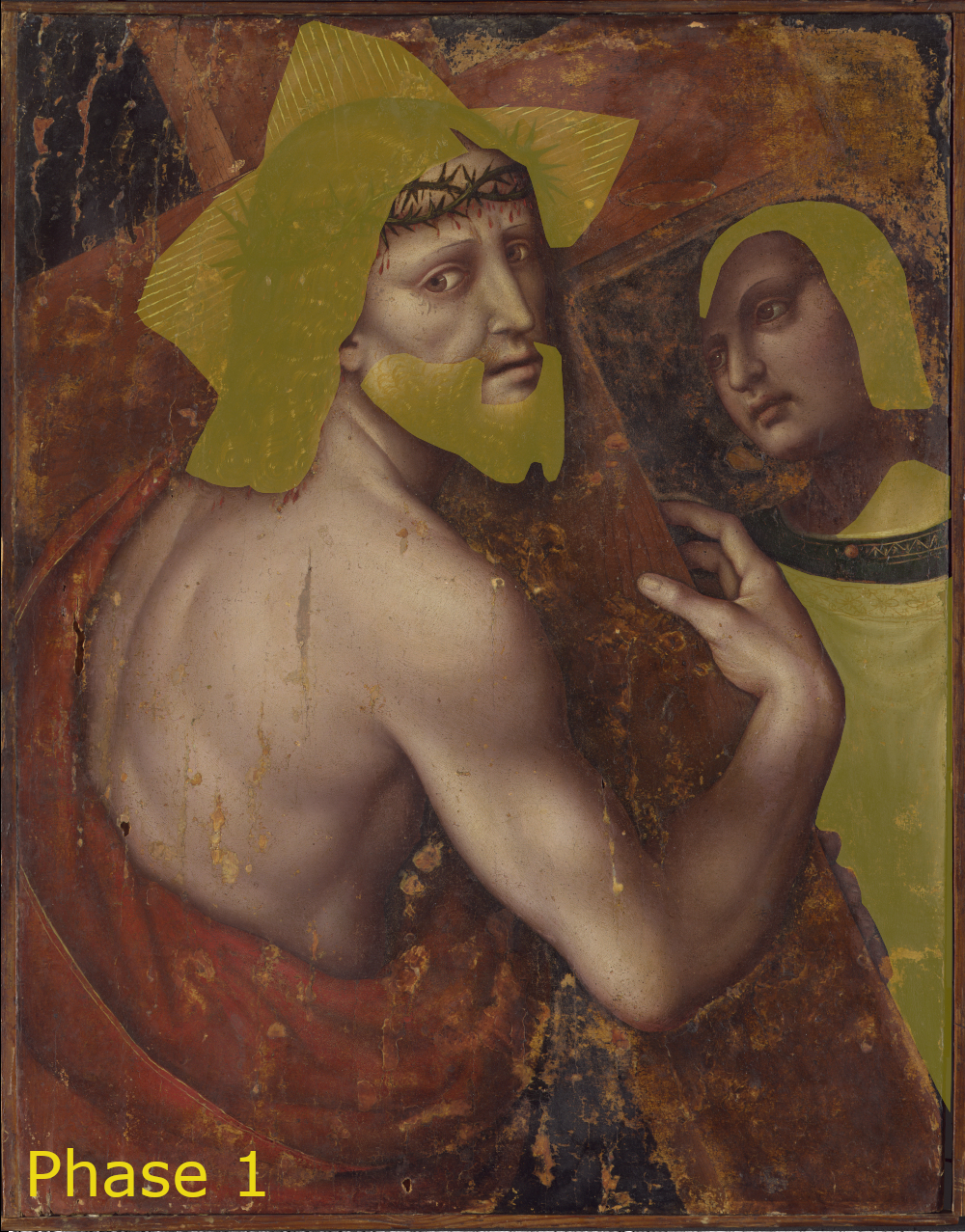
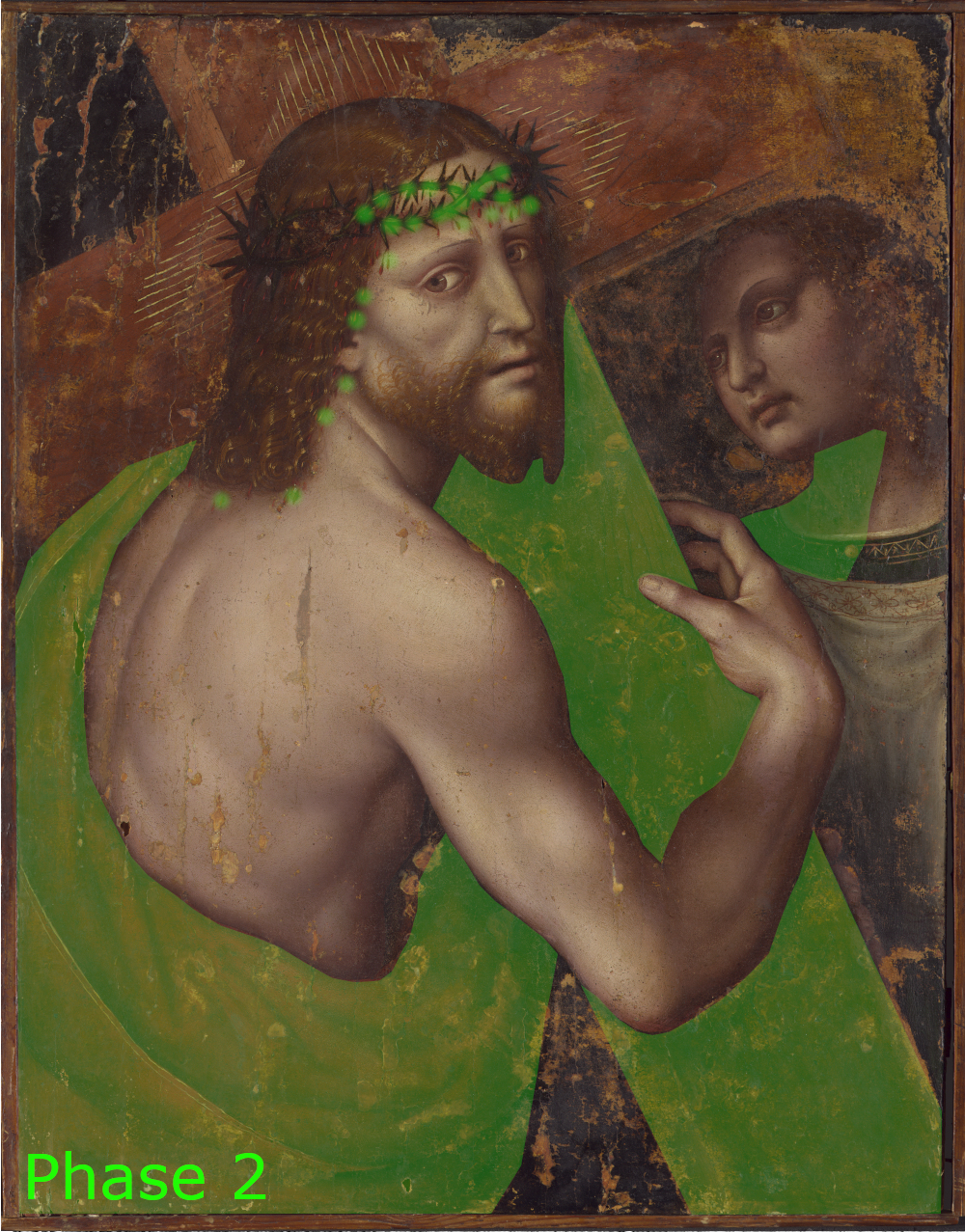
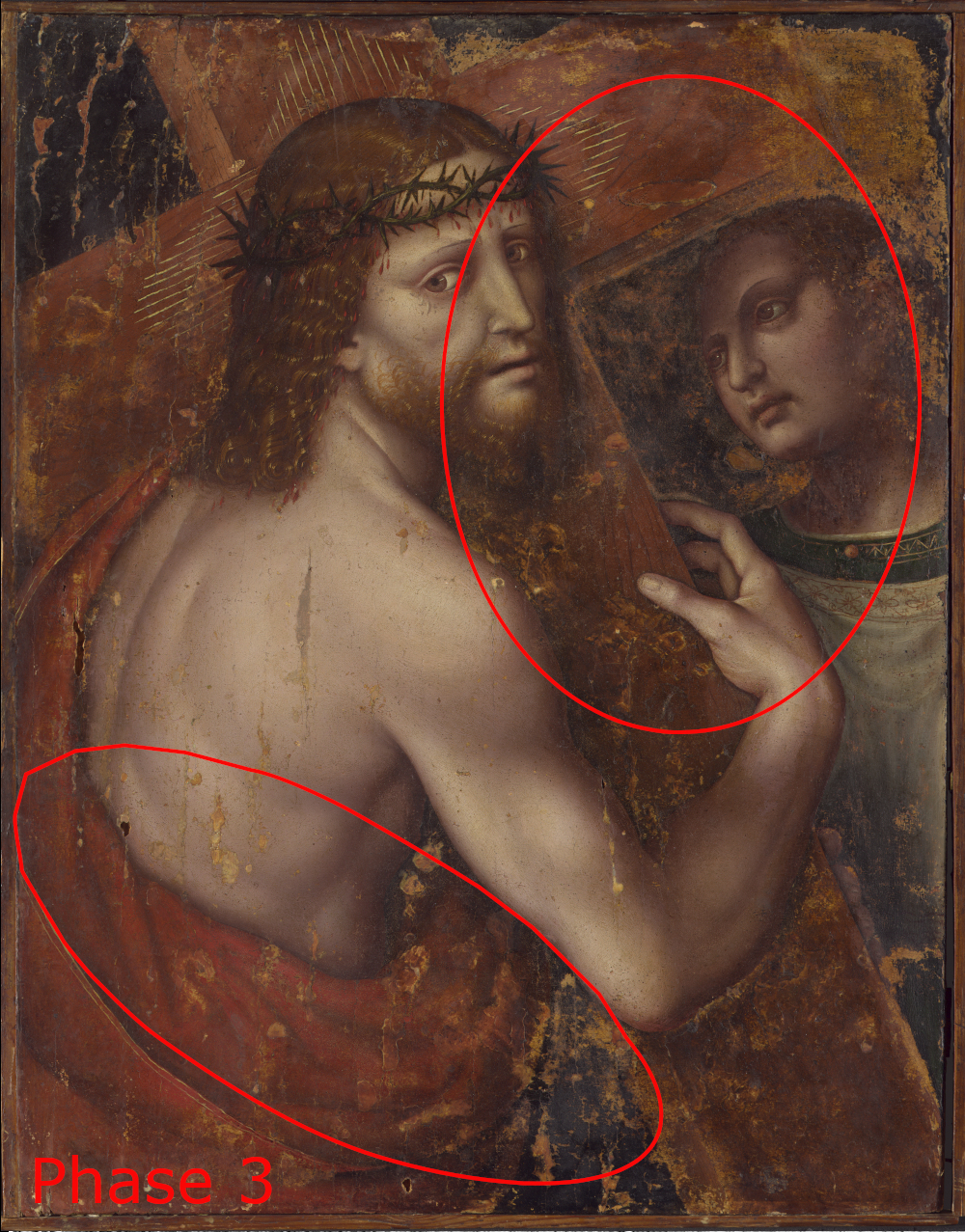
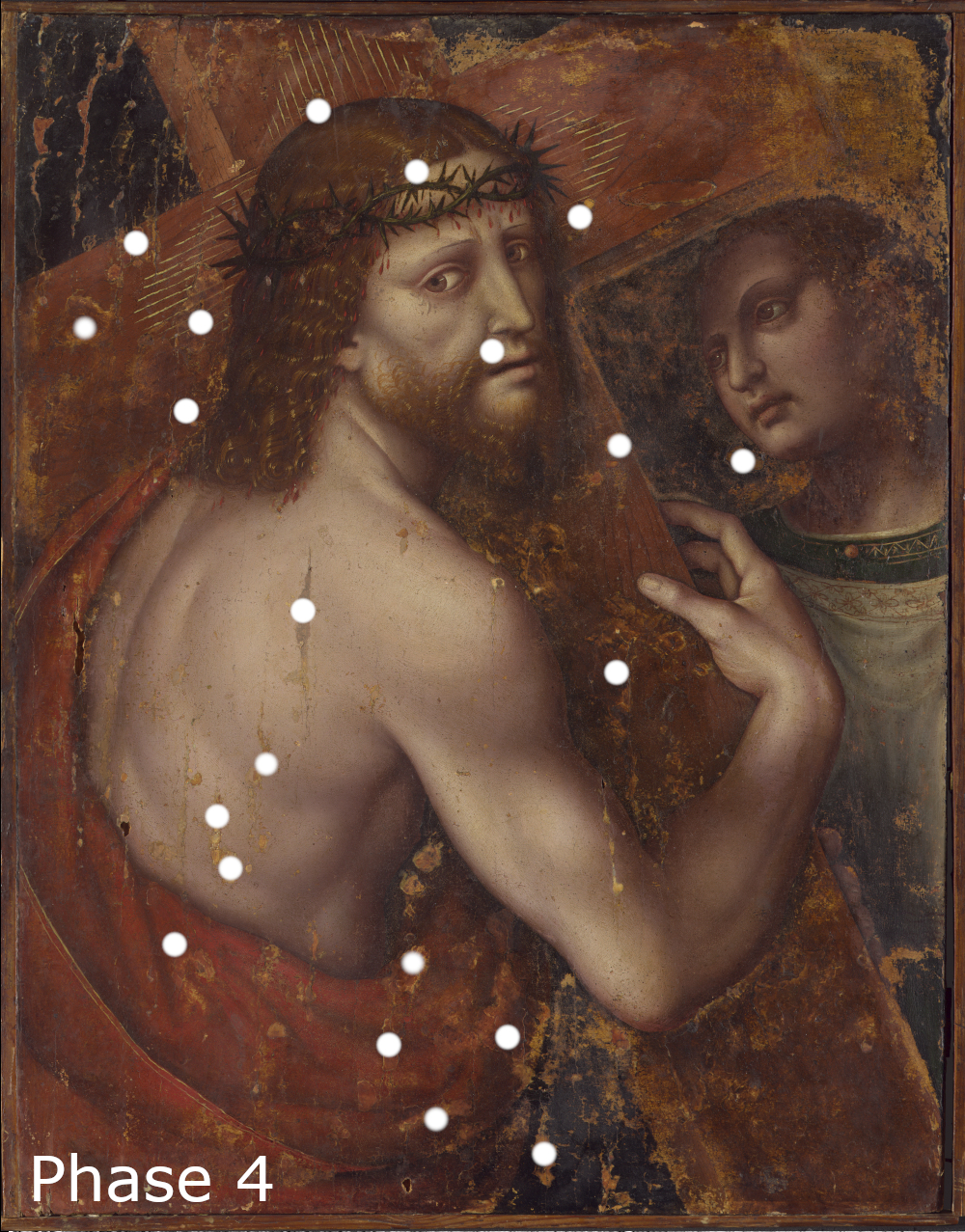
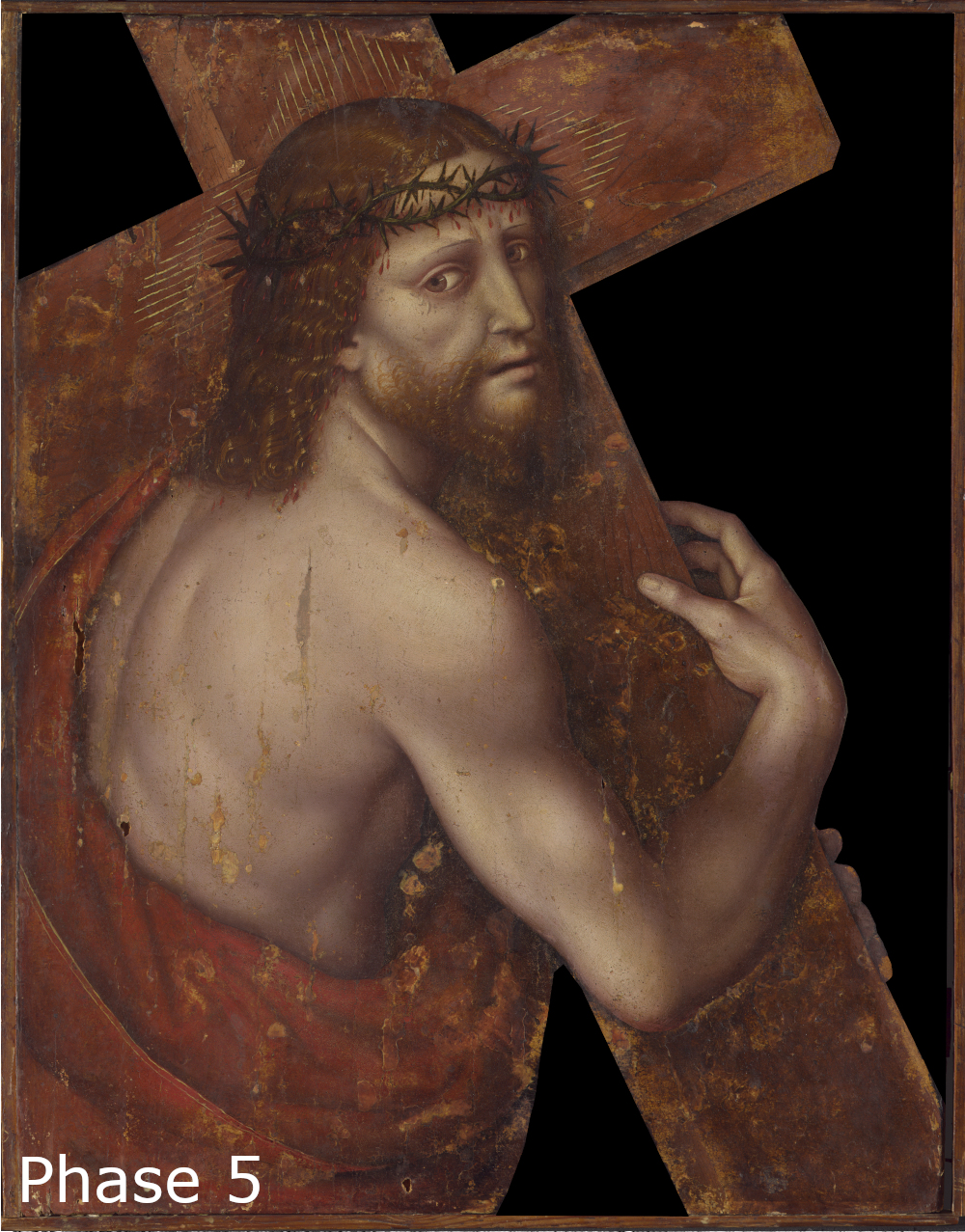
The analysis distinguishes six intervention phases, proposed here as a working hypothesis. Their exact sequence and modes of execution cannot be established with certainty, except for phase 6, linked to the restoration of the 1960s. For a detailed study of the overpaints, see the full study (PDF).
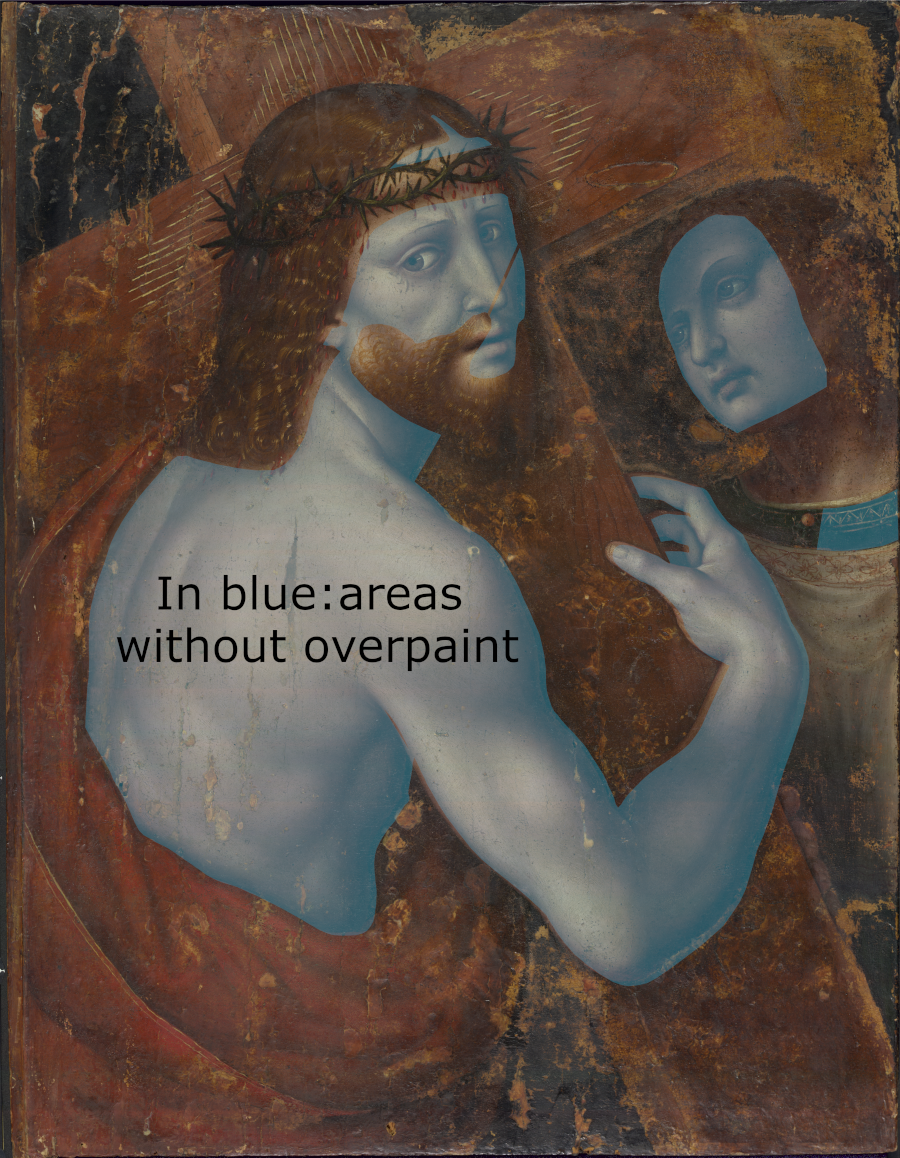
In blue: areas without visible overpaint
Excluding the black layer covering the Figure
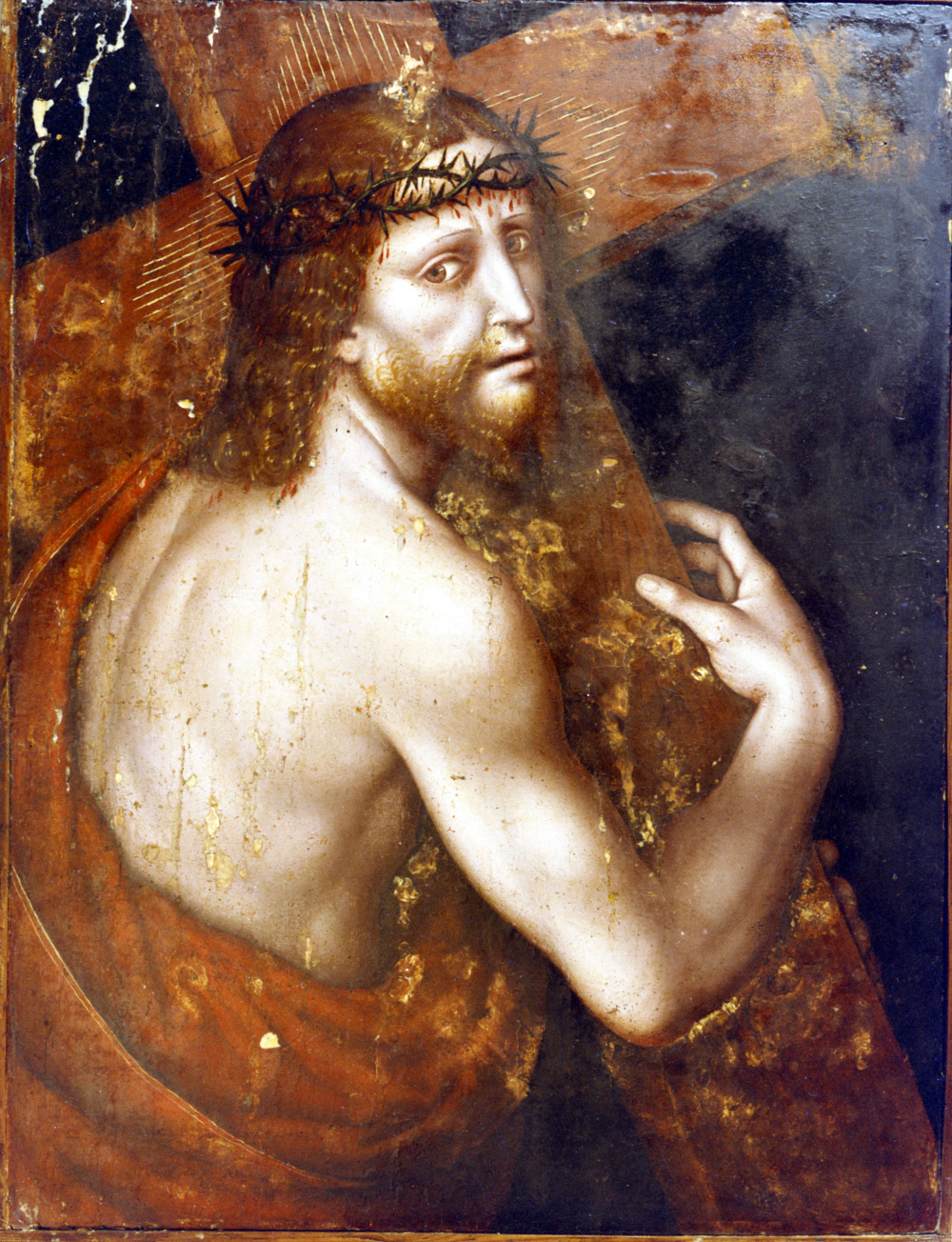
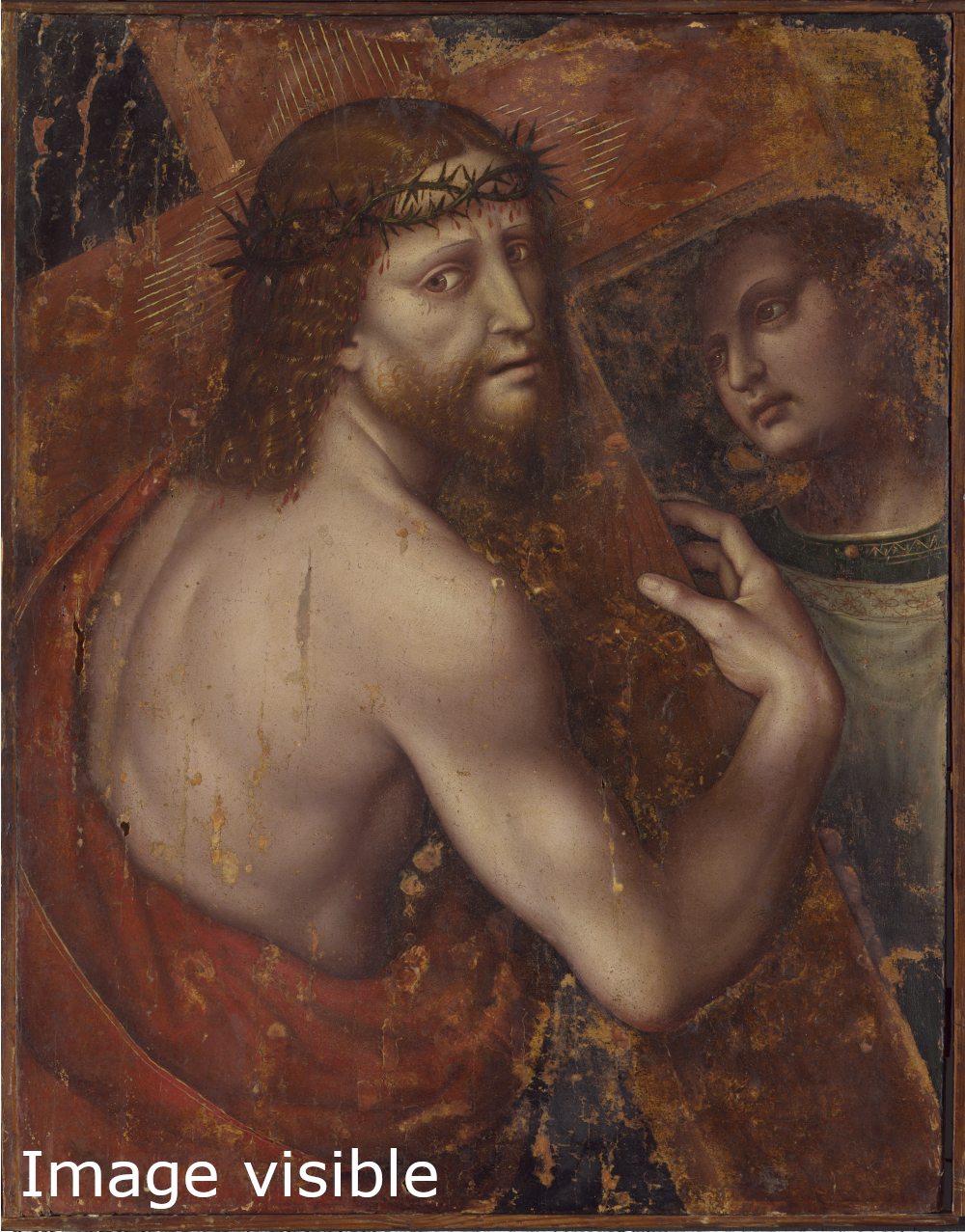
Image of The Painting, early 1960s
Before removal of the black layer covering the Figure
Issue
The overpaints affect both the present appearance of The Painting and our reading of its original state. They may conceal details, add others, or alter their interpretation.
The areas now best preserved — Christ’s face, back and arm, and the face of the Figure — correspond to flesh tones rich in lead white, a material whose stability may have limited certain alteration processes.
The paint-layer analyses conducted by the University of Bologna and the Seracini assessment suggest an extensive restoration campaign, probably in the sixteenth century, although the reports do not always clearly distinguish original paint from later interventions.
Summary: Six Main Phases
This chronology is a proposal based on imaging and expert assessments; by nature, it remains interpretative.
What This Changes for the Study
The overpaints may have altered the reading of the image — subject, values, contours, details of the cross, background and attributes — to the point that original paint and later interventions are sometimes difficult to distinguish with the naked eye.
This superimposition of interventions complicates any attribution discussion based solely on the visible image. The analysis must therefore combine imaging, stratigraphy and a critical reading of the restored areas.