Venice Head of Christ Drawing: Leonardo da Vinci
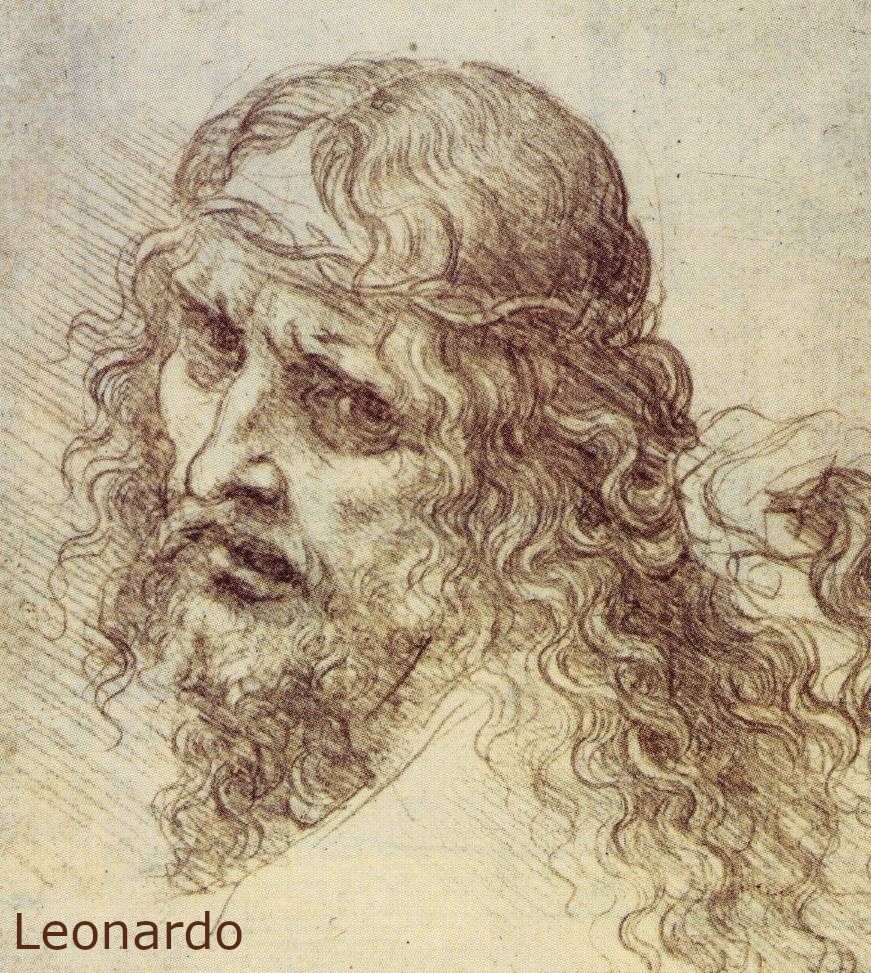
The Venice Drawing (Head of Christ, Gallerie dell’Accademia, Venice) is a small sheet attributed to Leonardo da Vinci, dated to around the 1490s. Christ appears in a three-quarter rear view, in a ritratto di spalla, his head turned back toward the viewer and crowned with thorns.
This sheet occupies a decisive place within the dossier. It constitutes the key reference from which several Christs Carrying the Cross from the Milanese milieu, as well as certain more specific extensions examined elsewhere on the site, can be understood.
Read the full study (PDF): The Venice Head of Christ Drawing (Leonardo da Vinci).
The Venice Drawing and the ritratto di spalla
Dated to around the 1490s, the Venice Drawing offers a particularly expressive example of the ritratto di spalla, built around the rotation of the torso, neck, and gaze.
Through its technique, construction, and expressive tension, it provides one of the firmest points of reference for the study of the Christ Carrying the Cross within Leonardo’s circle.
The drawing shows Christ in a three-quarter rear view, his head turned back toward the viewer, while a hand emerging from behind grasps his hair. The crown of thorns clearly places the sheet within the time of the Passion.
This combination of a turning movement, a strong tension of the neck, and a gaze directed toward the viewer gives the drawing a singular place within Leonardo’s graphic work.
See the dedicated page: The Venice Drawing and the ritratto di spalla

Art Historians and the Venice Drawing
Since the nineteenth century, art historians have treated the Venice Drawing as a central work for understanding the diffusion of the Christ Carrying the Cross type in the early sixteenth century.
The issue is not only stylistic. It concerns the very function of the drawing: autonomous study, workshop model, cartoon, or relay toward a painting now lost. In every case, the drawing stands as the main point of reference in the dossier.
See the dedicated page: Art Historians and the Venice Drawing

Influence of the Venice Drawing around 1500
The diffusion of the motif can be traced in several artistic centres around 1500. In the Venetian world (Giorgione / Titian), the influence is visible above all in the head type, the tension of the gaze, and the logic of the three-quarter portrait. In Milan, painters within Leonardo’s circle, especially Giampietrino, adopted the scheme more systematically, pointing to an intermediate model (template, cartoon, or painted variant).
See the dedicated page: Influence of the Venice Drawing
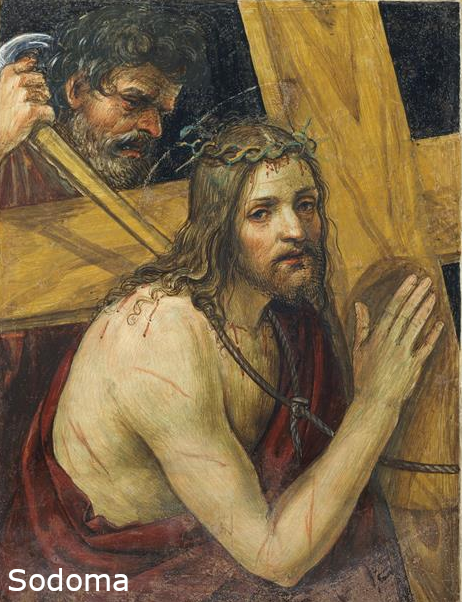
Four case studies are presented below: Giorgione / Titian, Giampietrino, Andrea Solario, and Sodoma.


Comparing the Structure of the Heads
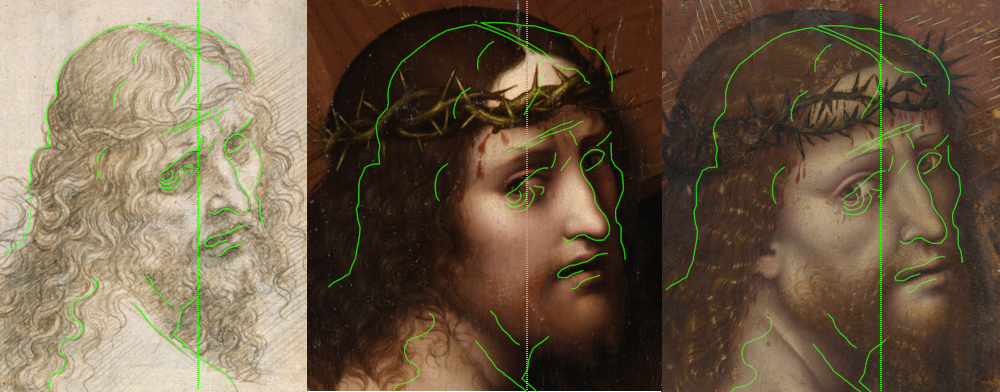
The Venice Drawing is shown in its original orientation. The Milanese versions are reversed to make comparison easier. Several facial landmarks and features of the head’s overall shape appear in comparable positions, suggesting a shared construction scheme. The main differences concern the hair, the crown of thorns, the halo, and the way the works were executed.
One specific reference point is the hair part: it follows a comparable axis in the Venice Drawing and in The Painting, while it is more noticeably displaced in Giampietrino’s work. This shift slightly changes the overall arrangement of the hair without calling into question the general structure of the type.
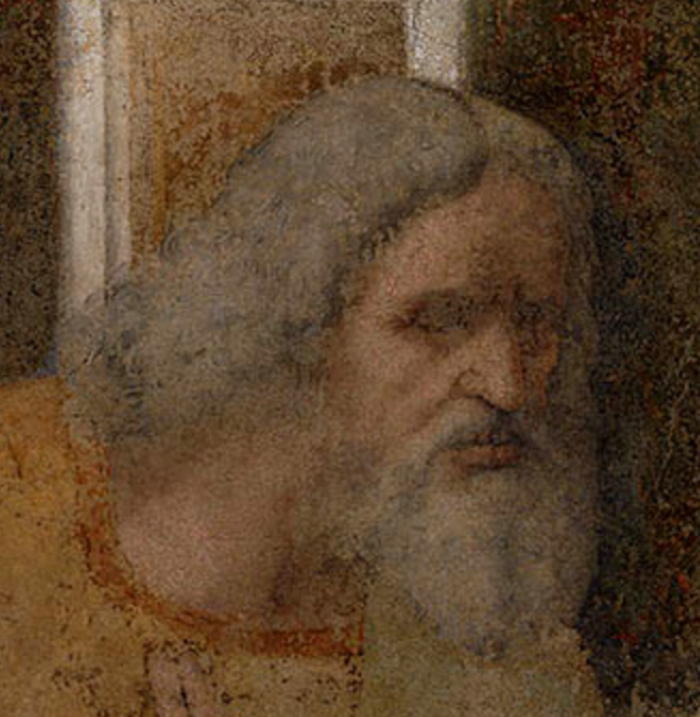
Thaddeus in The Last Supper: a development examined separately
The site also examines a possible extension of the Venice Drawing in the figure of Thaddeus in The Last Supper. This development belongs to a separate page devoted to this extension of the model.
See the dedicated page: Thaddeus (The Last Supper) and the Venice drawing