Christ’s Ear: Anatomical Detail, Morelli and Leonardo
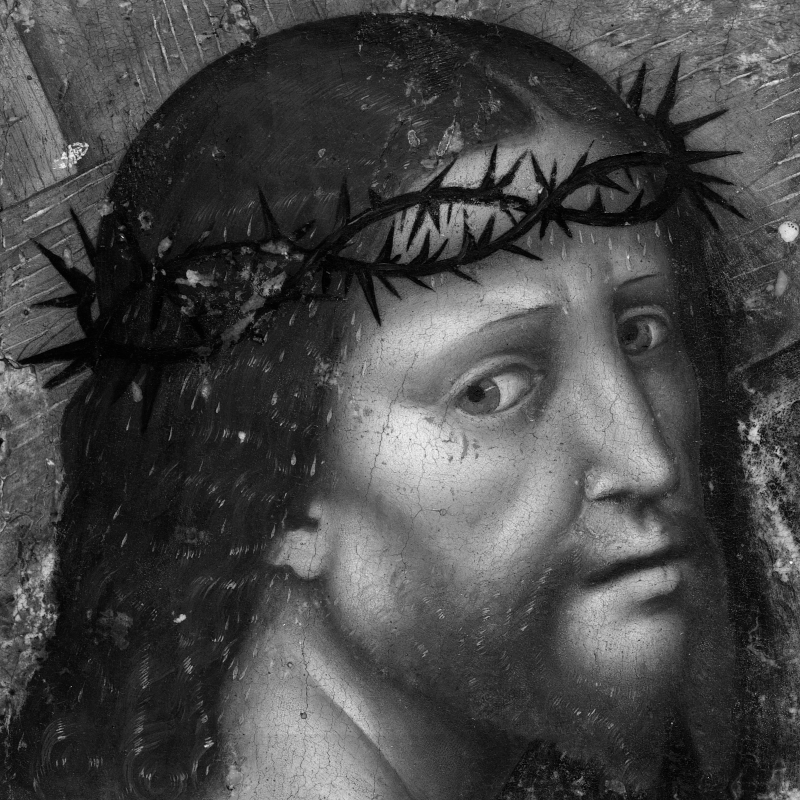
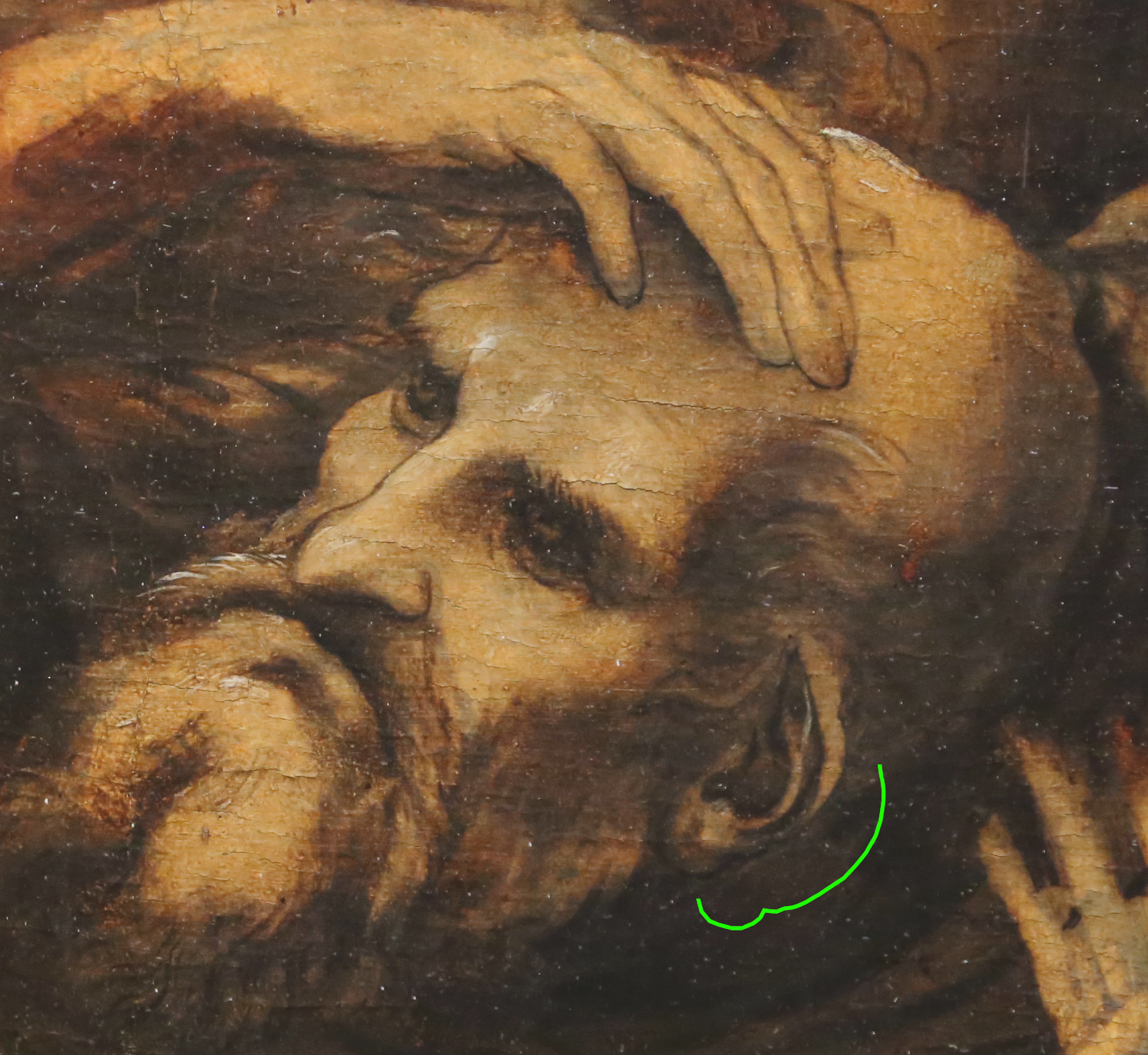
Among the anatomical particularities of Christ in The Painting, the ear is striking for the unusual form of its lobe. It does not follow a simple continuous curve, but appears to be constructed from two successive arcs. This detail becomes especially significant in light of the observations of Giovanni Morelli, whose method relies on the examination of discrete anatomical details, especially the ear, in works by Bellini, Botticelli and Leonardo da Vinci.
Form of the Earlobe
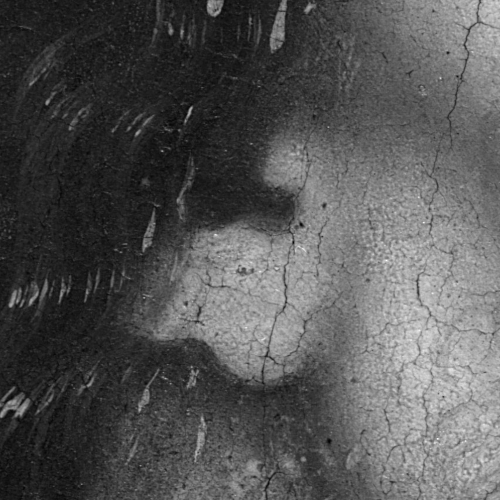
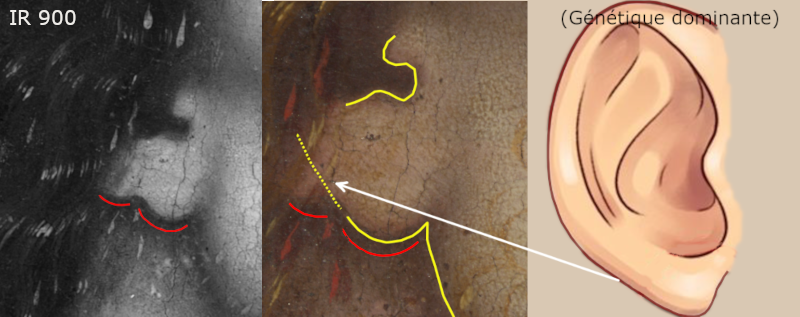
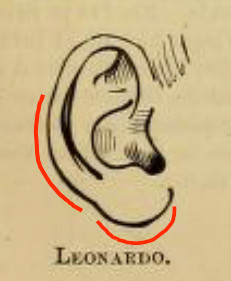
The diagrams based on the detail from The Painting make the shape of the lobe more legible. They reveal a first arc, tighter in form, followed by a broader second lower arc. Comparison with a standard free-earlobe model shows that this is not an ordinary continuous curve, but a more articulated construction.
Morelli and Leonardo
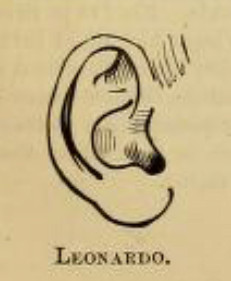
The reference proposed by Giovanni Morelli is essential here. His method of attribution is based on the direct examination of discrete anatomical details, especially the ear, which he regarded as particularly revealing. The ear model published under Leonardo’s name by Morelli in Italian Masters in German Galleries (1883, p. 219), shown here with two red arcs, provides a useful framework for reading the form of the lobe observed in The Painting.
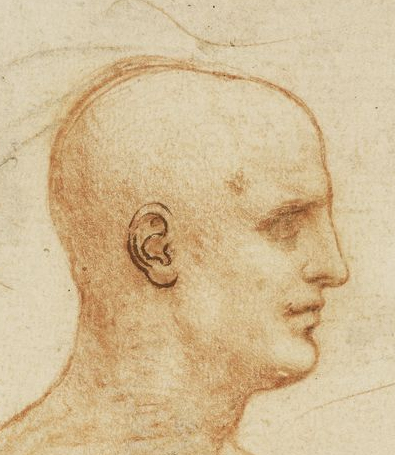
The ear details in the Adoration of the Magi and in the Windsor drawing RCIN 912600 extend this comparison. Without constituting an isolated proof, they connect Morelli’s reference point to works by Leonardo themselves, rather than to an abstract scheme.
A Significant Morphological Indication
The detail of the ear does not, by itself, constitute proof of attribution. But its particular form, its legibility in infrared and its proximity to the model published by Morelli make it a significant morphological indication.
Its value lies above all in its convergence with other observations: anatomical construction, underlying drawing, pentimenti, treatment of the face and differences from the versions by Giampietrino. Within this body of evidence, Christ’s ear is not an isolated detail; it reinforces the coherence of a Leonardesque reading of The Painting.