X-ray Radiography of The Painting
Radiography is one of the most useful tools for the study of an old painting. It does not show colours, but the internal distribution of pictorial materials, the densest areas — notably lead white, often used for flesh tones — certain corrections, overpaints and, at times, forms now altered or concealed.
In the case of The Painting, it played a decisive role: a first X-ray image taken in the 1960s, now unavailable, revealed the presence of the right-hand figure, then covered by a dark layer. The surviving radiographs, notably those from 1987 and 2011, allow the material and structural reading of the work to be developed further.

Christ Carrying the Cross — X-ray
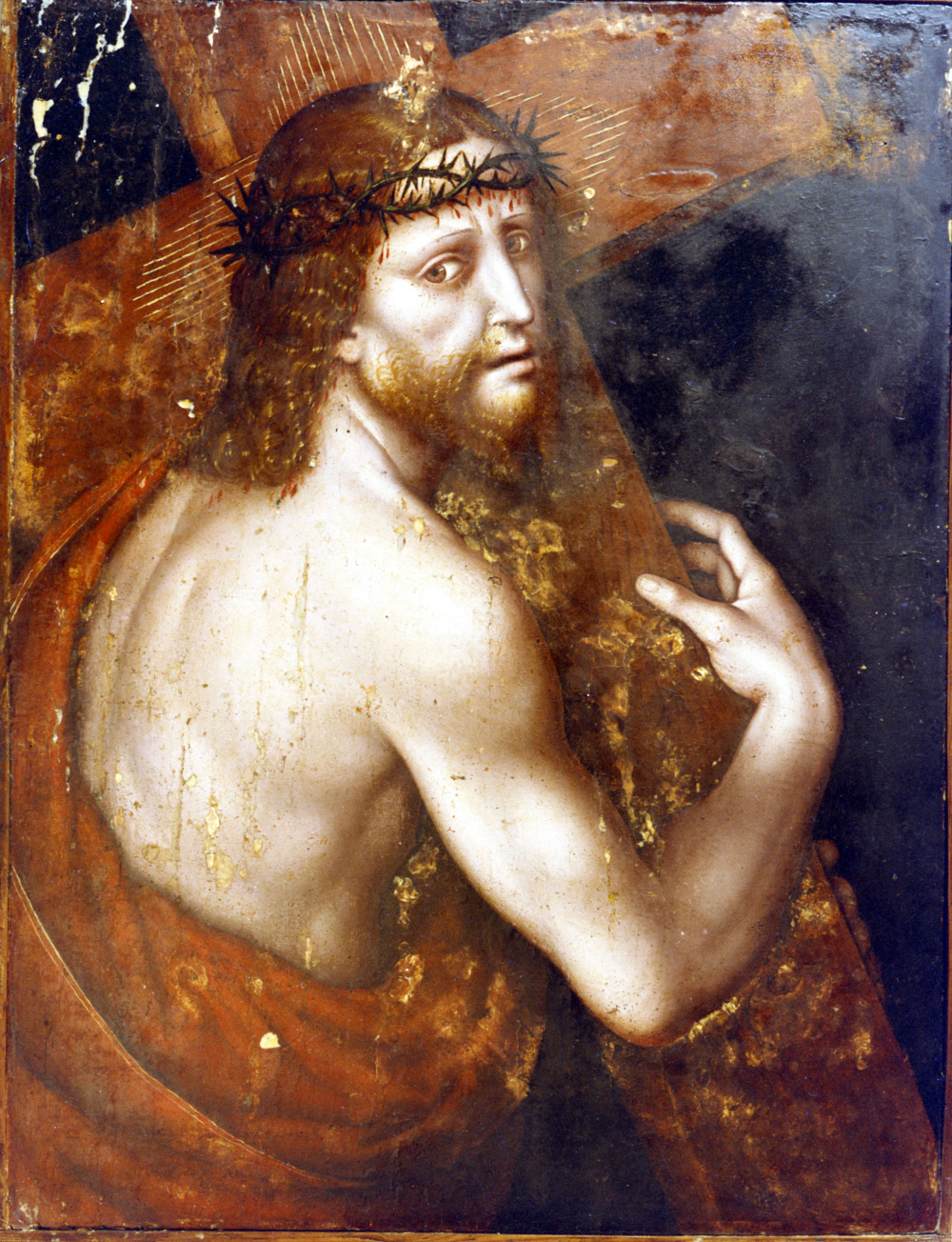
The Painting before the rediscovery of the right-hand figure
Pentimenti Visible in X-ray
In The Painting, radiography helps confirm the existence of corrections and reworkings already observed through other examination methods. For a detailed analysis of the pentimenti, see the page Pentimenti.

The thumb — X-ray
The Forearm
Notes written in the 1970s report the surprise of the radiologist who examined the work in the 1960s: in the X-ray, the muscles of the right arm and back appeared to him to be “painted” and “distinct”. This assessment would ideally need to be compared with the opinion of another specialist.
This reading is particularly relevant to the forearm, whose volume appears more developed than that of the upper arm.
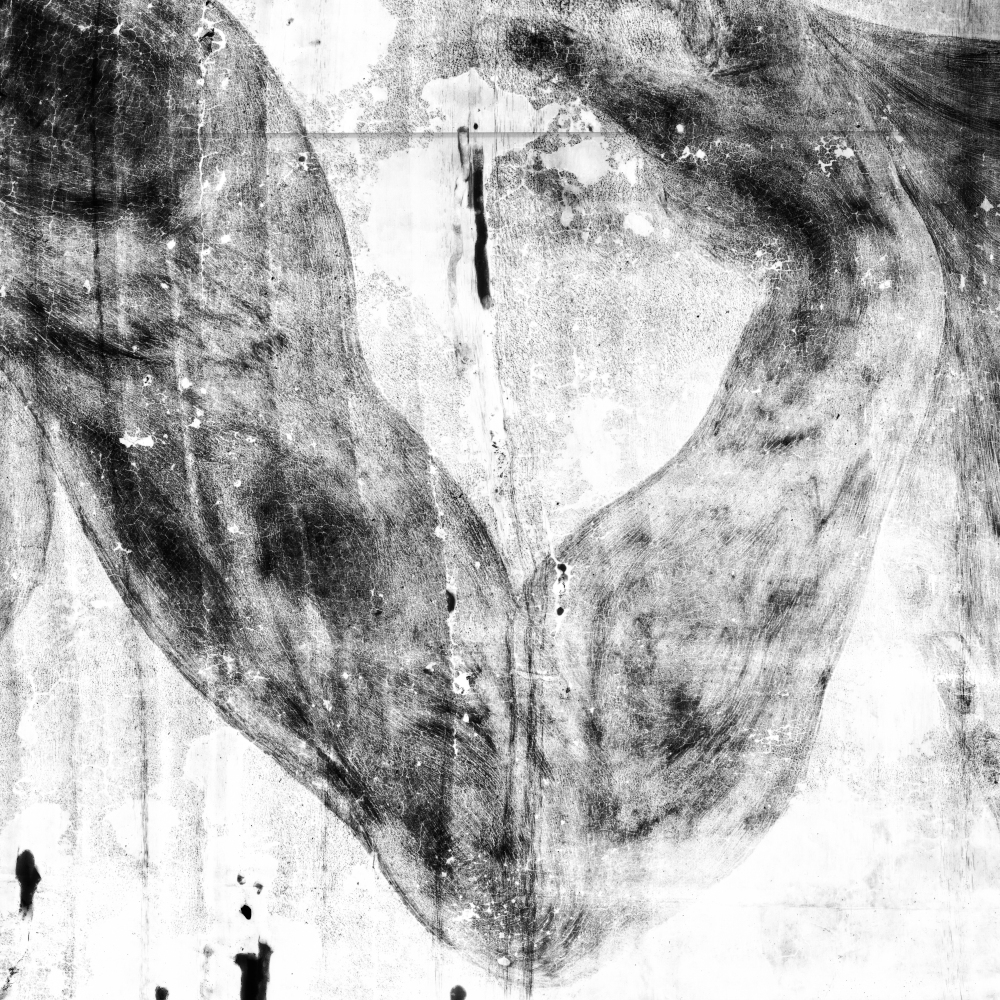
Radiography thus confirms several essential points: the presence of the right-hand figure beneath the old black layer, internal corrections, areas rich in lead white and the anatomical modelling of the arm. It is not sufficient, by itself, to establish an attribution, but it constitutes a major material document for understanding the execution of The Painting.