The Ecce Homo of Cassago Brianza, Salaino and The Painting
The Ecce Homo preserved at Cassago Brianza, attributed to Salaino, shows significant points of convergence with The Painting. The connection begins with the inscription “Salajno” on the reverse of the work under study, an old form of “Salaino”, in which the letter j, used as a long i in Italian, stands for i. It continues in the comparison of the works themselves: general structure, contours, crown of thorns, radiating halo, drops of blood and treatment of the hair.
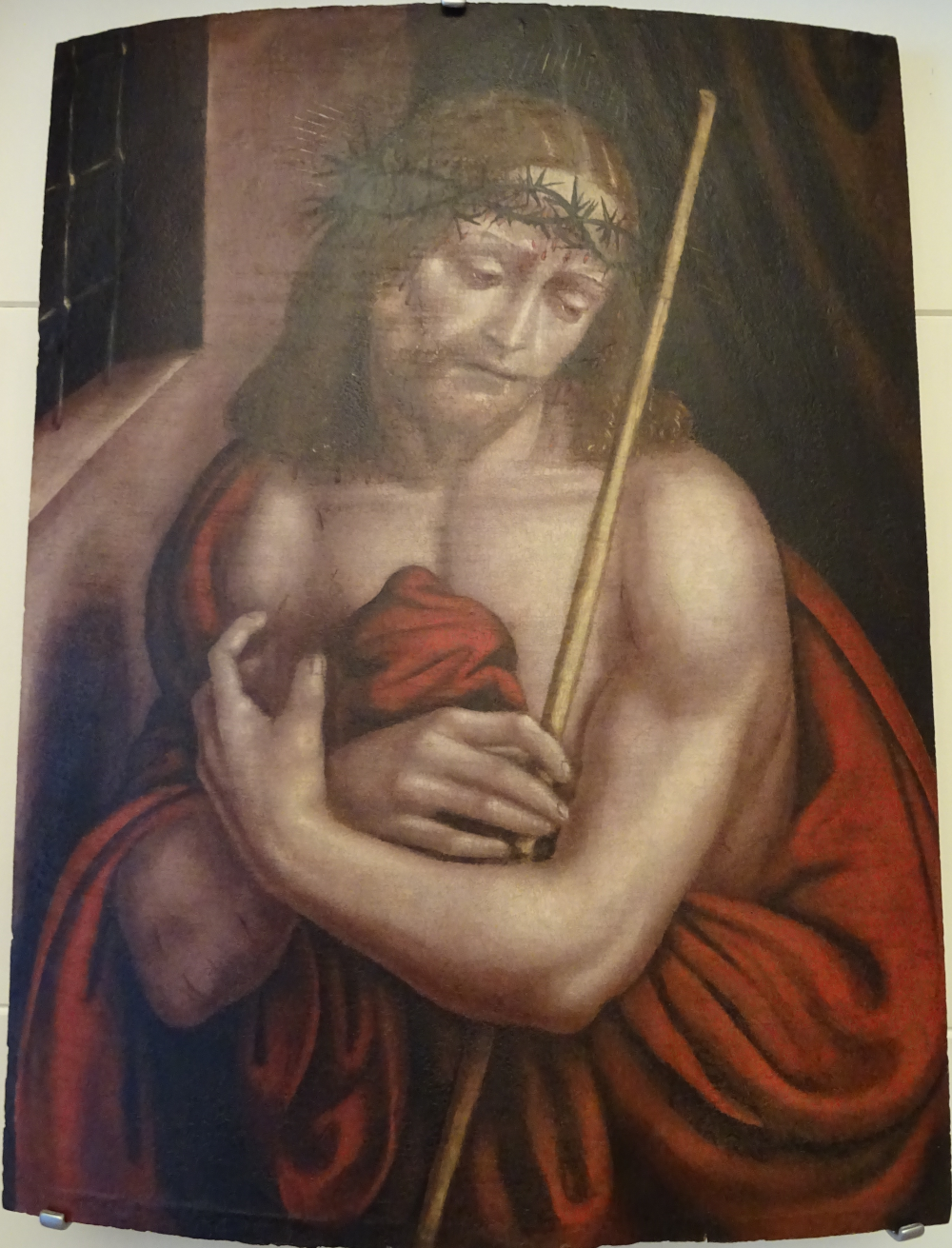
Presentation of the Ecce Homo
The parish of Cassago Brianza, north of Milan, preserves an Ecce Homo attributed to Salaino. The work has attracted attention because of its proximity to Milanese representations of the Passion, particularly through its halo, crown of thorns and certain facial features. The earlier dossier also records a previous attribution to Giampietrino, later reclassified in favour of Salaino. This shift in attribution justifies the comparative interest of the work within the Leonardesque context.
A Composition Close to Giampietrino
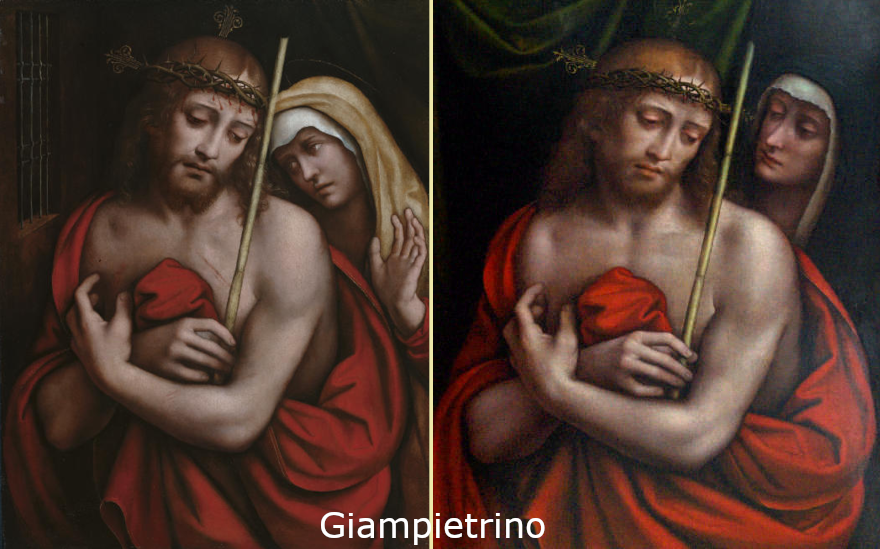
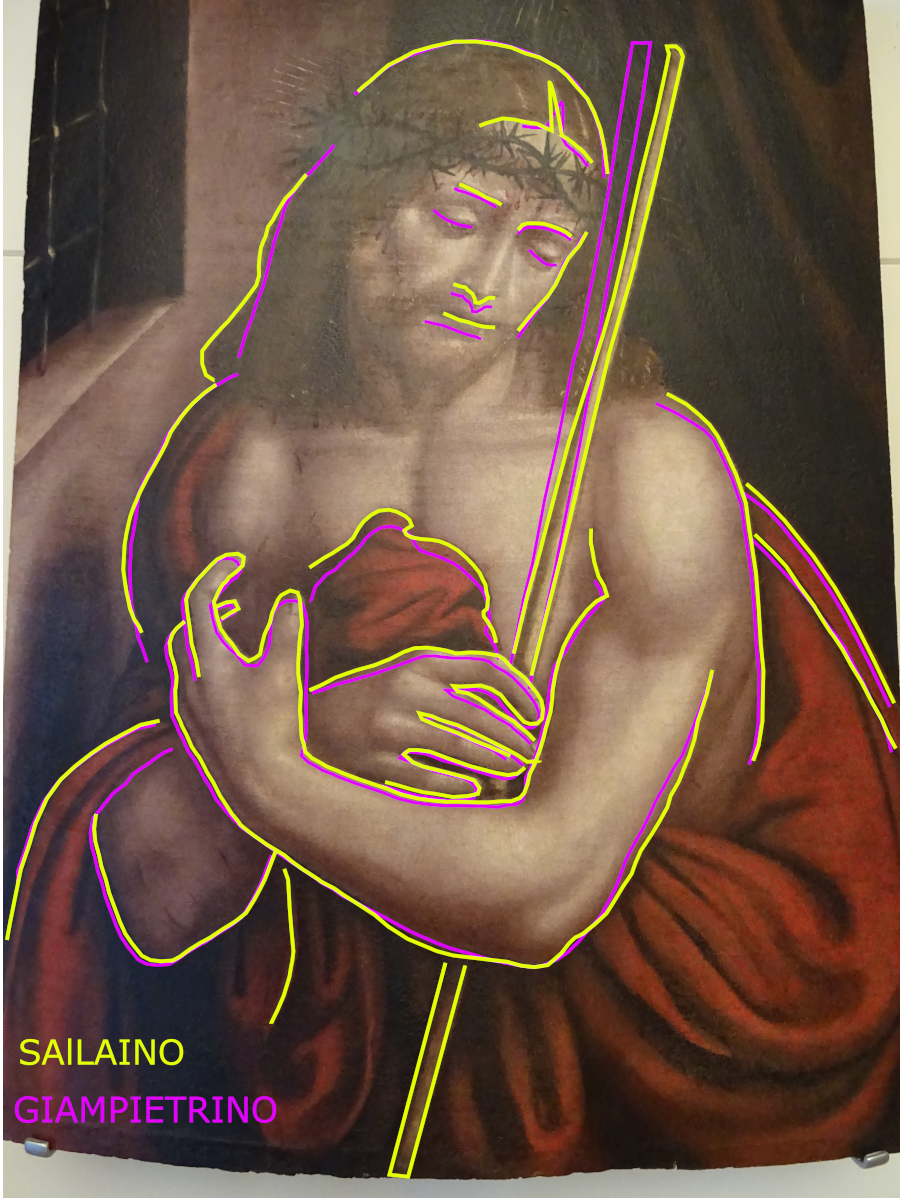
Two other Ecce Homo paintings attributed to Giampietrino present a very similar composition, with the Virgin on the right. The dimensions of one of them are close to those of the Cassago Brianza version. When the images are brought to the same scale, the comparison of the contours reveals a strong structural relationship. It suggests the use of a shared preparatory drawing, while also showing differences in the folds, the background and the lower part of the reed.
Comparison with The Painting
The comparison with the work under study does not concern the entire composition, but a set of converging details. The clearest similarities concern the crown of thorns, the halo, the drops of blood and certain aspects of the hair.
This comparison is reinforced by the presence, on the reverse of the work under study, of the inscriptions “Salaino” and “Salaj / …”, although these mentions are not sufficient, in themselves, to establish an authorial connection.
A Crown of Thorns with a Comparable Structure
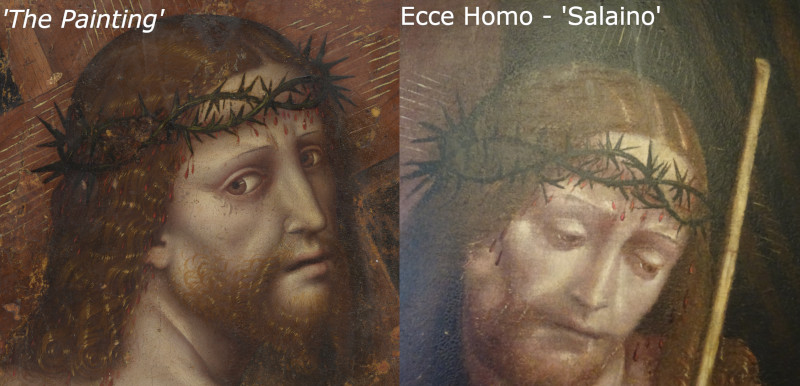
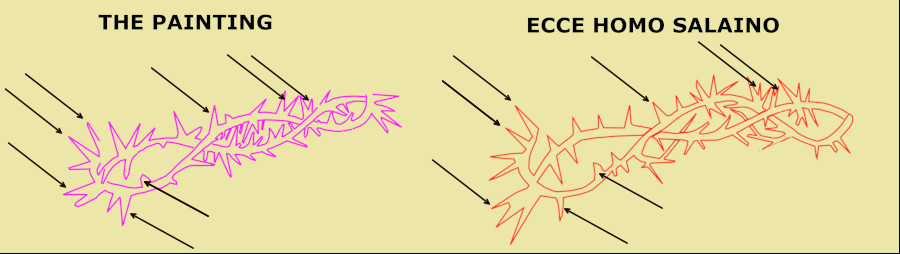
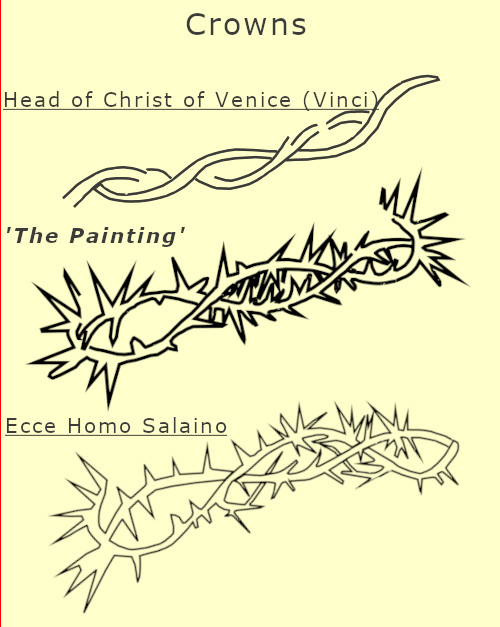
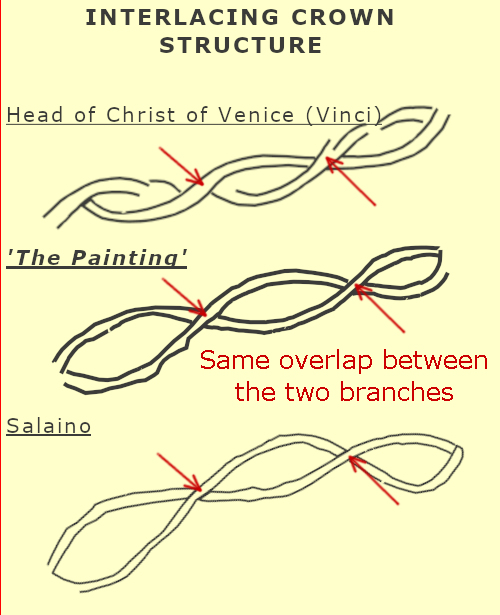
In both works, the crown is seen from a similar angle. Its interlacing rests on two main branches, with a comparable placement of several thorns. This scheme differs from Giampietrino’s crowns, which are generally thicker, tighter and built around three branches. The comparison with the Venice Head of Christ further strengthens the interest of this detail.
The Link with the Venice Drawing
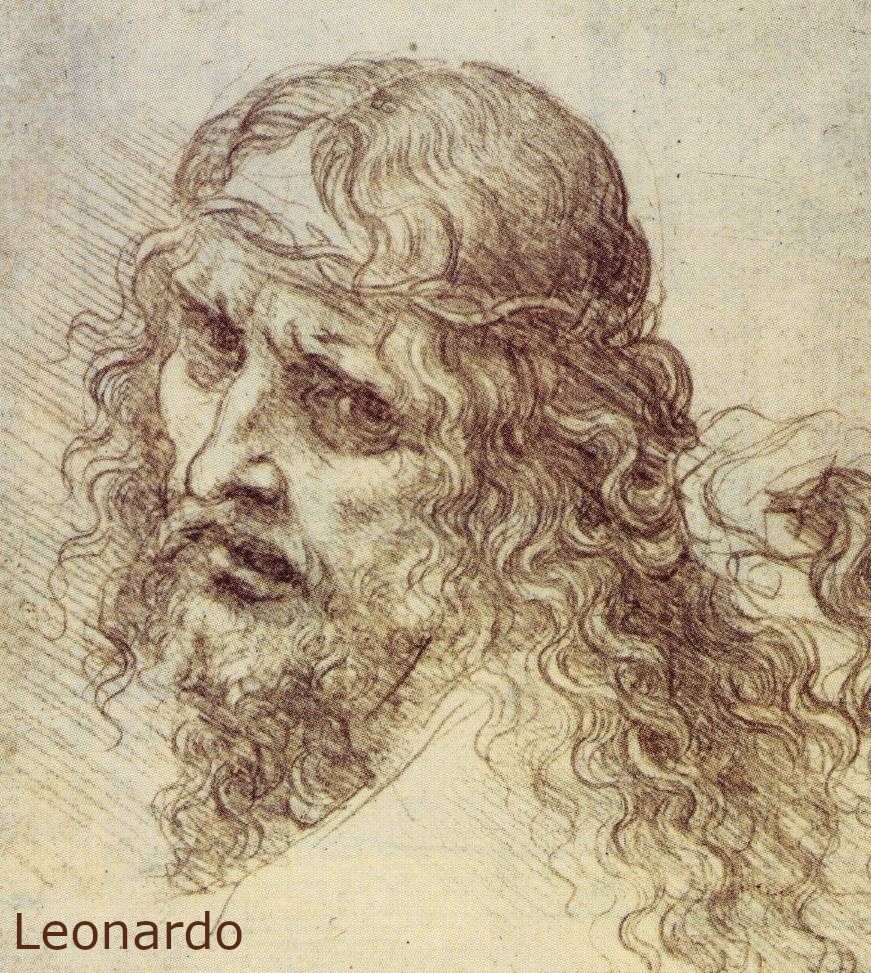
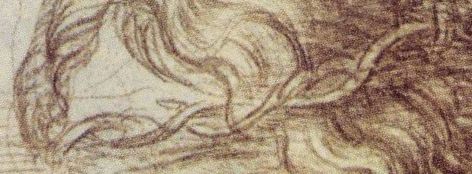
The structure of the crown can be compared with that of the Venice Drawing. Reduced to its simplest form, in all three cases it rests on the same principle of a two-branch interlacing. The most significant point lies in the overlapping of one branch by the other. This structural detail appears both in The Painting and in the Ecce Homo attributed to Salaino.
A Radiating Halo of Comparable Form
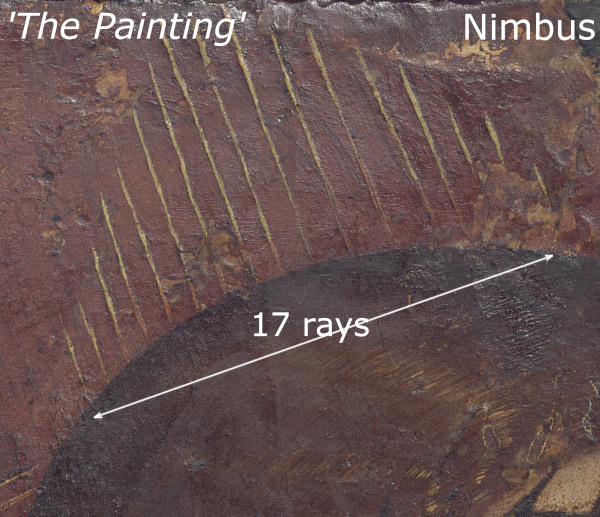
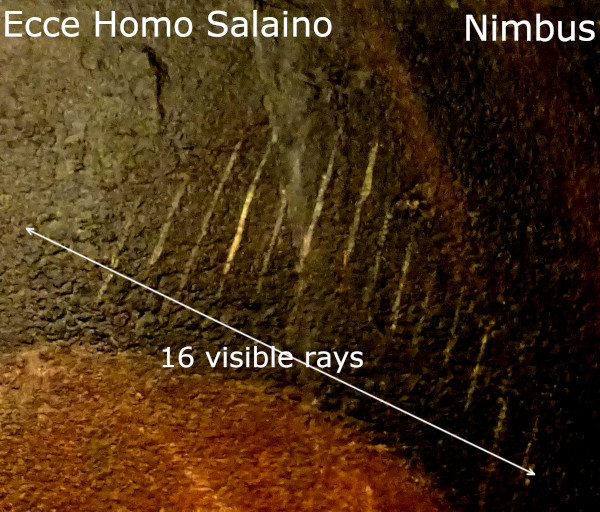
The two works present a radiating cruciform halo of similar facture. In The Painting, this halo is considered a later addition; in the Ecce Homo, it also appears as rays arranged around the head of Christ. The arrangement and visible number of rays support the formal comparison between the two images.
Drops of Blood of Comparable Form
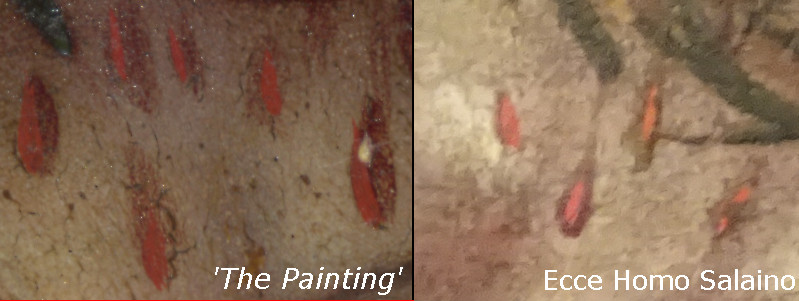
The drops of blood have a similar form and a comparable distribution on the forehead and on either side of the hair. In The Painting, they have been retouched; in the Ecce Homo, they have also undergone interventions.
This detail is all the more useful because it differs from the drops visible in other works by Giampietrino, where their distribution and design do not follow exactly the same logic.
Hair Constructed in a Similar Way
The hair also offers several correspondences: general form, net-like appearance, highlights arranged around the central parting, drawing of the curls and luminous accents in the lower right area. These similarities are not sufficient to establish a direct dependency. They do, however, add to a coherent set of morphological and graphic comparisons.
Conclusion
The comparison between the Ecce Homo of Cassago Brianza attributed to Salaino and The Painting reveals several precise points of convergence: crown of thorns, halo, drops of blood and hair. Taken together, however, they form a network of relationships that raises the question of a possible link between the two works and strengthens the documentary interest of the inscriptions “Salaino” and “Salaj / …” on the reverse of the work under study.