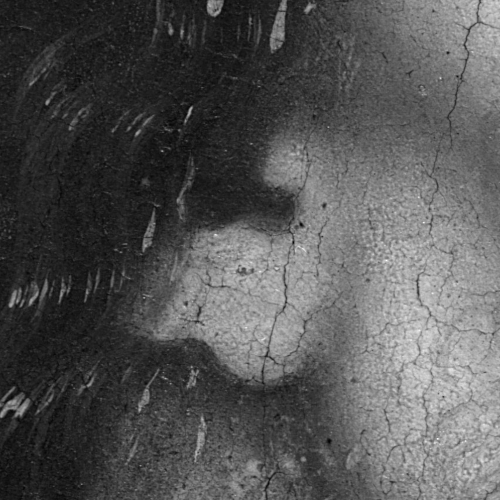
The Painting: Complete Study
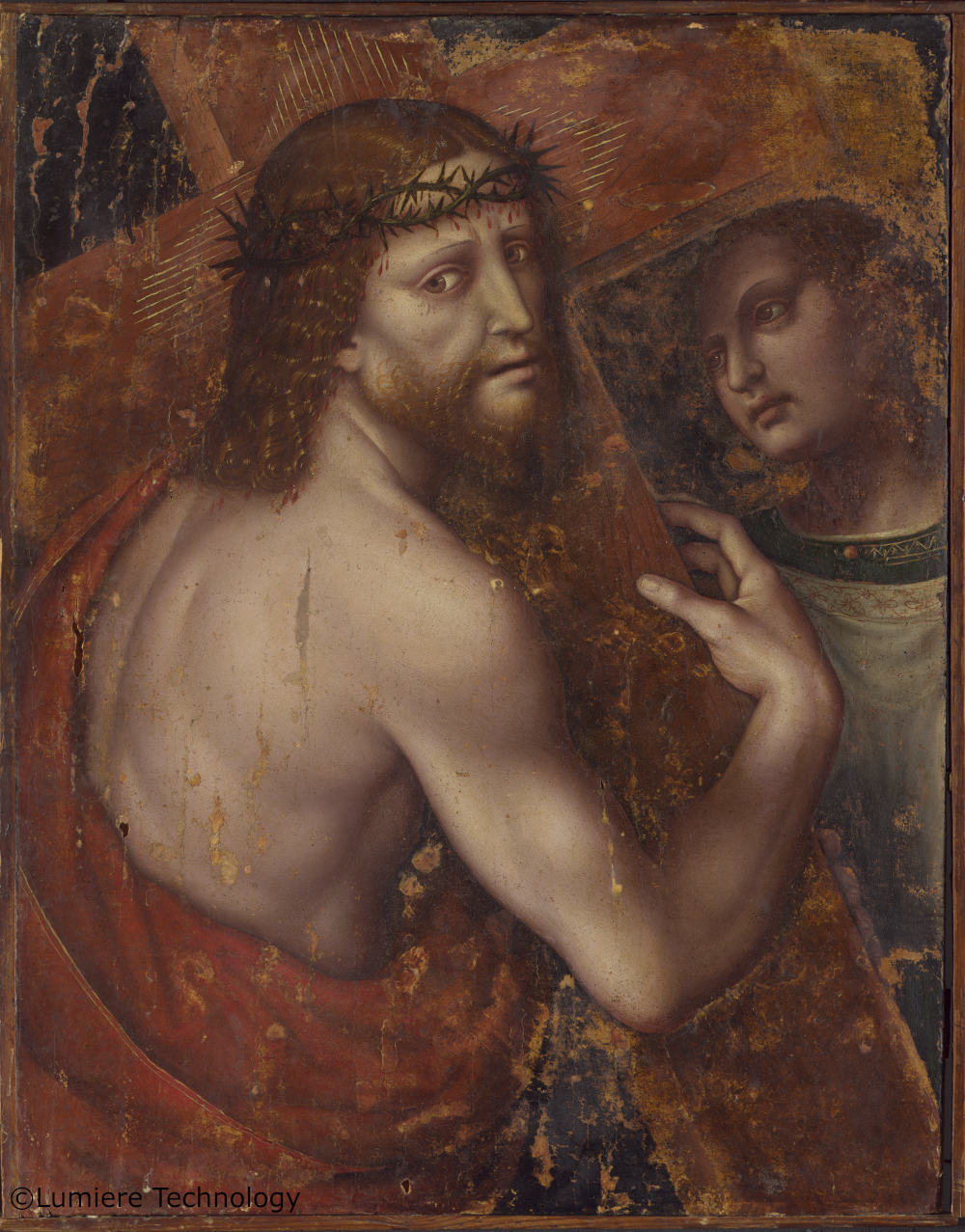
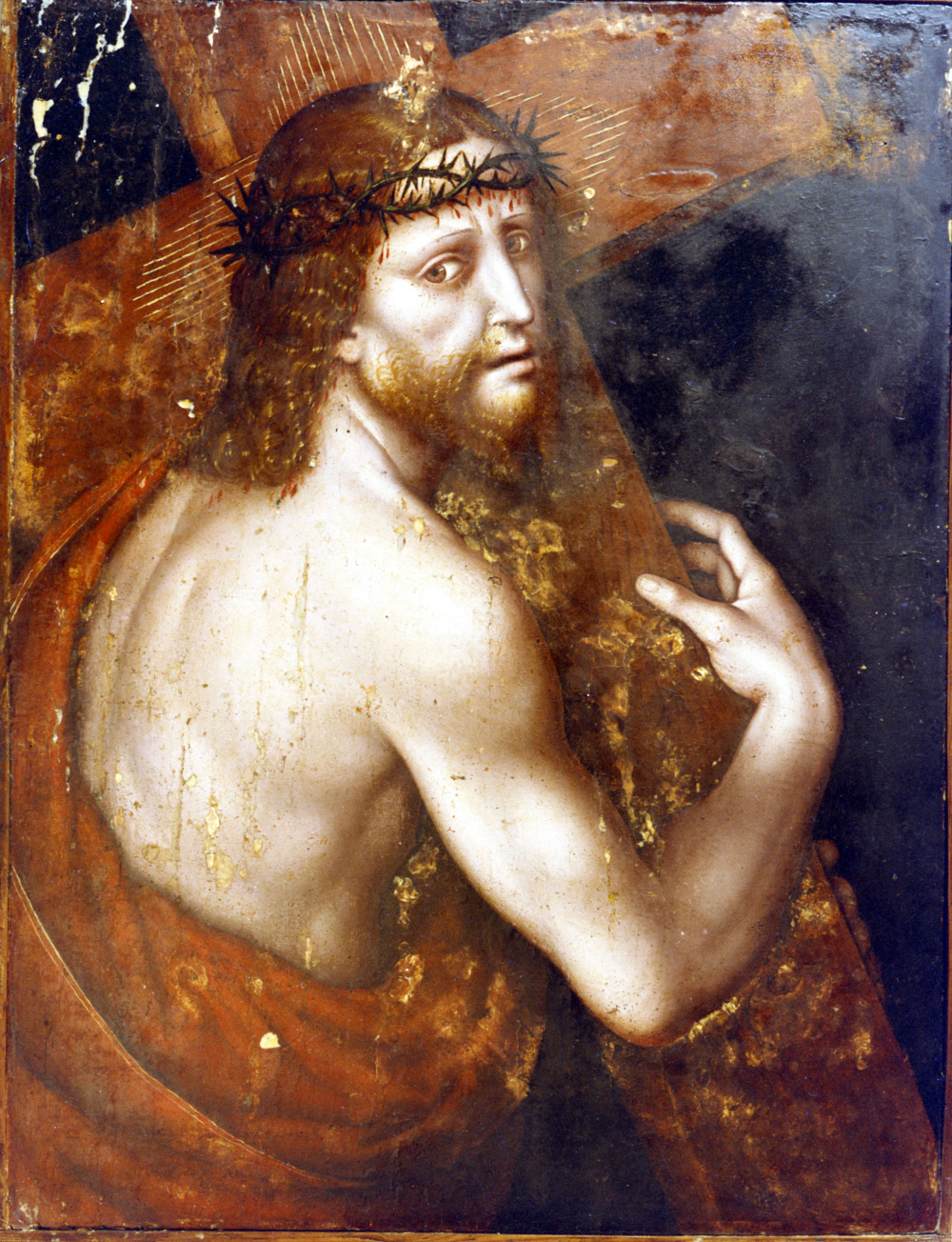
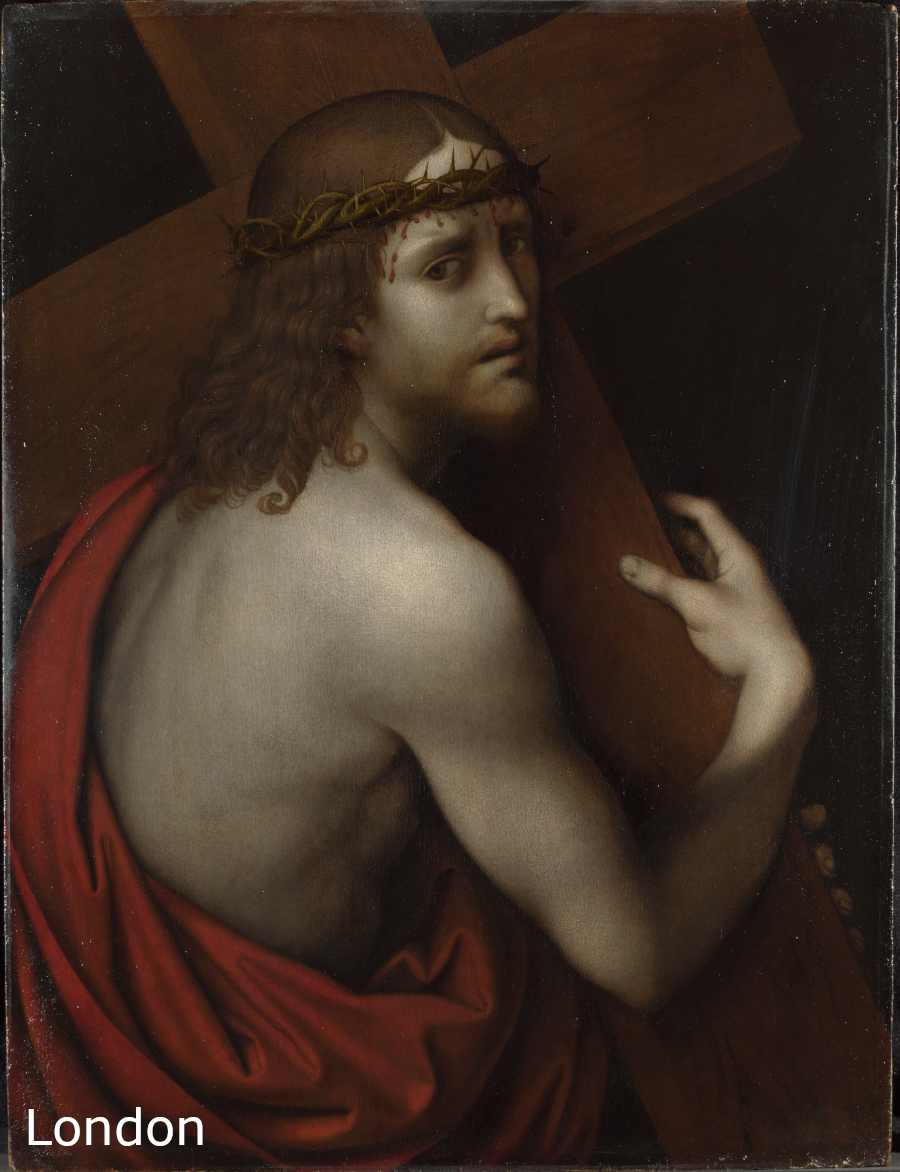
The Painting is an anonymous Italian Renaissance Christ Carrying the Cross, painted in oil on poplar panel (60 × 46 cm). Dated after 1470, it presents a rare iconography: Christ seen from a three-quarter rear view, accompanied by a young figure revealed by X-ray.
The aim is to situate the work within the Leonardesque Milanese milieu: not as a simple workshop copy, but as an autonomous variant or a direct witness to a model now lost.
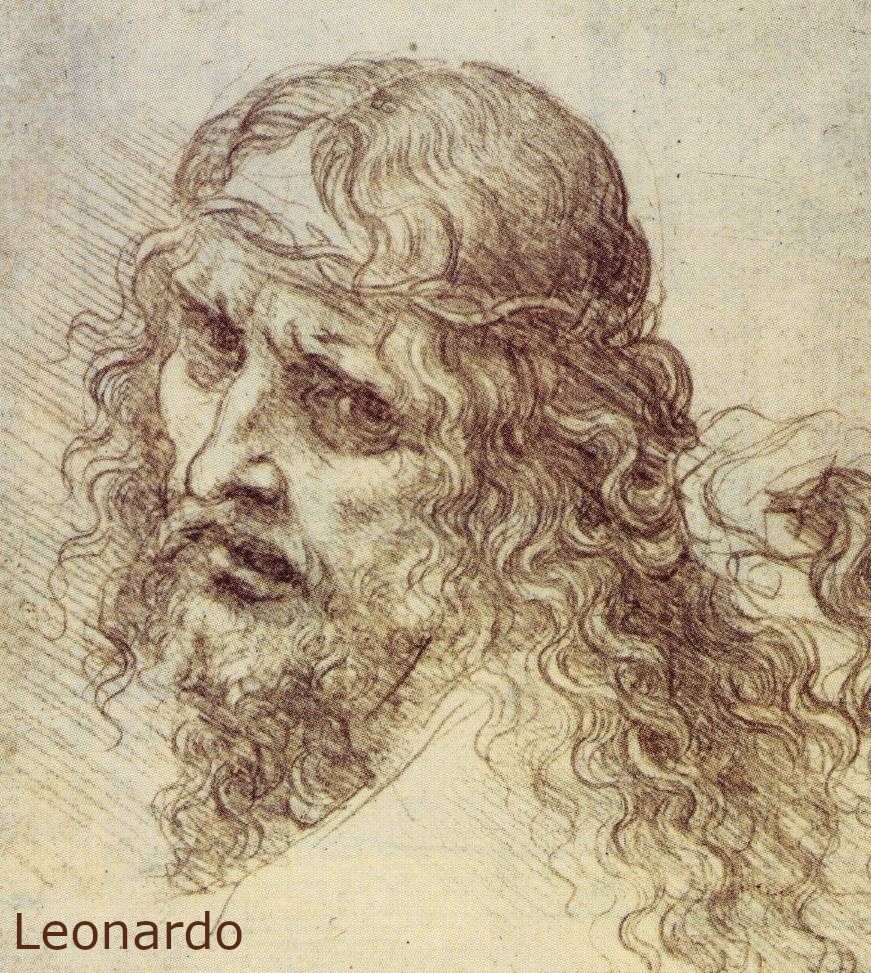
The study combines the material and scientific examination of the panel with comparisons based on Leonardo da Vinci’s Venice Head of Christ drawing, recognized as the reference model for Giampietrino’s Christs Carrying the Cross, as well as with the main Milanese versions. Detailed analyses are developed in the pages of the sub-menu.
Provenance and history
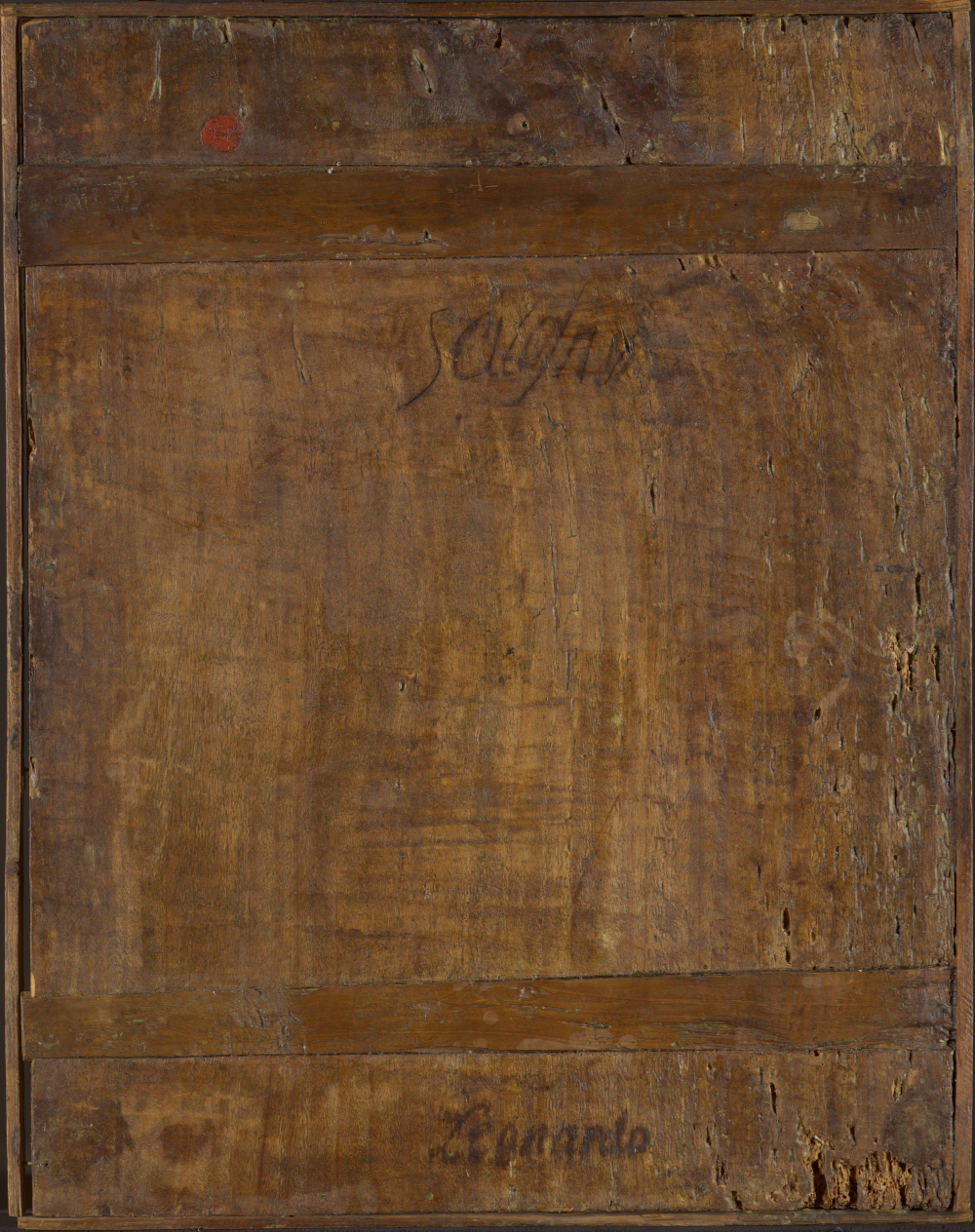
The documented provenance of the panel rests first on the reverse and on several expert examinations carried out since the twentieth century. Inscriptions, handwritten notes, a red wax seal, and analyses of the support provide the main material points of reference.
See the dedicated page: Provenance of The Painting
The young figure at right
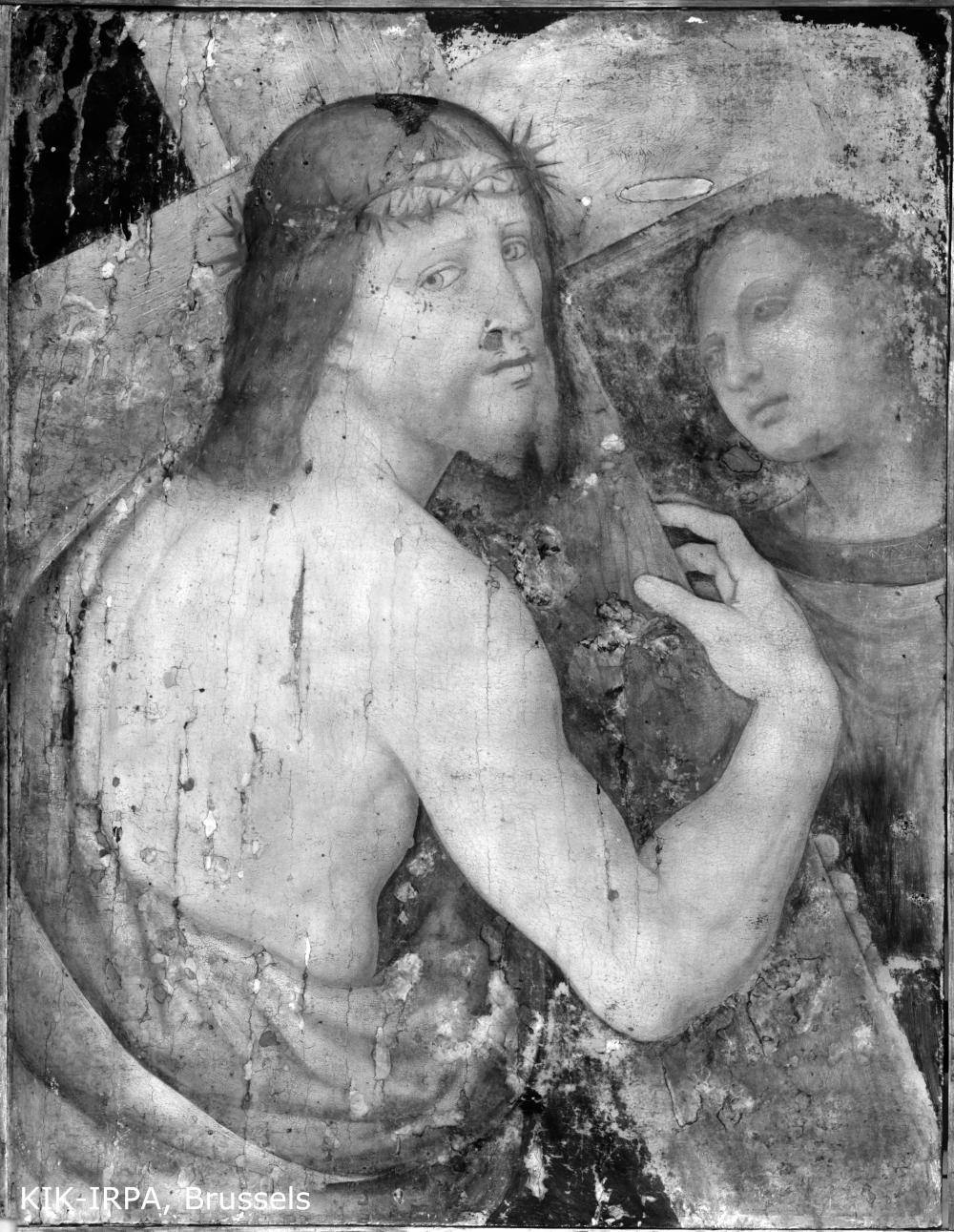
The young figure at right is one of the most singular features of The Painting. Revealed by X-ray beneath an old black layer, it appears in none of the known Milanese versions of Christ Carrying the Cross. Its presence alters the balance of the composition and requires the question of its role to be reconsidered.
See the dedicated page: The young figure at right
Iconography
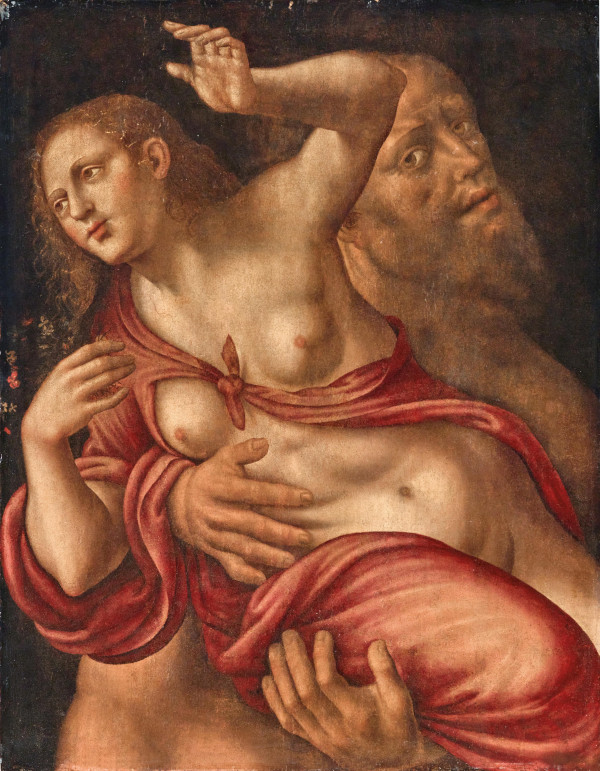
The Iconography page examines the comparisons that help situate this variant within its artistic and cultural context. Among them, the comparison with the Rape of Proserpine from Giampietrino’s workshop deserves particular attention, because of the similarities observed with the young figure in the Painting.
See the dedicated page: Iconography
Technical analysis
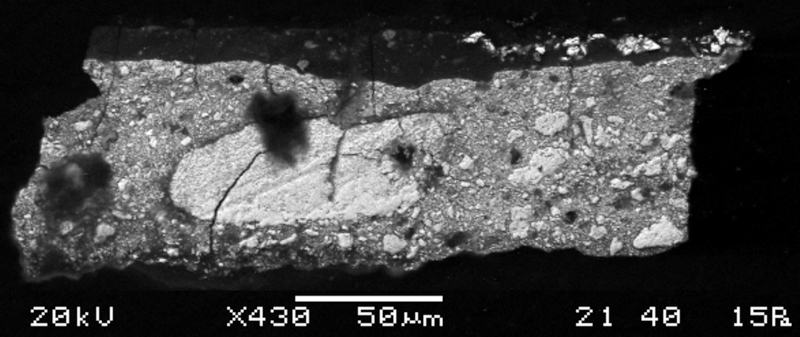
This section brings together the main results of the technical analysis of The Painting: support, underdrawing, transfer method, paint layer, and alterations. It is based on imaging and on the examination of decisive areas.
See the dedicated page: Technical analysis
Examinations and expert reports
Since the twentieth century, The Painting has been the subject of several examinations and expert reports. These studies have clarified the support, the painting technique, and the state of conservation, but they have also produced divergent readings, depending on whether priority is given to the eye, imaging, or material analysis.
See the dedicated page: Examinations and expert reports
The Painting and Giampietrino
Several Christs Carrying the Cross attributed to Giampietrino show a composition very close to that of The Painting. This proximity points to a shared model, but the iconographic and technical differences rule out reducing The Painting to a simple workshop variant.
See the dedicated page: The Painting and Giampietrino

Distinctive features of The Painting
Certain areas of The Painting call for specific analysis. They reveal either singular features of construction, secondary interventions, or direct affinities with Leonardo’s milieu.
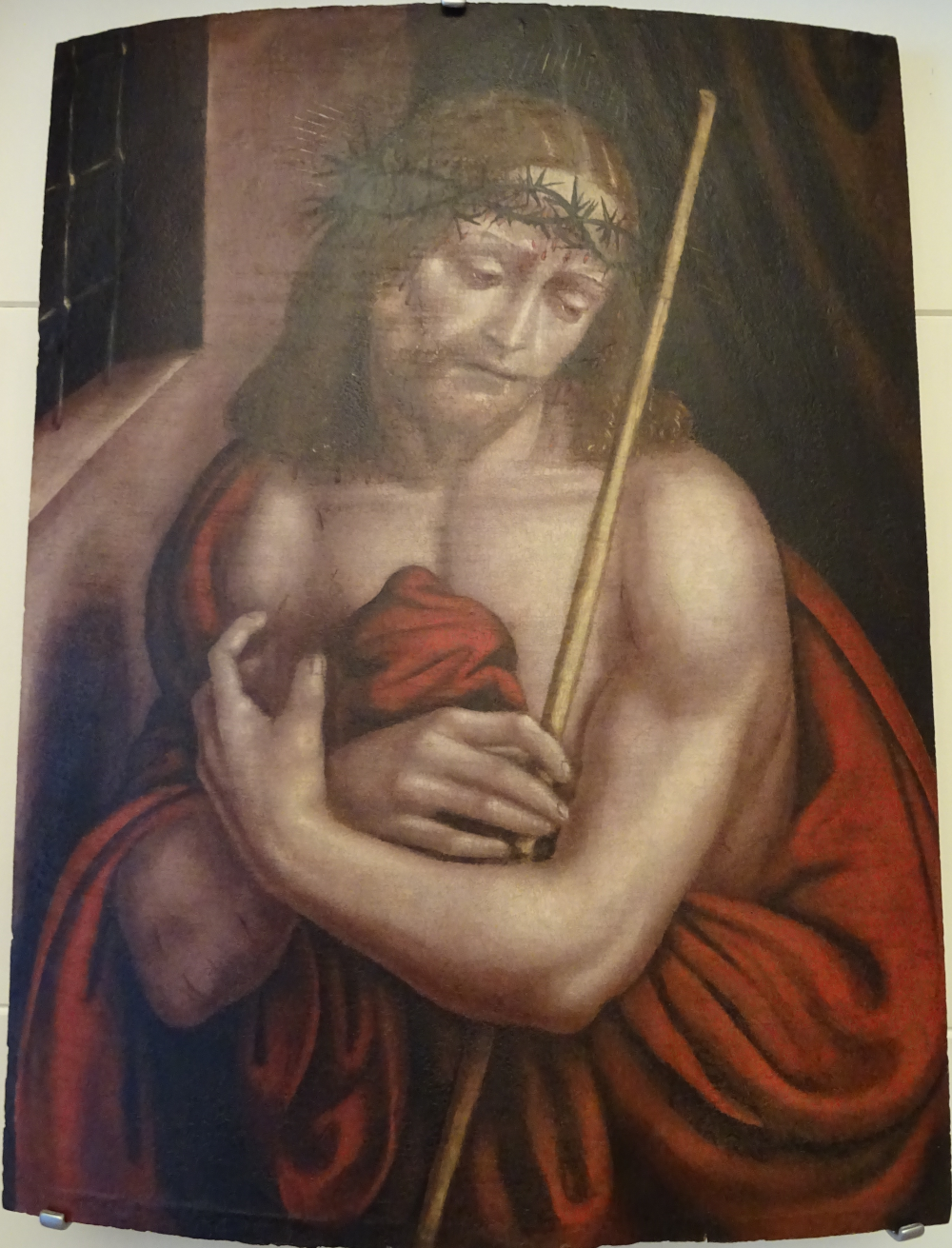
The Ecce Homo of Cassago Brianza and The Painting
This comparison brings out several precise correspondences between the Ecce Homo of Cassago Brianza, attributed to Salaino, and The Painting: contours, crown of thorns, radiating halo, drops of blood, and treatment of the hair.
See the dedicated page: The Ecce Homo of Cassago Brianza
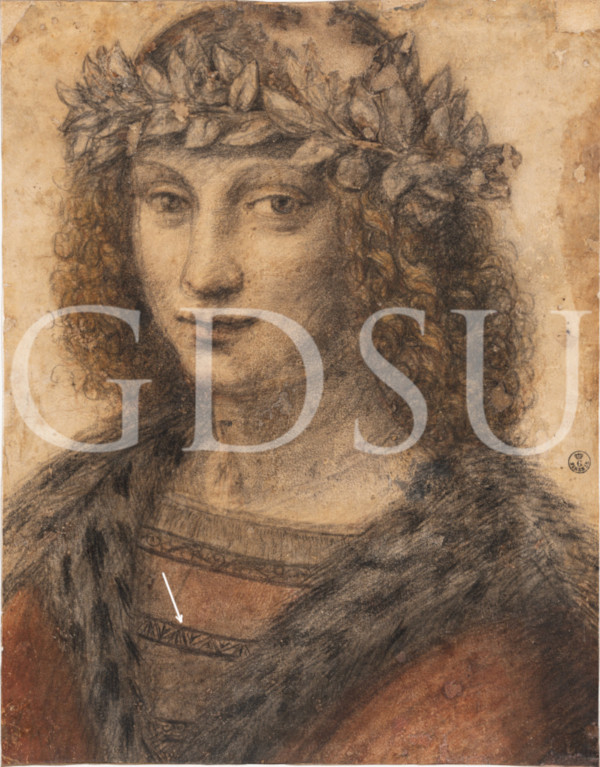
Portrait of a Young Man and the Figure in The Painting
This page examines a precise detail of dress: the ornamental band on the tunic. The comparison between the Portrait of a Young Man attributed to Leonardo da Vinci or to a follower, and the figure in The Painting, brings to light the same ornamental motif and a structural relationship beyond differences of execution and state of preservation.
See the dedicated page: Portrait of a Young Man
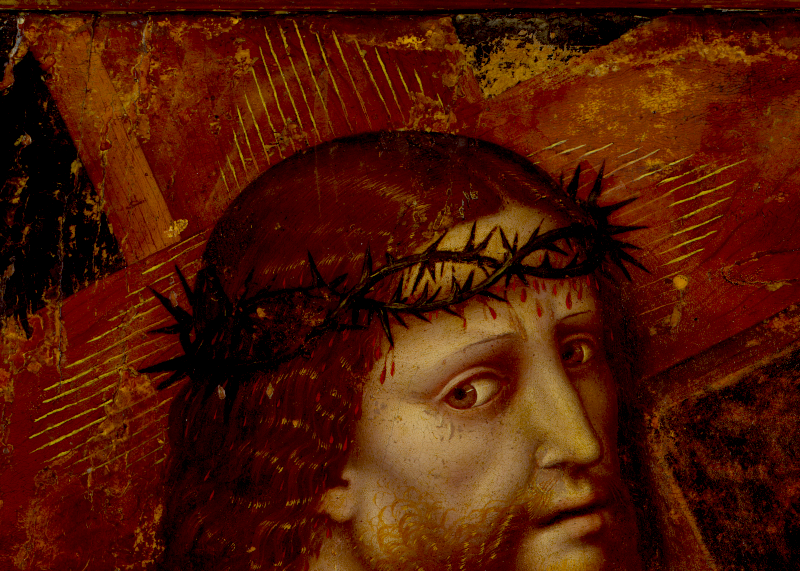
Halo: addition and impact
The halo does not belong to the initial project. Craquelure, stratigraphy, and imaging all point to a later addition, which changes the reading of Christ’s head and reinforces the religious character of the scene.
See the dedicated page: Halo — addition and impact
Christ’s forearm
Christ’s forearm shows a construction that is particularly clear in infrared. Its musculature, markedly more developed than in Giampietrino’s versions, constitutes a significant morphological difference. Beyond anatomy alone, this detail reinforces the idea of a filiation of the model and of its possible link with Leonardo’s milieu.
See the dedicated page: Christ’s forearm
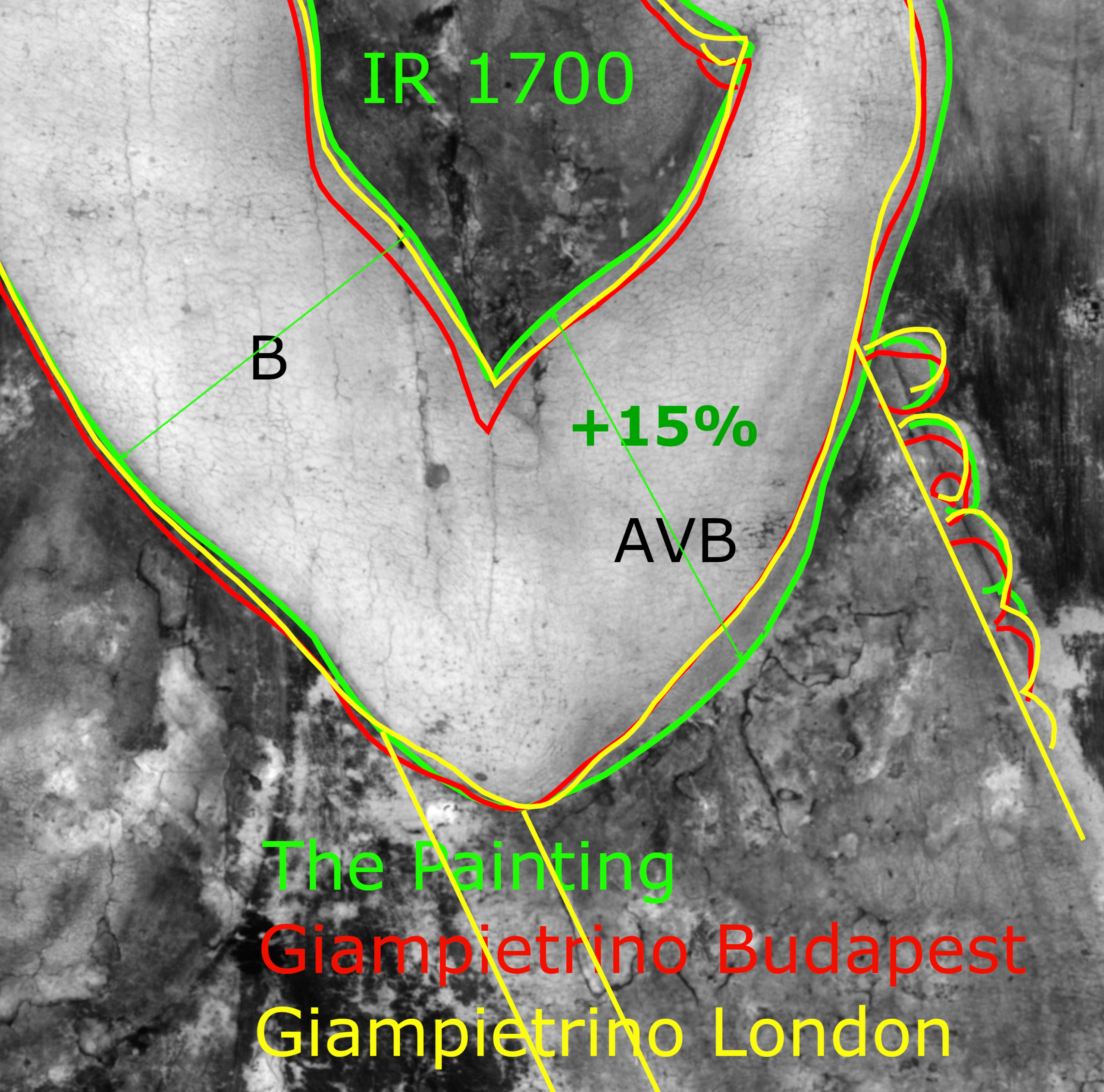
Christ’s ear
Christ’s ear constitutes a singular morphological detail. The shape of the lobe, compared with certain patterns analysed by Morelli and with several works by Leonardo, gives this detail real comparative value in the study of The Painting.
See the dedicated page: Christ’s ear