The Hand of Christ
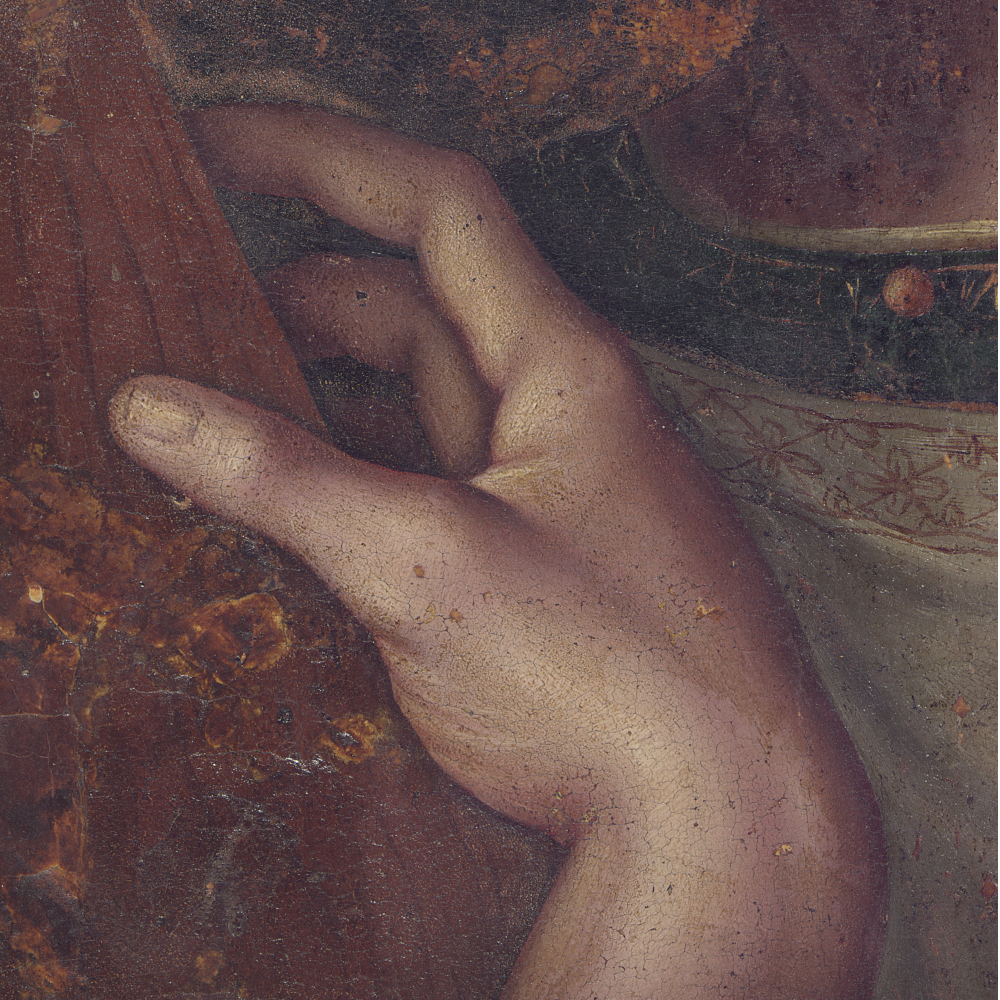
The study of Christ’s forearm identified more pronounced musculature in infrared images of the Painting than in the versions by Giampietrino examined. The study of the hand extends this analysis: the thumb opposes the fingers curled around the cross, while the relief, folds and shadows suggest the effort of the grip.
The comparison with Giampietrino focuses on the modelling, the contour of the hand and the shape of the nail. A comparison with a study of hands by Leonardo da Vinci allows a closer examination of the thumb.
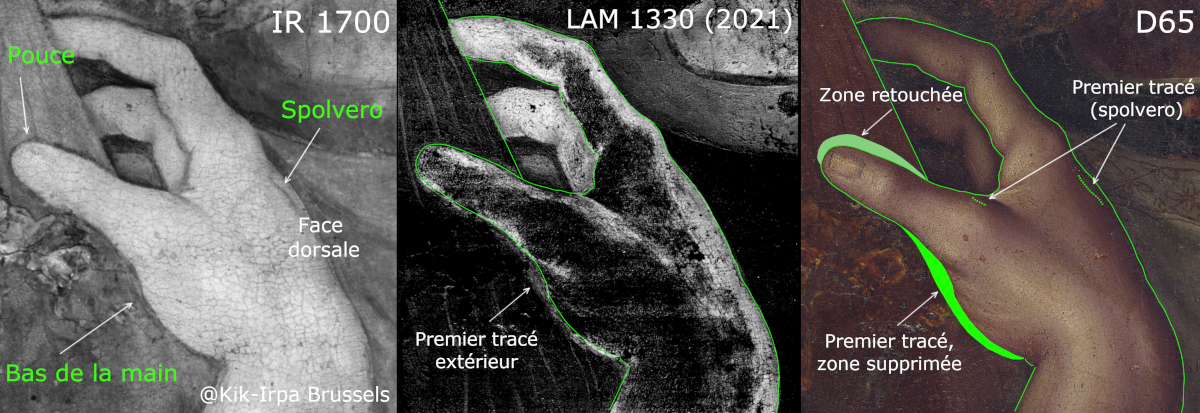
Christ’s hand: preparatory drawing and pentimenti
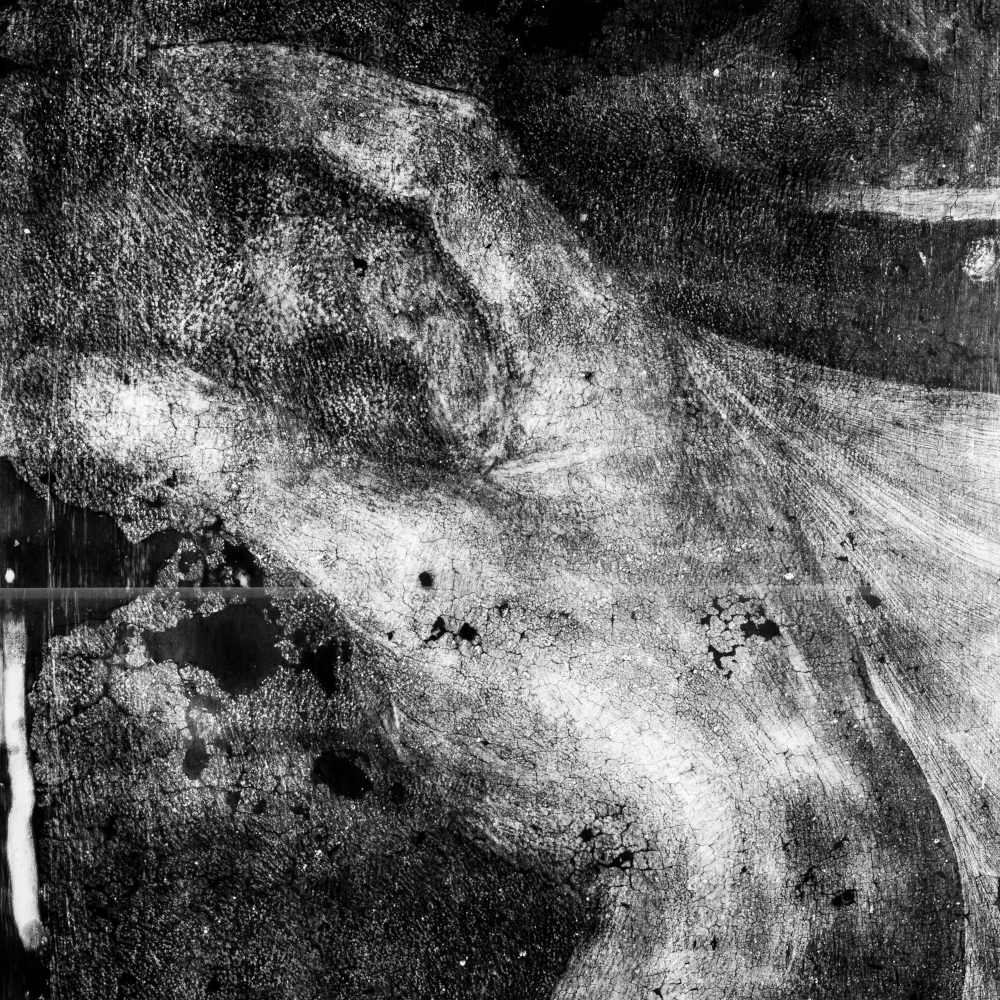
Technical imaging reveals several changes to Christ’s right hand. The initial lower contour was brought inwards, reducing the volume of the hand, and the thumb was corrected. On the back of the hand, dots identified as traces of spolvero, a method of transferring a drawing by pouncing, are offset from the final contour.
In the X-ray image, the contours of the reworked area are less distinct than those of the upper part. Considered alongside the changes in outline, this difference is consistent with reworking during the original execution. These indications shed light on the adjustment of the volumes and the transition to the wrist. See the study of pentimenti in the Painting.
The transfer of a drawing is not, however, a feature distinctive to Leonardo: the National Gallery also documents traces of cartoon transfer, visible in infrared, in Giampietrino’s London version.
Comparison with Giampietrino
Giampietrino’s versions known as “London”, “Budapest” and “Turin” allow a comparison of the relief of the hand, the thumb and the nail; infrared images of the London and Budapest versions extend this examination to the contour of the back of the hand.
The hand: volume and gesture
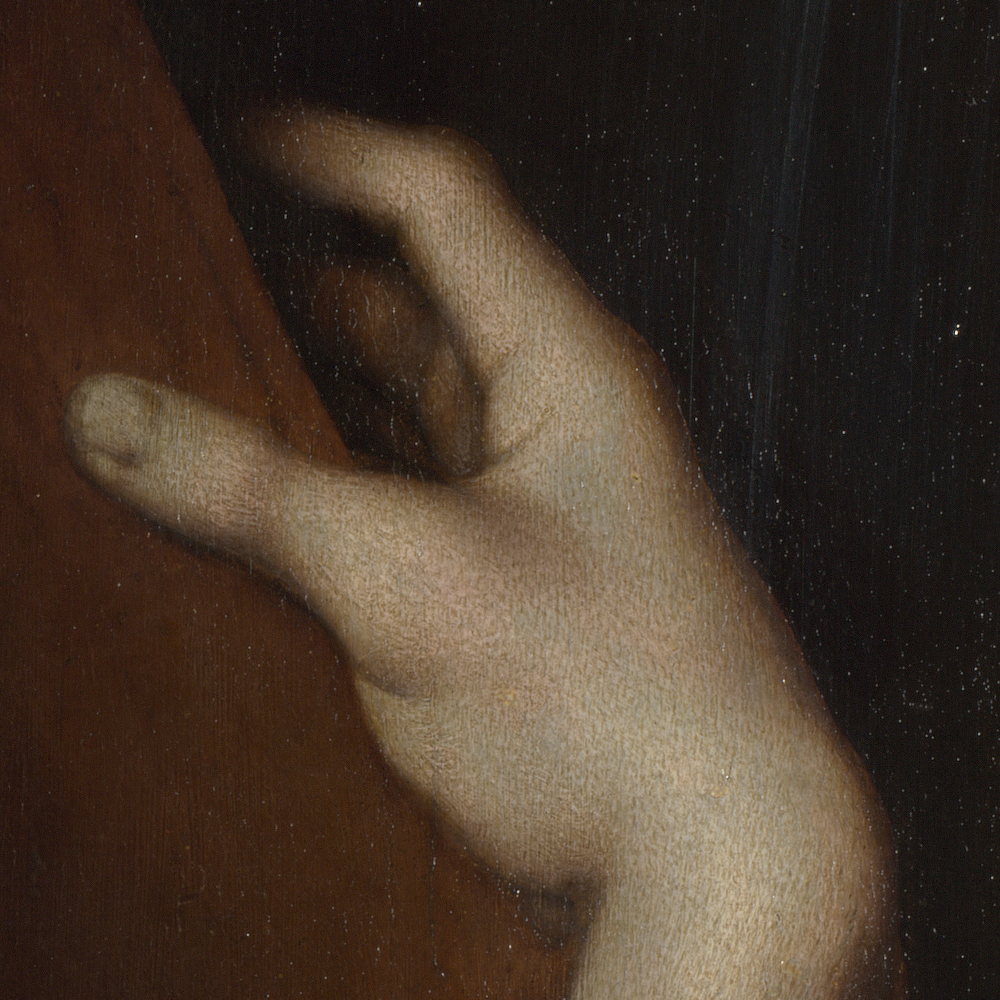
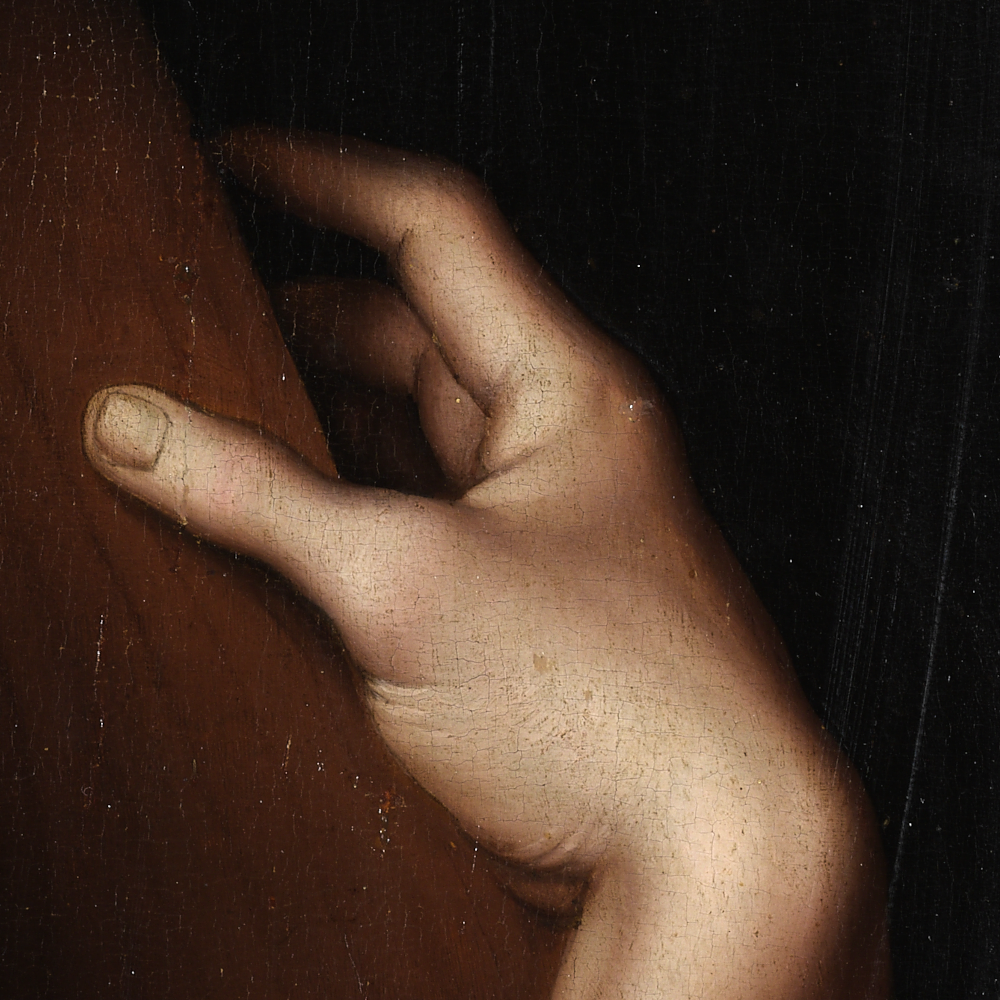
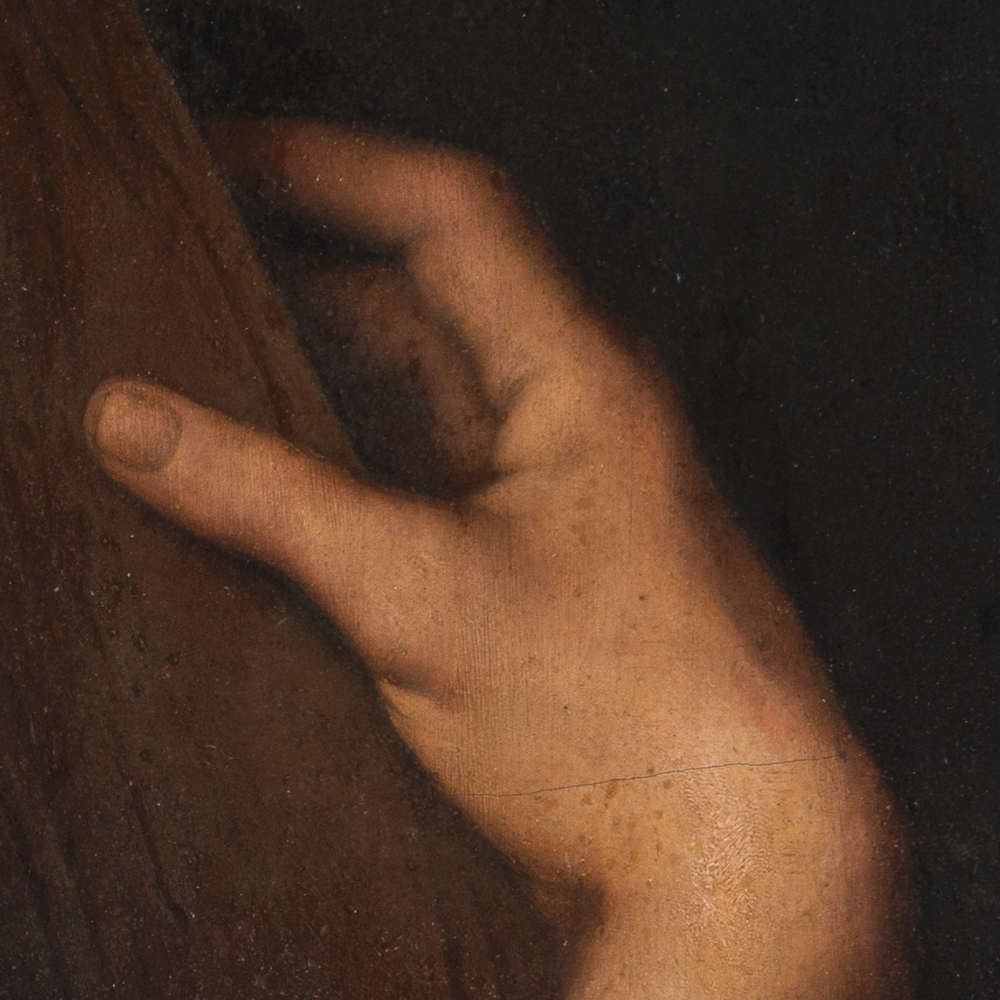
In the Painting, folds and transitions between light and shadow give the hand relief. Giampietrino’s versions show smoother modelling, although the Budapest version makes the joints more visible.
The thumb: making the effort visible
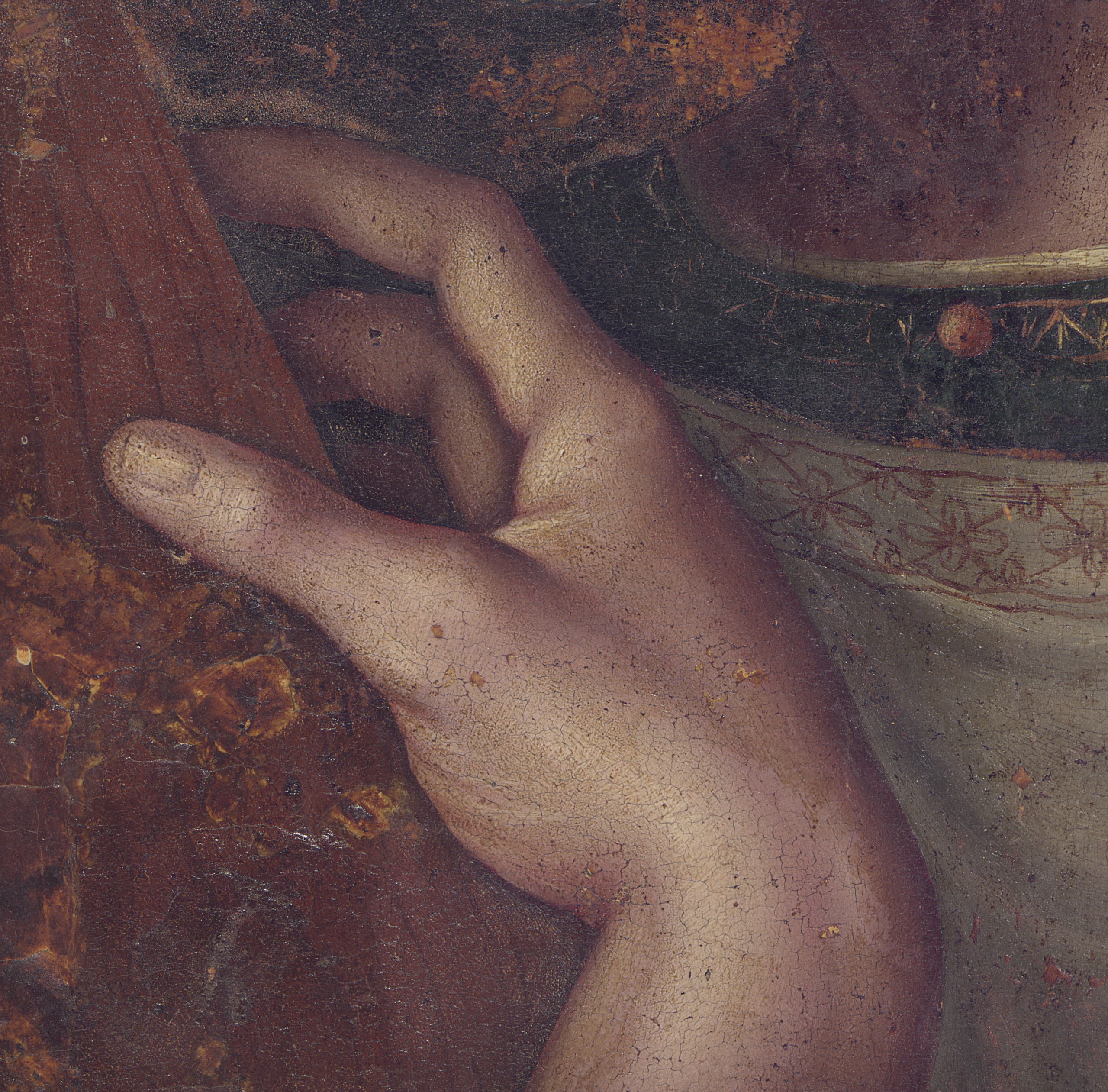
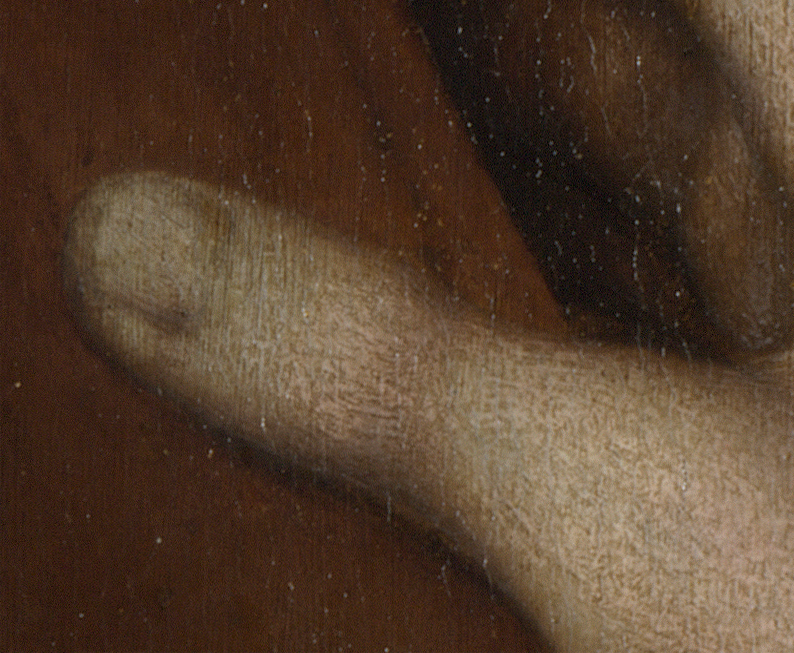
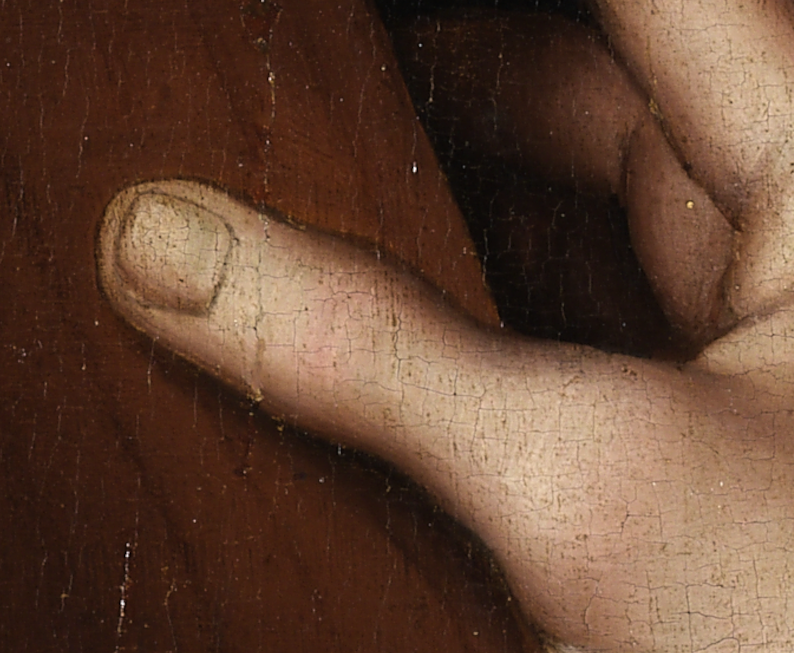
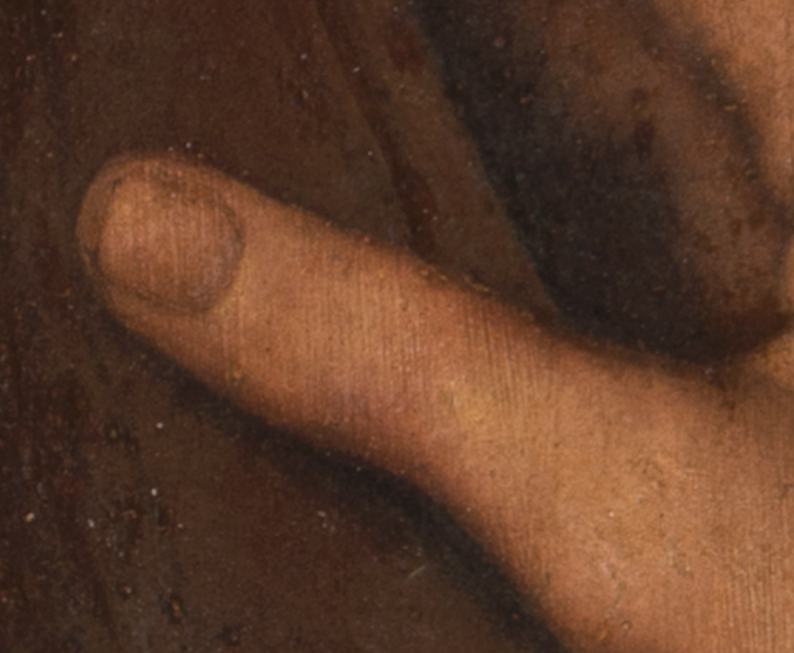
In the Painting, the relief of the thumb and the folds near the joint suggest the pressure exerted on the cross. In Giampietrino’s versions, the thumb appears flatter and the effort less apparent.
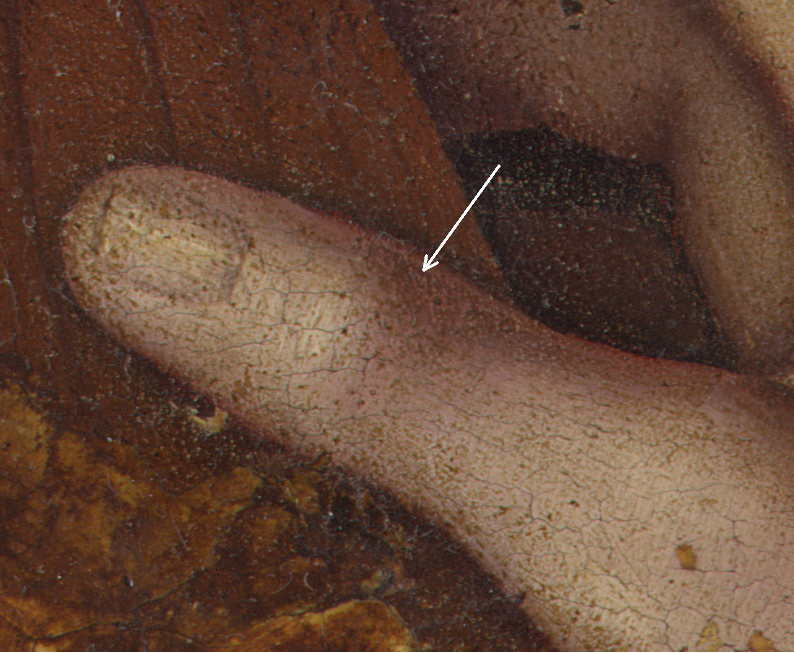
A cast shadow (white arrow) near the joint extends along the thumb and accentuates its volume. This treatment can be considered alongside the comparative study of lighting in the Painting and Giampietrino’s versions.
The nail: a difference in shape
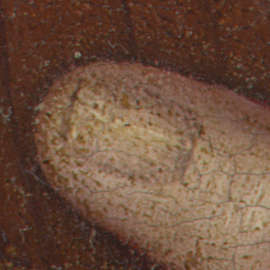
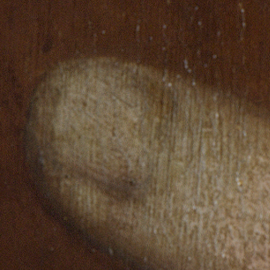
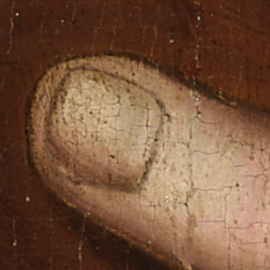
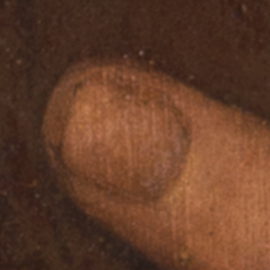
Across the three versions by Giampietrino examined — London, Budapest and Turin — the average length-to-width ratio of the nail is 1.1: the nail is almost as wide as it is long. In the Painting, the ratio is 1.43; the nail is therefore more elongated.
The dorsal surface: the contour of the back of the hand
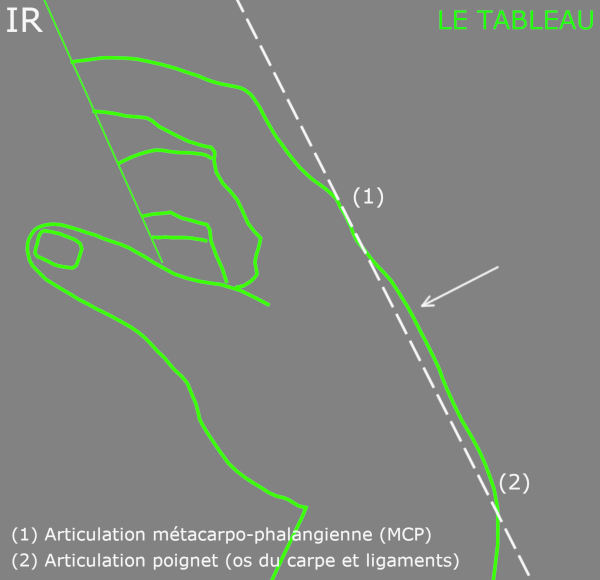
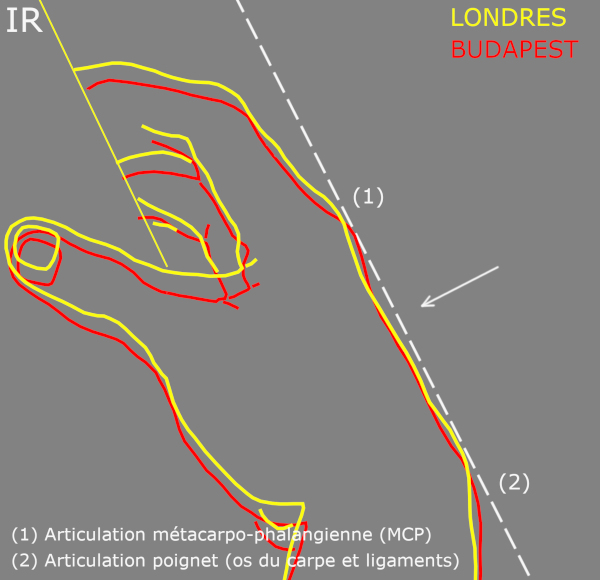
The wrist is shown in flexion. Between the index-finger joint and the wrist, the outline of the back of the hand is convex in the Painting, whereas it is concave in Giampietrino’s London and Budapest versions. The infrared outlines below compare these contours.
Professor Dominique Le Nen considers that, with the wrist in this position, the back of the hand can be straight or convex. His observation sheds light on this anatomical difference.
Read the detailed note on the back of Christ’s hand (PDF, in French)
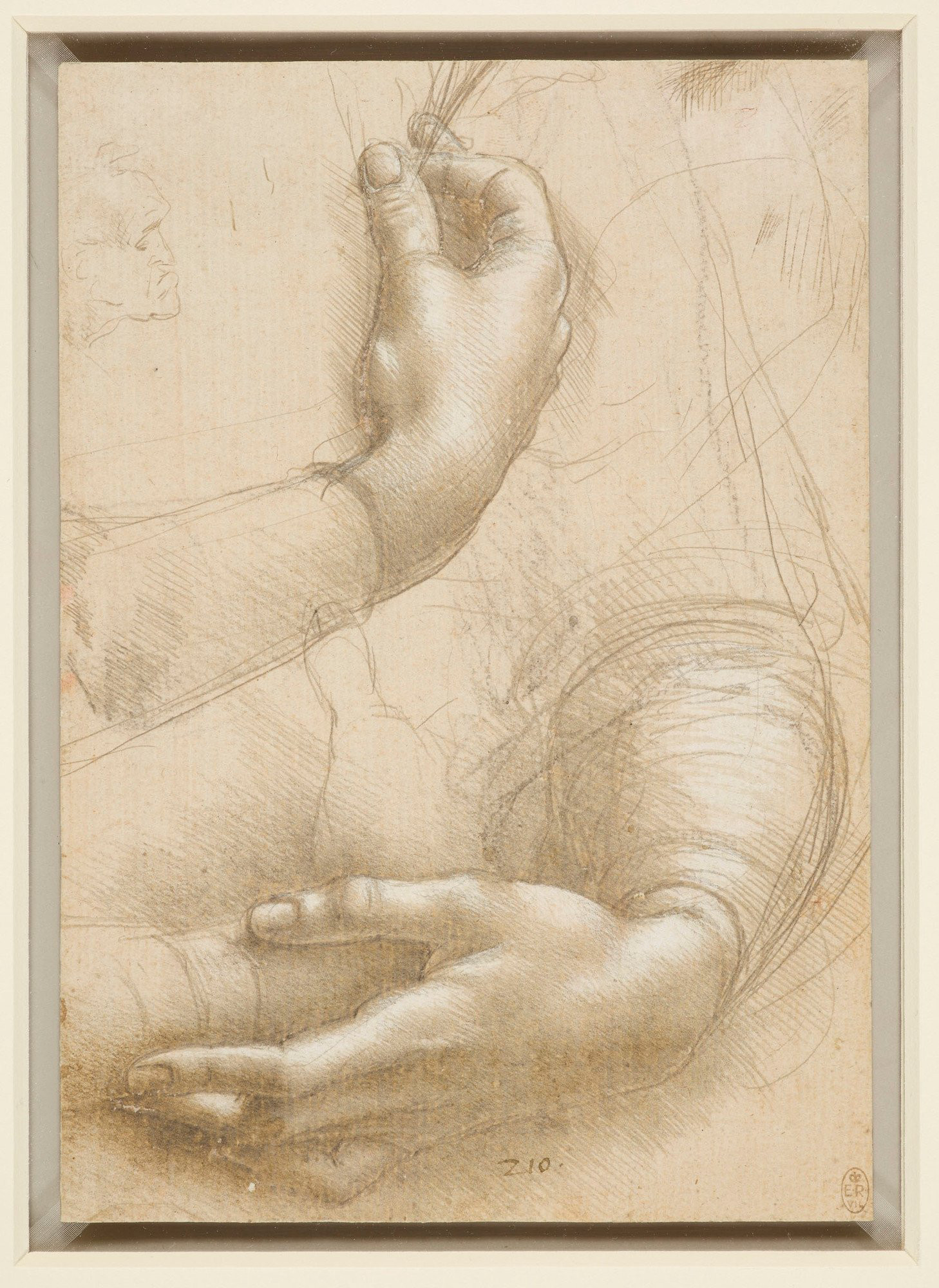
Leonardo da Vinci’s study of hands: RCIN 912558
This sheet by Leonardo da Vinci, held at Windsor under the reference RCIN 912558, contains two studies of a woman’s hands. In the upper study, a hand holds something between the thumb and index finger; in the lower study, one hand crosses another, drawn more lightly. Fine lines of shading create the relief of the fingers and folds.
The intended purpose of the sheet remains uncertain. The Royal Collection suggests a possible connection with Lady with an Ermine, without stating that the drawing was a preparatory study for the portrait.
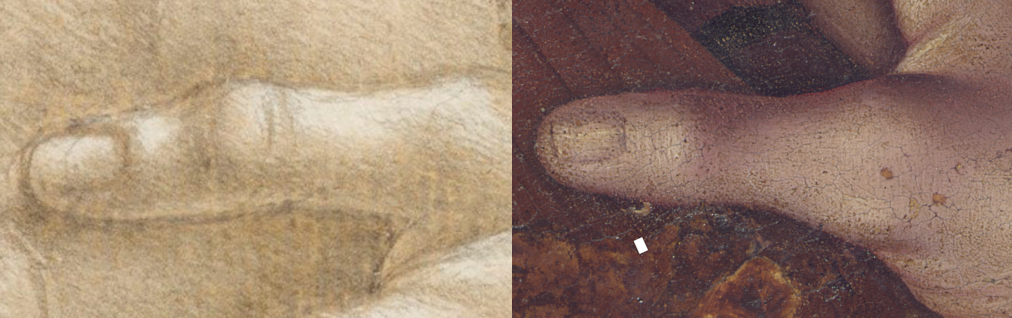
The thumb: comparison between RCIN 912558 and the Painting
In both the upper study and the Painting, the thumbnail is elongated, with fairly straight sides and rounded corners. Its length-to-width ratio is 1.48 in the drawing RCIN 912558 and 1.43 in the Painting. The folds and shadows around the nail define the volume of the thumb and its transition to the hand.
This nail shape also appears in Lady with an Ermine and Saint John the Baptist. The comparison must nevertheless take account of differences in gesture and viewpoint.
Contact with the figure on the right?
As well as gripping the cross, the hand may touch the tunic of the figure on the right. Nearby, the folds rise as though slightly lifted, whereas they follow a more regular curve on the other side.
Textile historian Mary Harlow considers this interpretation plausible, although the contact cannot be established with certainty. Such a gesture would suggest a direct connection between the two figures. See the study of the figure on the right.
What the comparison reveals
The comparison with Giampietrino highlights more pronounced modelling, a grip whose effort is more apparent and a more elongated nail in the Painting. The Windsor drawing RCIN 912558 provides a specific point of comparison in the proportions and contour of the nail, as well as the relationship between folds and shadows around the thumb.
These affinities with Leonardo shed light on the construction of the hand, without being sufficient to establish an attribution. Their significance must be considered alongside the pentimenti observed and the full range of stylistic and technical evidence relating to the Painting.