Evidence of a Possible Link Between the Painting and Leonardo da Vinci
The Christ Carrying the Cross studied on this website shows several parallels with Leonardo da Vinci’s drawings, his anatomical research and works by artists in his circle. Other evidence, particularly the inscriptions on the reverse of the panel, opens up a complementary historical line of inquiry.
These observations raise a question: what relationship might the Painting have with Leonardo? The reuse of a model, the circulation of drawings within his workshop and the master’s personal involvement are distinct hypotheses. Examining them requires considering visual comparisons, technical evidence and inscriptions together, while clarifying the significance of each comparison.
1. A Model Emerging from Leonardo’s Research
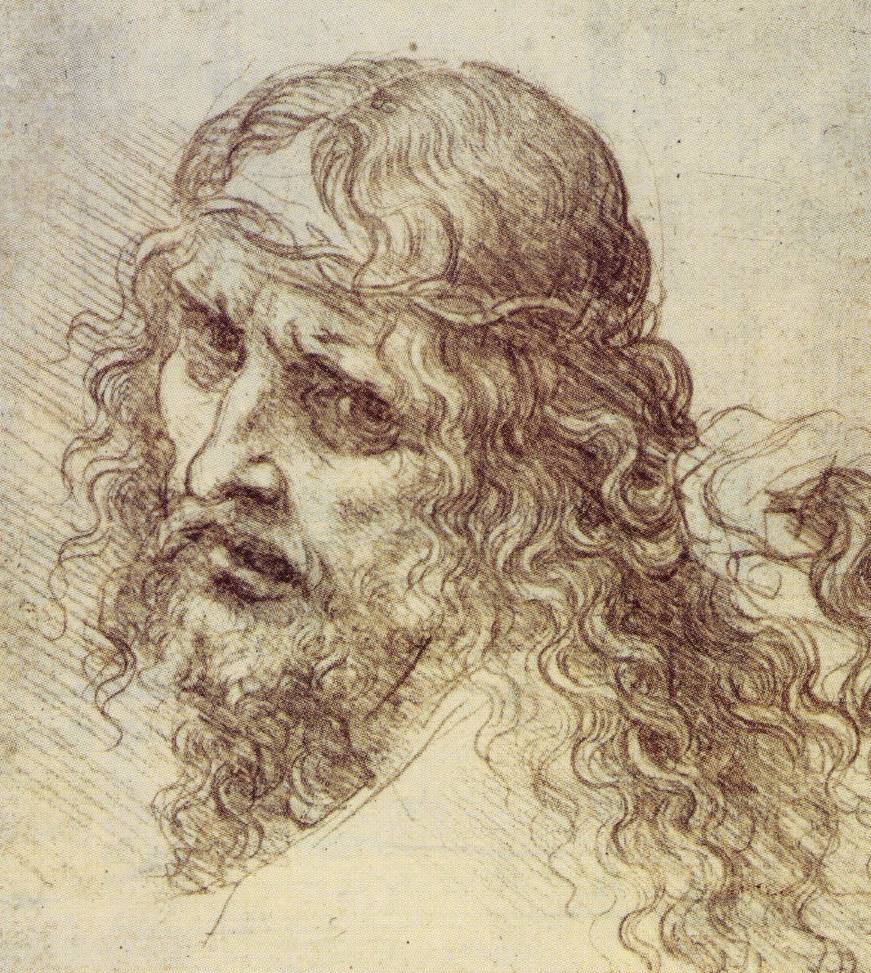
The Head of Christ preserved in Venice provides the starting point for this investigation. This drawing, attributed to Leonardo, depicts Christ in a rear three-quarter view, with his head turned towards the viewer. This arrangement, known as ritratto di spalla, combines the rotation of the body with the tension of the gaze.
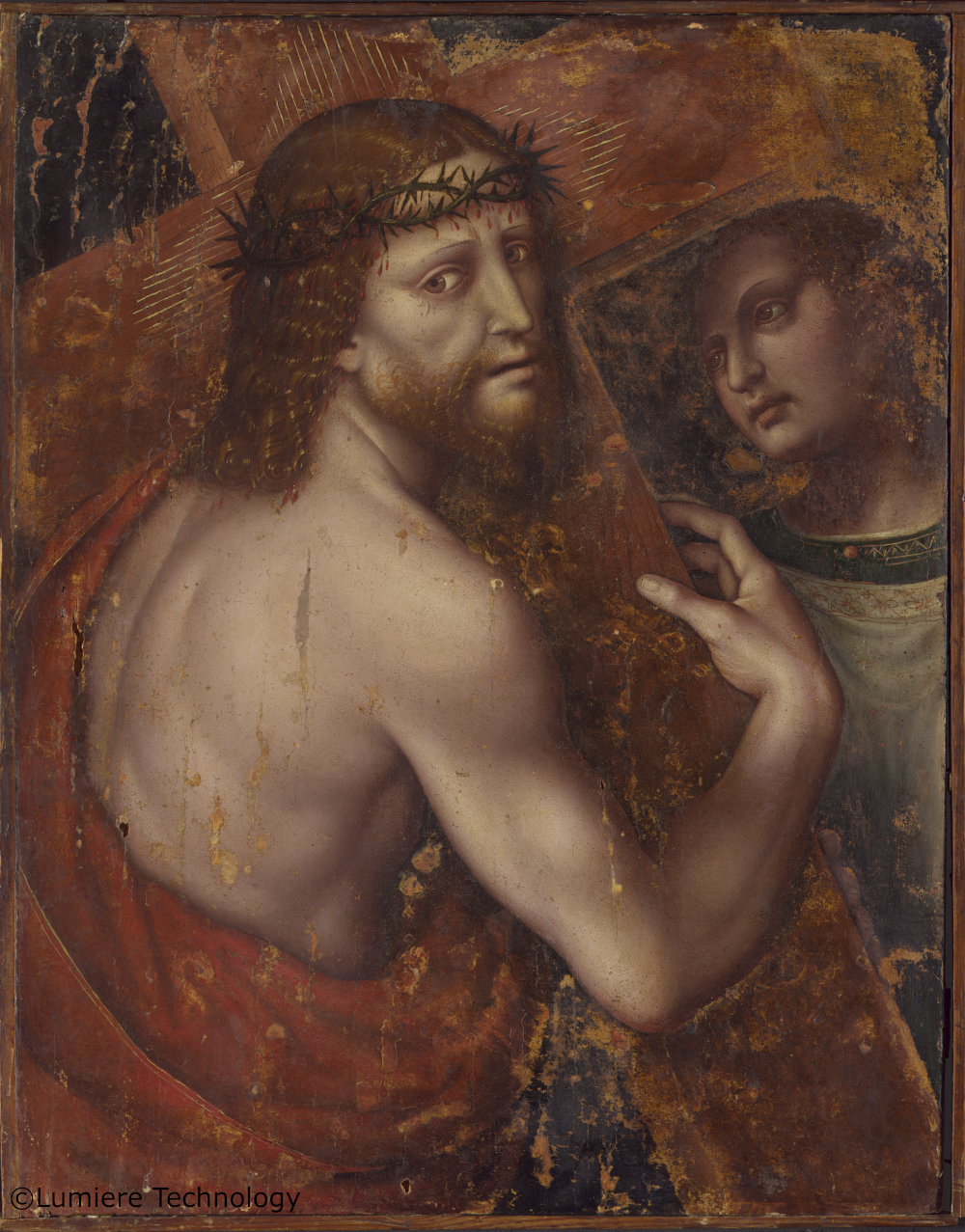
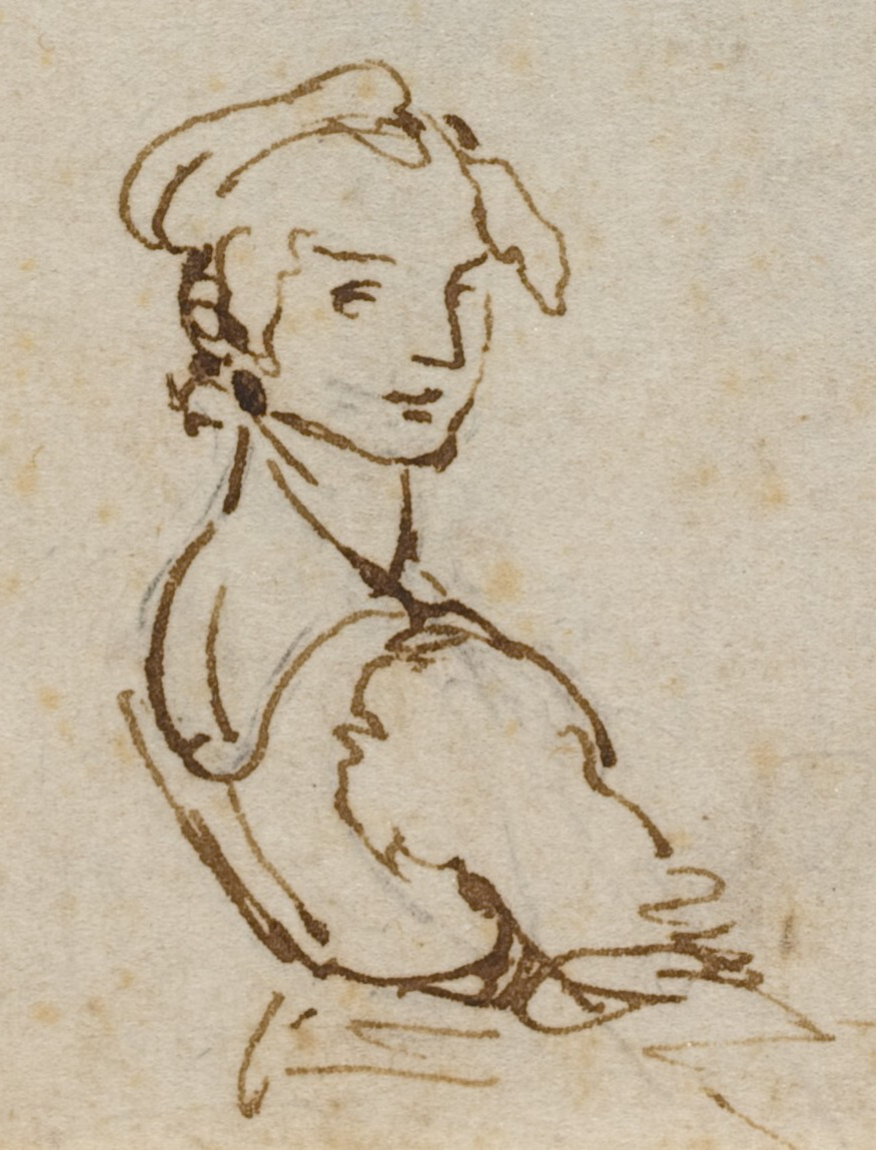
Several elements of this construction recur in the Painting. Comparison with the Venice drawing and a study sheet preserved in Washington highlights, in particular, the fold of the neck and the curvature of the back. The position of the hair parting provides another point of reference: in the Painting, its position relative to the eye corresponds to that in the Venice drawing, whereas Giampietrino’s versions show a displacement.
These correspondences invite an examination of how a compositional scheme may have been transmitted. The art historians cited on this website have considered several possibilities: a cartoon, an intermediate model or a now-lost painting by Leonardo. The Venice drawing may thus be the surviving record of an investigation whose scope and outcome remain debated.
Read the studies: the Venice drawing and the construction of the body, the hair parting, art historians’ views.
2. Attention to the Body: Anatomy, Gesture and Modelling
Christ’s anatomy provides a second group of comparisons. Imaging allows us to examine how the painter builds up volumes and conveys the effort involved in gripping the cross.
The forearm appears more strongly defined than in the versions by Giampietrino used for comparison. This observation can be considered alongside Leonardo’s recommendations in the Treatise on Painting: muscles engaged in an action should be made more visible. The deltoid, examined through X-radiography and LAM imaging, provides another parallel with Leonardo’s anatomical research into the shoulder and its articulation with the arm.
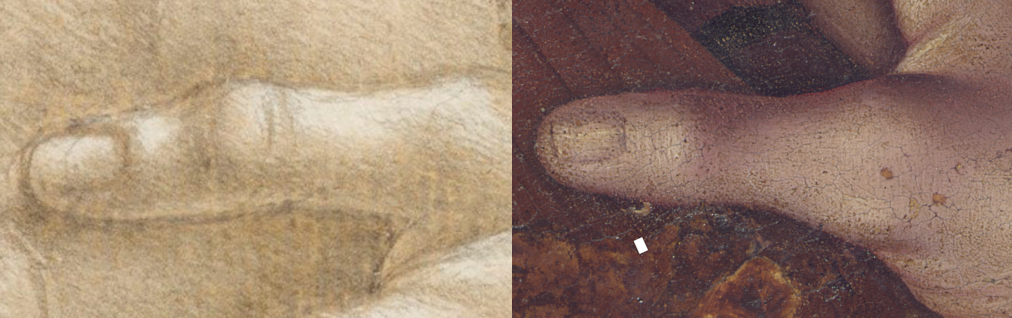
In Leonardo’s study of a woman’s hands (Windsor, RCIN 912558), the outline and proportions of the thumbnail are close to those in the Painting, despite differences in gesture and viewpoint.
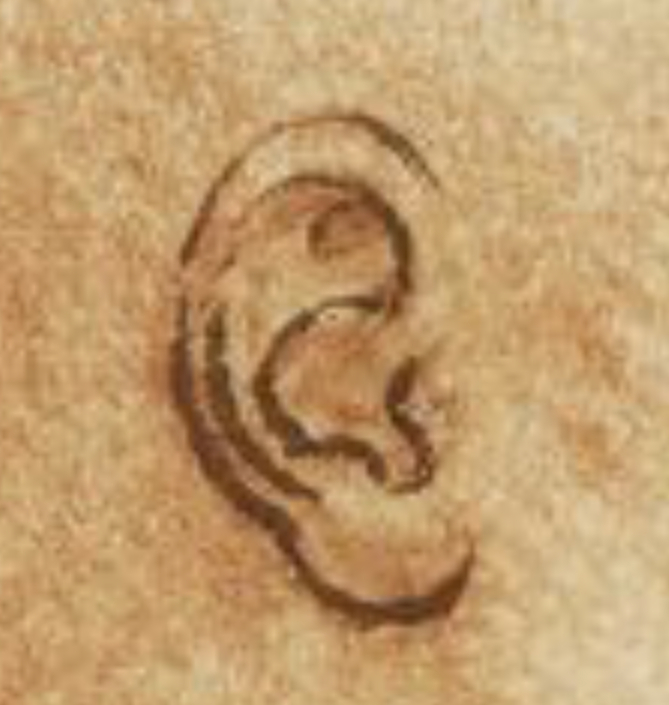
Christ’s earlobe has two successive arcs: the first tight, the second broader. This distinctive construction also appears in a drawing by Leonardo preserved at Windsor (RCIN 912600).
The treatment of shadows completes this examination. Gradual transitions can be observed in certain areas of the Painting, but no glazes comparable to those of the Mona Lisa have been conclusively identified. The comparison therefore concerns modelling and its effects, within the limitations imposed by the state of preservation.
Read the studies: the forearm, the deltoid, the hand, the ear, sfumato.
3. Models Circulating Within Leonardo’s Circle
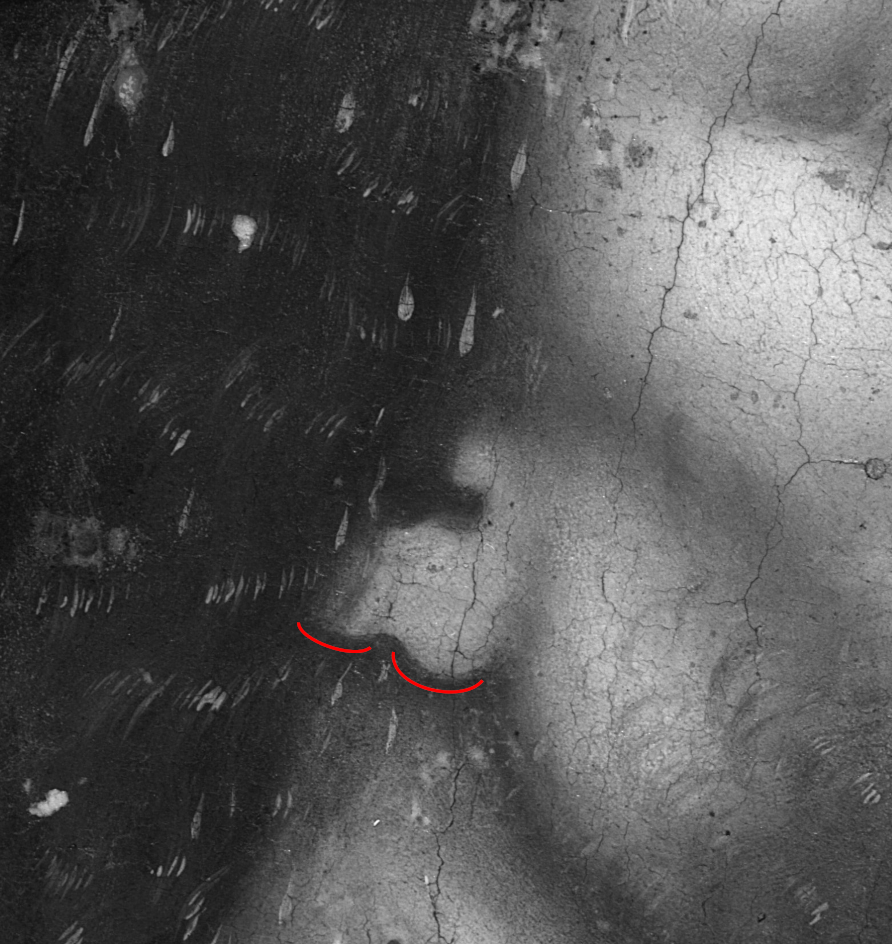
The Painting shares a closely similar compositional structure with Giampietrino’s depictions of Christ Carrying the Cross. Superimposed outlines and certain details, such as the central groove of the lower lip, support the hypothesis of a common cartoon or a shared intermediate model. The traces of spolvero observed in the Painting, for their part, document a method of transferring the drawing.
The same model could be reused by several painters. Compositional similarities must therefore be examined alongside differences in execution: modelling, corrections, anatomy and the treatment of details.
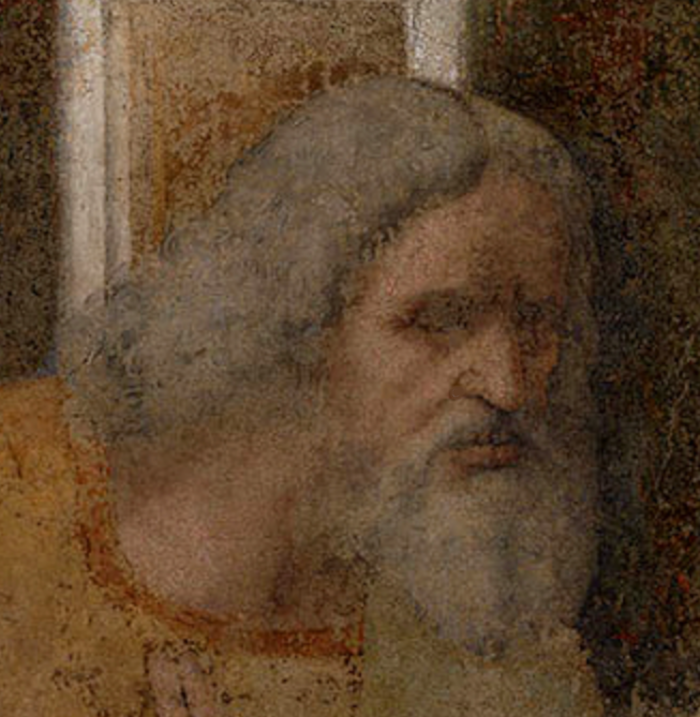
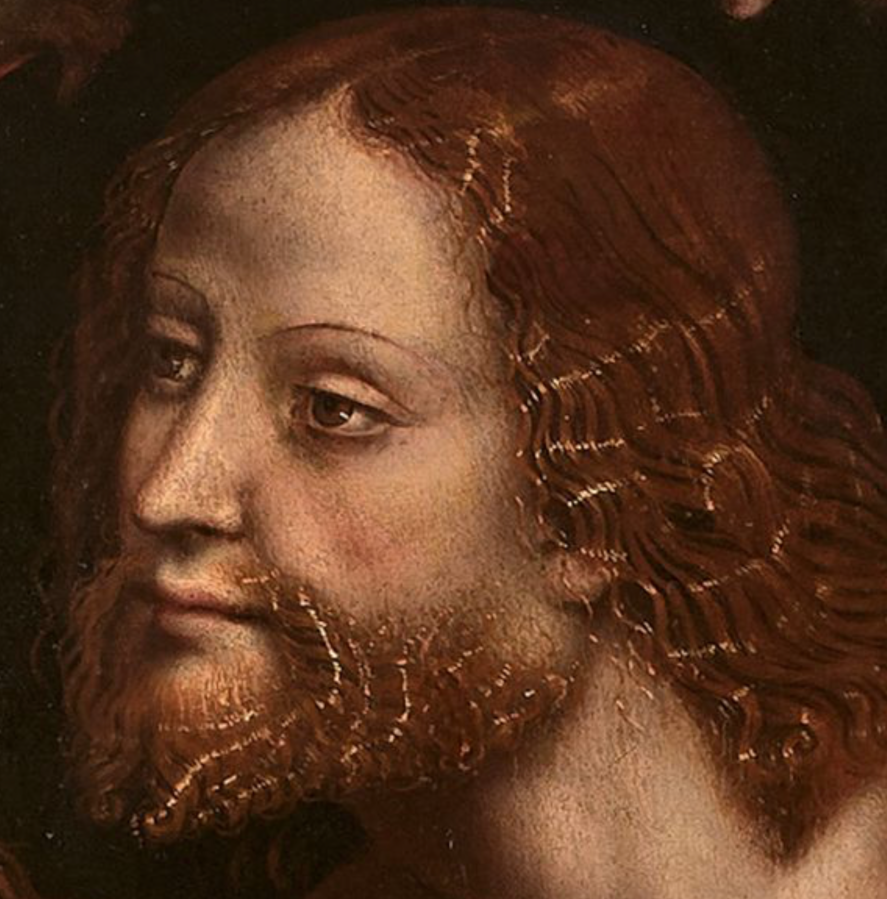
The study of Thaddeus in The Last Supper, based on early copies, extends this inquiry. Correspondences with the Venice drawing suggest the possible reuse of the same head type. Adam’s face in a painting attributed to Giampietrino offers a further parallel; his beard also shows specific similarities to that of Christ in the Painting.
These comparisons suggest the circulation and adaptation of models within Leonardo’s artistic circle. They place the Painting within this network without, on their own, resolving the question of its authorship.
Read the studies: the shared cartoon, the dissemination of the Venice drawing, Thaddeus, Adam.

4. The Figure on the Right: A Distinctive Feature to Examine
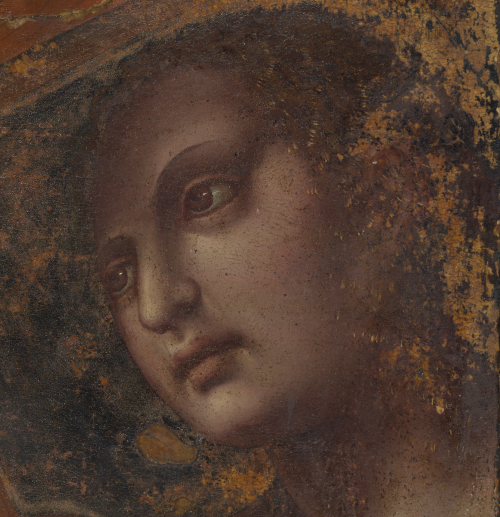
Absent from Giampietrino’s known versions, the young figure to the right of Christ distinguishes the Painting. His face, hair and downward gaze invite comparisons with several figures from Leonardo’s artistic circle, notably Proserpina and the angel in the San Magno altarpiece.
The decoration of his garment offers a more specific parallel. The frieze on the band has an arrangement comparable to that in the Portrait of a Young Man in the Uffizi, whose attribution remains debated: chevrons accompanied by small branching forms.
A similar graphic construction appears in a sheet by Leonardo devoted to the casting of the Sforza monument, RCIN 912349. Here, the forms represent channels intended for molten metal. Their function is entirely different from that of garment decoration: the comparison concerns only their graphic arrangement and does not establish a direct connection.
Read the studies: the figure on the right, comparisons of the frieze.


5. The Inscriptions on the Reverse and the Possible Salaì Connection
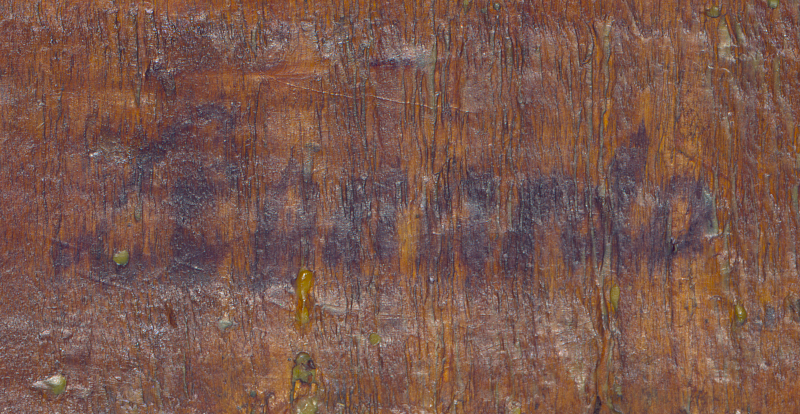
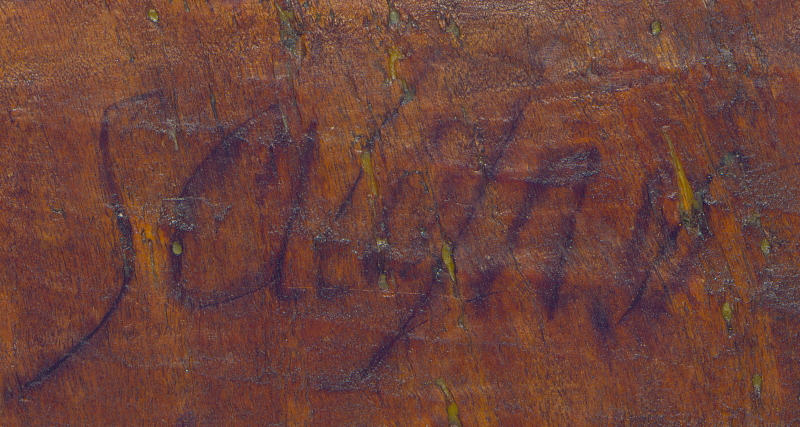
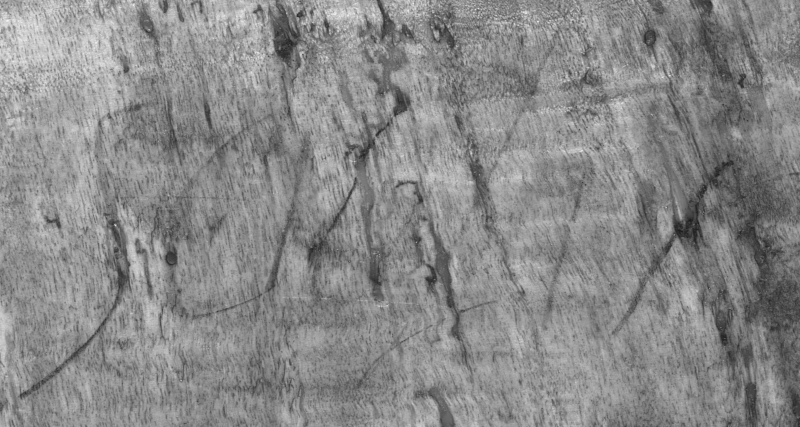
The reverse of the panel bears the names “Leonardo” and “Salajno” in ink, together with an incised inscription read as “Salaj/?”, whose final character remains undeciphered.
Examination of their superimposition indicates that the ink inscription “Salajno” overlies the incised lettering. This establishes a relative sequence of interventions without providing an absolute date. The form “Salaj”, used by Leonardo to refer to Gian Giacomo Caprotti, his pupil and companion, gives this inscription particular interest. The circumstances in which these inscriptions were added to the panel nevertheless remain unknown.
Comparison with the Ecce Homo of Cassago Brianza, attributed to Salaino, adds to this line of inquiry. It concerns the crown of thorns, hair, halo and drops of blood. The structure of the crown, formed from two branches, is also compared with the Venice drawing. Since some of the features being compared underwent later interventions in the Painting, their significance must be assessed in light of this material history.
Read the studies: the inscriptions on the reverse, the Ecce Homo of Cassago Brianza.
What Significance Should Be Attached to These Parallels?
The graphic, anatomical and pictorial comparisons, the circulation of models and the inscriptions warrant examining a connection with Leonardo and his circle. Their evidential weight nevertheless varies: several parallels depend on the same model, while certain interventions remain undated.
The place of the Painting within this transmission has yet to be clarified. Leonardo’s personal involvement remains a hypothesis requiring further evidence.